1933–2010 · Contemporary
Henryk Mikołaj Górecki
1 work
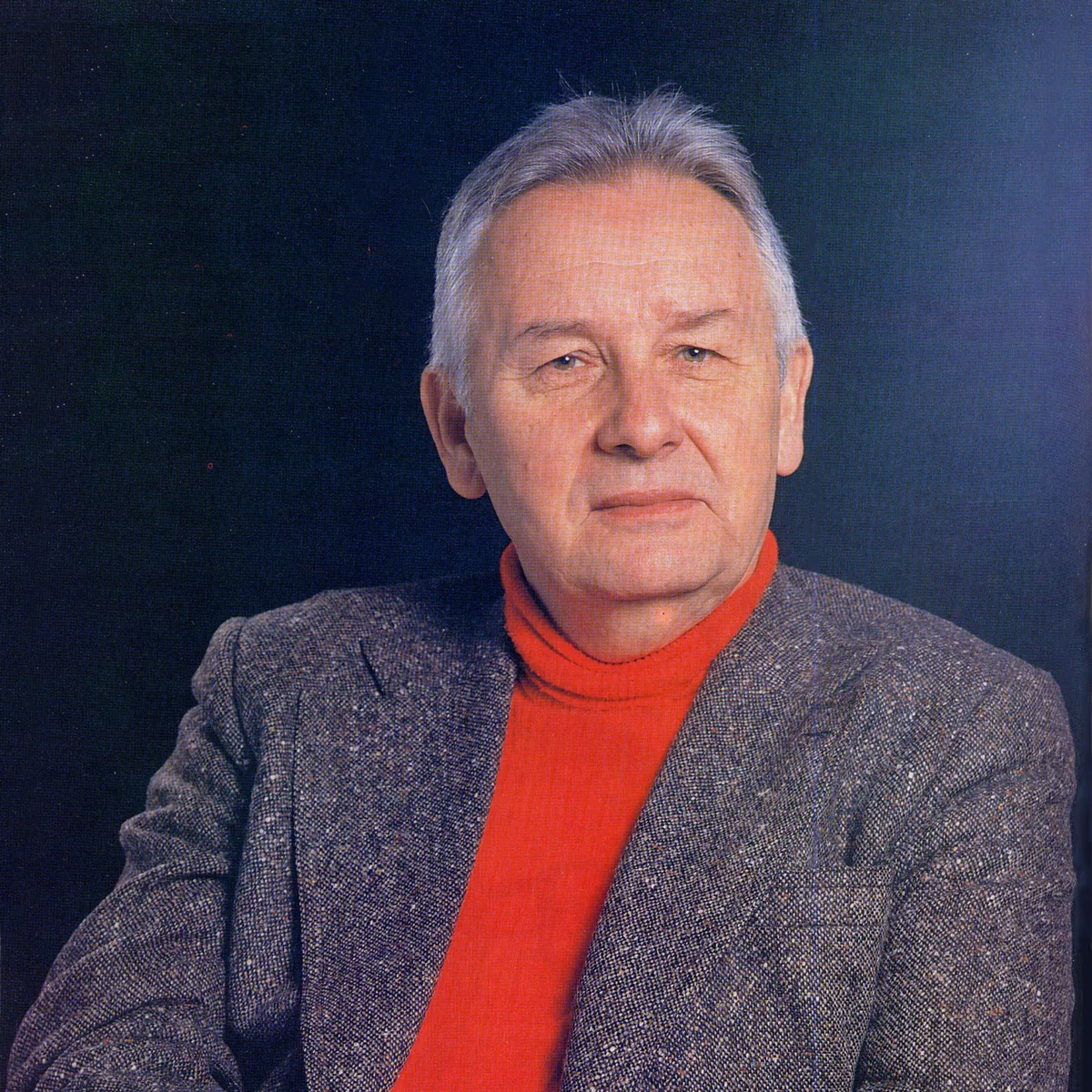
Górecki was born in 1933 in Czernica, in Silesia, and died in Katowice in 2010. In the late 1950s and early 1960s he wrote dissonant twelve-tone and serial pieces influenced by Webern, such as Epitafium (1958) and Scontri (1960), and became a leading figure of the Polish avant-garde. From the mid-1960s he moved toward a simpler, expressive style. By the 1970s his music was built from small repeated motifs, plain harmony, slow rhythms and long, quiet gestures, often with religious subjects: the Second Symphony ("Copernican", 1972), Beatus Vir (1979) and Miserere (1981) belong here.
The Symphony No. 3, Op. 36 ("Symphony of Sorrowful Songs") was written in Katowice between October and December 1976 for solo soprano and orchestra. It was first performed on 4 April 1977 at the Royan Festival in France, with Stefania Woytowicz as soloist and Ernest Bour conducting. The Western critics who reviewed it were harshly dismissive, while Polish critics praised it. A 1992 recording with Dawn Upshaw and David Zinman topped the US classical charts for 38 weeks.
All three movements are slow, and the whole lasts about 54 minutes. Strings dominate and fortissimo appears in only a few bars. The sung texts are in Polish and share one theme, a mother and a child separated: a lament of Mary from the late fifteenth century, a message scratched on a Gestapo cell wall in Zakopane in 1944 by an eighteen-year-old girl, and a folk song from the Opole region about a mother searching for her son, killed in the Silesian uprisings.
What to listen for
- The first movement opens with a canon: the double basses begin, and each new entry comes one bar later in the cellos, violas and violins, until eight parts sound together. Then the voices drop out again.
- In the second section of the first movement the soprano enters on the same E that the strings have been holding, and builds to a climax on the final word.
- In the second movement, an A and E drone, a string chord held without a diminuendo for nearly a minute and a half, and a closing prayer (the first two lines of the Polish Ave Maria) sung on one repeated pitch.
- In the third movement, three verses in A minor, a soft, waltz-like pulse on the A chord (Górecki's own word was a "walczyk", a little waltz), and a last stanza that turns to A major.
- How little the dynamics change. The music stays quiet and the harmony stays plain; the effect comes from repetition.
Sources: Henryk Górecki (Wikipedia), Symphony No. 3 (Górecki) (Wikipedia)