1867–1916 · Romantic
Enrique Granados
1 work
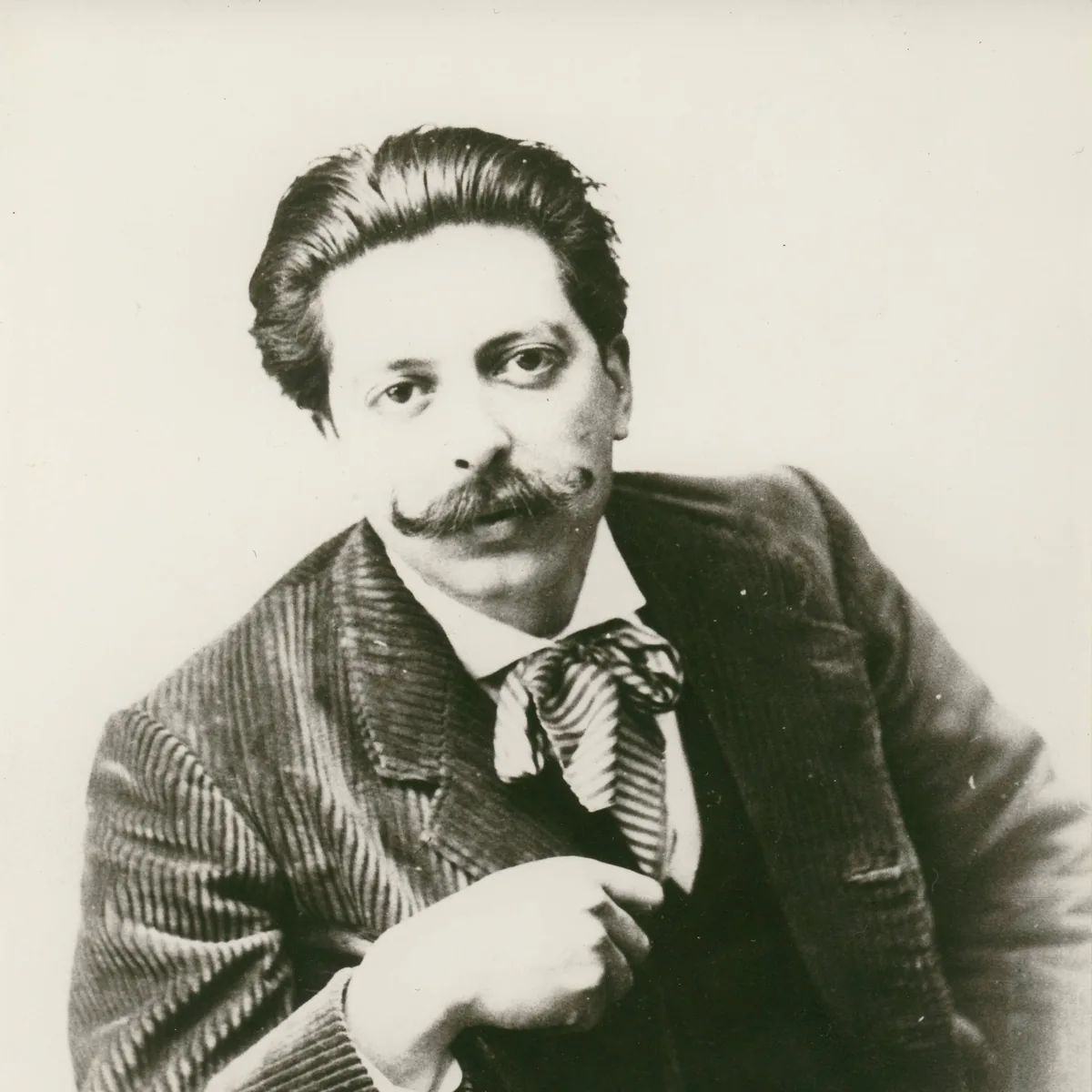
Granados was born in Lleida in 1867 and trained as a pianist in Barcelona and, from 1887, in Paris. He also studied with Felip Pedrell, which one source calls just as important for him. After returning to Barcelona in 1889 he founded the Acadèmia Granados, a piano school whose pupils included Alicia de Larrocha. His output falls into three phases: a Romantic one, a nationalist Spanish one (the Danzas españolas), and the Goya-inspired Goyescas period. He combined Spanish dance, melody and rhythm with the piano language of Chopin, Schumann and Liszt.
Goyescas, subtitled Los majos enamorados ("The Gallants in Love"), Op. 11, is a suite of piano pieces inspired by the paintings of Goya, whose Madrid had the majos and majas, gallant young men and elegant women. Granados began work in 1909 and played Book I in Barcelona on 11 March 1911; Book II was finished that December and first heard in Paris in 1914. Book I contains Los requiebros, Coloquio en la reja, El fandango de candil and Quejas, o La maja y el ruiseñor. Book II contains El amor y la muerte (Balada) and Epílogo: Serenata del espectro.
The writing is dense and very difficult: wide stretches, countermelodies and heavy ornamentation, giving textures that sound nearly orchestral. Quejas is nocturne-like and the best known of the set, and El amor y la muerte has a strongly improvisatory feel. In 1915 he turned the suite's melodies into a one-act opera, also called Goyescas, which was first staged in New York in 1916.
What to listen for
- Quejas, o La maja y el ruiseñor (The Maiden and the Nightingale): nocturne-like and the best known piece of the set, with an ornamented melody.
- El fandango de candil, named for a Spanish dance, where the dance rhythm shows most openly.
- El amor y la muerte: the free, improvised feel of its long ballad-like span.
- Thick chords and countermelodies that fill the keyboard so that a single piano sounds like an orchestra.
Sources: Enrique Granados (Wikipedia), Goyescas (Wikipedia), Enrique Granados (Encyclopedia.com)