1874–1954 · Modern
Charles Edward Ives
1 work
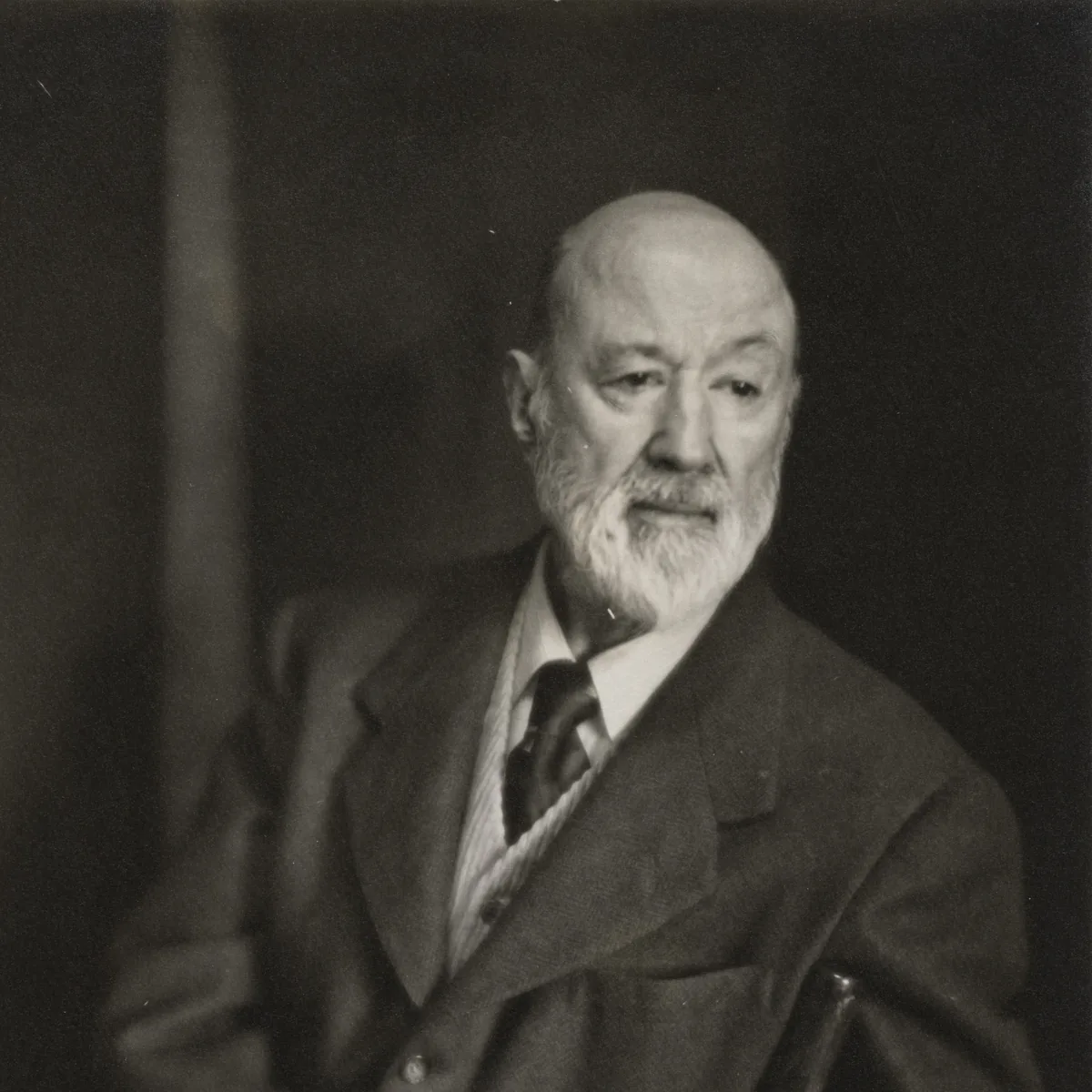
Ives was born in Danbury, Connecticut, in 1874 and died in New York in 1954. He was the son of a bandleader, George Ives, and studied at Yale with Horatio Parker. He earned his living in insurance from 1898 until he retired in 1930, so his composing was done outside a musical career. His music uses polytonality (two or more keys at once), polyrhythm (different rhythms sounding together), tone clusters and sometimes quarter tones. He quoted hymns, folk tunes and melodies by Stephen Foster.
The Unanswered Question was composed in 1908, though it is often misdated 1906, and revised between 1930 and 1935. It was first performed in 1946. It is short, and it is a good example of Ives layering independent groups. Strings, placed offstage and playing softly, hold slow tonal triads. A solo trumpet, preferably muted, plays a short question. Four flutes, or substitute instruments, answer.
Ives wrote a programme for it. The strings represent "The Silence of the Druids", who know, see and hear nothing. The trumpet asks "The Perennial Question of Existence" seven times. The woodwinds, the "Fighting Answerers", reply six times, growing more agitated and dissonant, and then give up. Each group keeps its own tempo: the winds speed up, while the strings barely change. After the last question the strings are left alone, and the piece fades away.
What to listen for
- The unchanging string chords, soft and slow, that form the background from the first note to the last.
- The trumpet's short question, asked seven times: it is atonal, while the strings stay in plain triads.
- The flutes' answers, which grow more agitated and dissonant and speed up as they go, until they give up.
- The last trumpet question, after which the piece fades into the strings.
Sources: Charles Ives (Wikipedia), The Unanswered Question (Wikipedia)