1923–2006 · Contemporary
György Ligeti
1 work
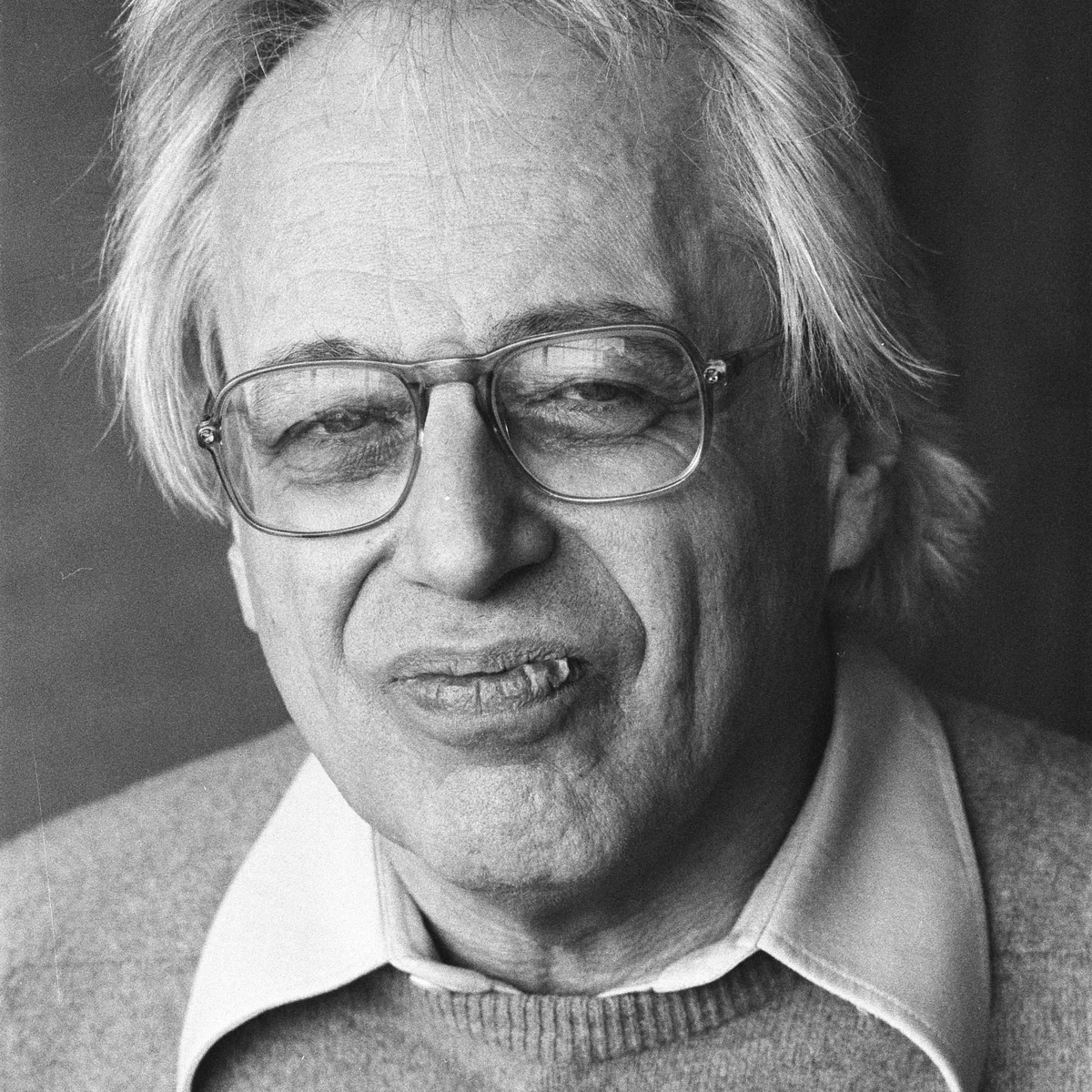
Ligeti was born in 1923 in Diciosânmartin (now Târnăveni), Transylvania, then part of Romania, to a Hungarian Jewish family. He left Hungary in December 1956, after the uprising was crushed, and went by way of Vienna to Cologne, where he worked at the electronic music studio of West German Radio with Stockhausen and Koenig. He became an Austrian citizen in 1968, taught in Hamburg from 1973 to 1989, and died in Vienna in 2006.
His best-known early method is micropolyphony: many voices play or sing their own slightly different lines so densely that the individual lines blur into a mass of sound, as in Apparitions and Atmosphères (1961). Harmony shifts gradually, and the music is built from texture and tone colour rather than melody or steady rhythm. He also wrote block-like clusters, as in the organ piece Volumina. Stanley Kubrick used Atmosphères, Lux Aeterna, the Requiem and Aventures in 2001: A Space Odyssey, and in later life Ligeti wrote the piano Études, the Horn Trio and a Violin Concerto in a different, rhythmically intricate style.
Lux Aeterna dates from 1966, after the Requiem of 1963 to 1965. It is a work for sixteen unaccompanied voices, four each of sopranos, altos, tenors and basses, setting Latin words from the Requiem Mass that ask for eternal light to shine on the dead.
What to listen for
- The opening, where sopranos and altos sing similar parts woven together in micropolyphony, and the tenors enter about halfway through the first section.
- A passage where the basses enter in a very high falsetto, the men sing alone, and the women return on the words "Quia pius es".
- Each voice using its own rhythmic subdivision, so there is no steady beat to follow.
- A last section in which the basses sink to a very low register and briefly form the only traditional chord in the piece, before the parts fade away and seven bars of silence close the work.
Sources: György Ligeti (Wikipedia), Lux Aeterna (Ligeti) (Wikipedia)