1908–1992 · Modern
Olivier Messiaen
1 work
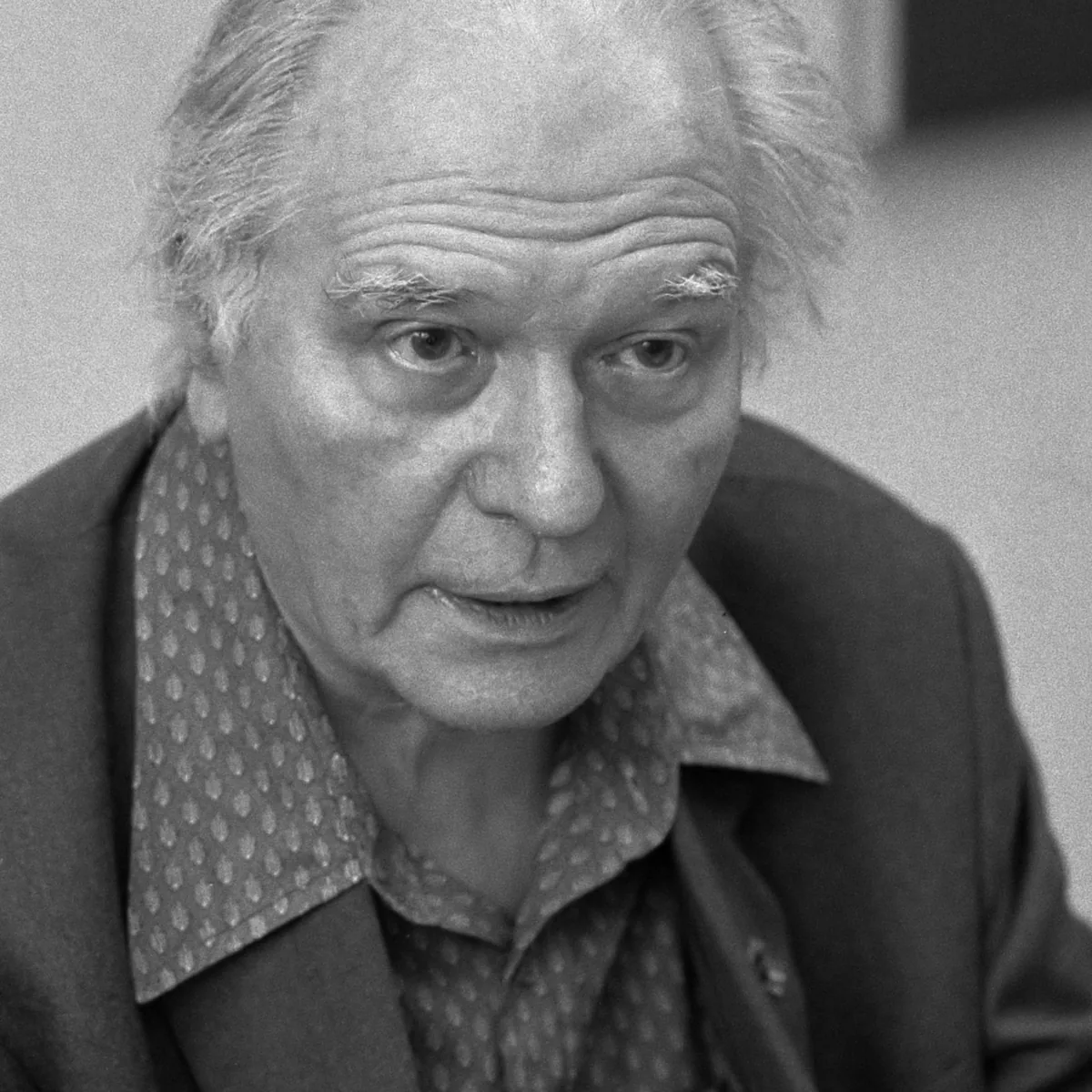
Messiaen was born in Avignon and was organist of the Église de la Sainte-Trinité in Paris from 1931 until his death in 1992. He also taught at the Paris Conservatoire from 1941. He was a Roman Catholic, and his music before 1945 is mostly Christian in subject. He heard colours when he heard chords, and colour is central to how he thought about harmony.
His harmony avoids ordinary cadences. He built melodies and chords from his modes of limited transposition, scales that can be shifted only a few times before they repeat the same notes, so the music glows and hovers instead of heading for a goal. His rhythm uses palindromic patterns, additive rhythms and Hindu rhythmic formulas, and later he transcribed birdsong.
O sacrum convivium was written in 1937 at the request of Abbé Brun for the offertory of the Mass. It is a motet of 35 bars for four-part mixed choir on a Latin text attributed to Thomas Aquinas, with an optional organ part, and it was his first setting of a Latin text. It is marked Lent et expressif and has no time signature. The harmony sits mostly in F-sharp major, though analysts disagree whether to read it through his modes instead. Messiaen later said the piece was not typical of his style.
What to listen for
- A slow, free flow with no strong beat: the singers count eighth notes and the number in each bar changes.
- Chords that shimmer in and out of focus around F-sharp major rather than driving towards a cadence.
- A slow, rather static atmosphere that suits the offertory text, with the expressive peak coming where the text speaks of glory.
- The final Alleluia, which closes the Latin text of the motet.
Sources: Olivier Messiaen (Wikipedia), O sacrum convivium! (Wikipedia), Programme notes: Messiaen (Aberdeen Bach Choir), Messiaen and Stravinsky notes (Brussels Philharmonic)