1892–1974 · Modern
Darius Milhaud
1 work
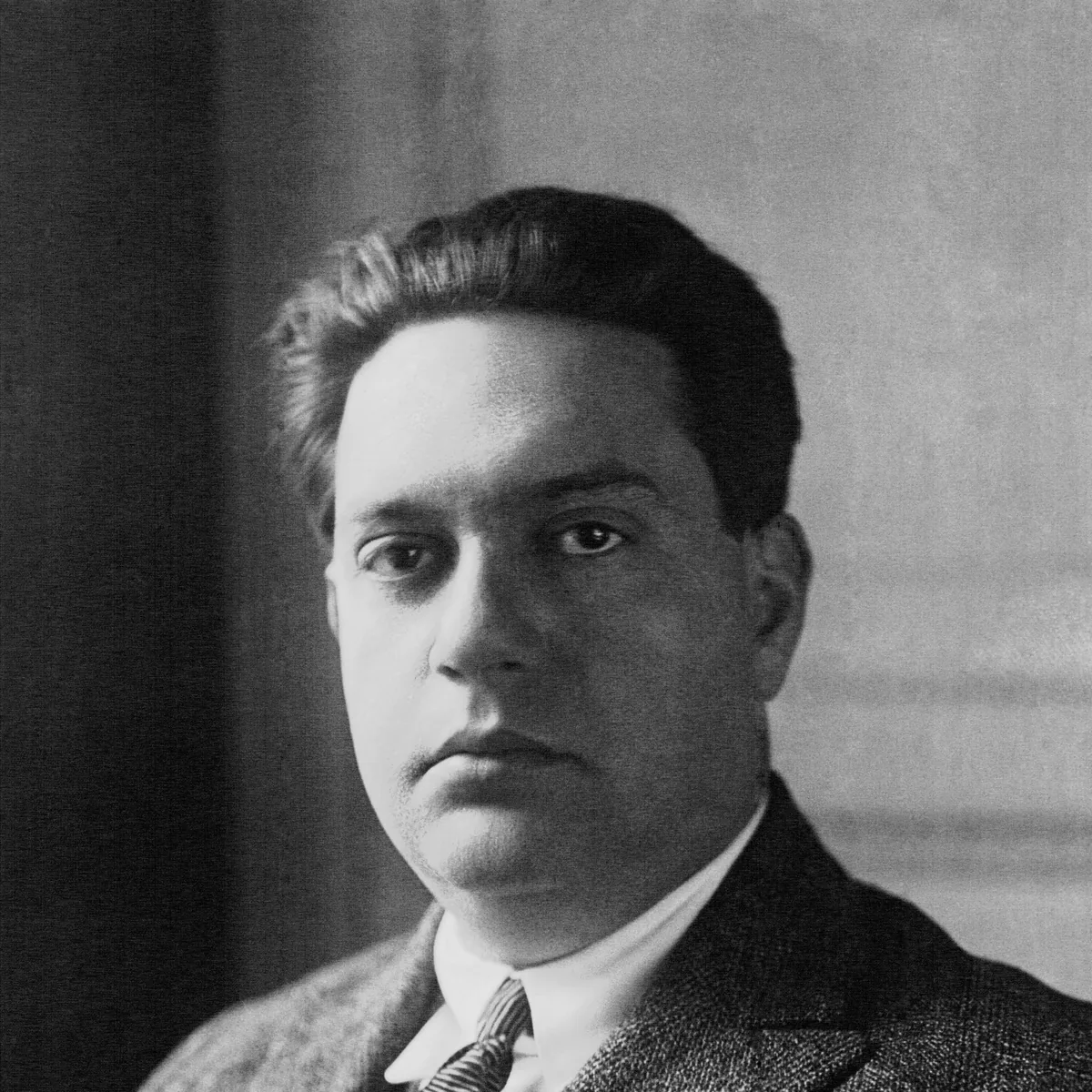
Milhaud was born in Marseille in 1892, grew up in Aix-en-Provence and studied at the Paris Conservatoire. He belonged to the group of French composers known as Les Six. From 1917 to 1919 he lived in Rio de Janeiro as secretary to the poet Paul Claudel, then French ambassador, and Brazilian popular music stayed in his work. After hearing jazz in Harlem in 1922 he used it in La création du monde. He left France in 1940 and taught at Mills College in Oakland, later dividing his time between California and the Paris Conservatoire.
His music makes wide use of polytonality, which means two or more keys sounding at once. Syncopated Brazilian rhythms, jazz inflections and folk-like tunes sit beside it.
Scaramouche was put together in 1937 from music he had written for two plays, and it takes its name from the Théâtre Scaramouche, the troupe that staged one of them. The version for two pianos, Op. 165b, was made at the request of Marguerite Long and first played that year by Marcelle Meyer and Ida Jankelevitch. It has three movements: Vif, Modéré and Brazileira. The first uses nursery-rhyme and folk-like themes, the second has a nod to the French overture, and the finale is a Brazilian samba-choro built on a syncopated tresillo rhythm.
What to listen for
- Two keys at once: a tune in one key over accompaniment chords in another, which gives a bright, slightly sour edge.
- In the first movement, simple tunes of nursery-rhyme character passing quickly between the two pianos.
- In the finale, the syncopated samba rhythm, in which eight pulses are grouped 3 + 3 + 2 (the tresillo) so the accent keeps landing off the beat.
- In the second movement (Modéré, in B-flat major), a moderate pace and a manner that hints at the French overture style.
Sources: Darius Milhaud (Wikipedia), Scaramouche (Milhaud) (Wikipedia)