1865–1931 · Late Romantic
Carl Nielsen
2 works
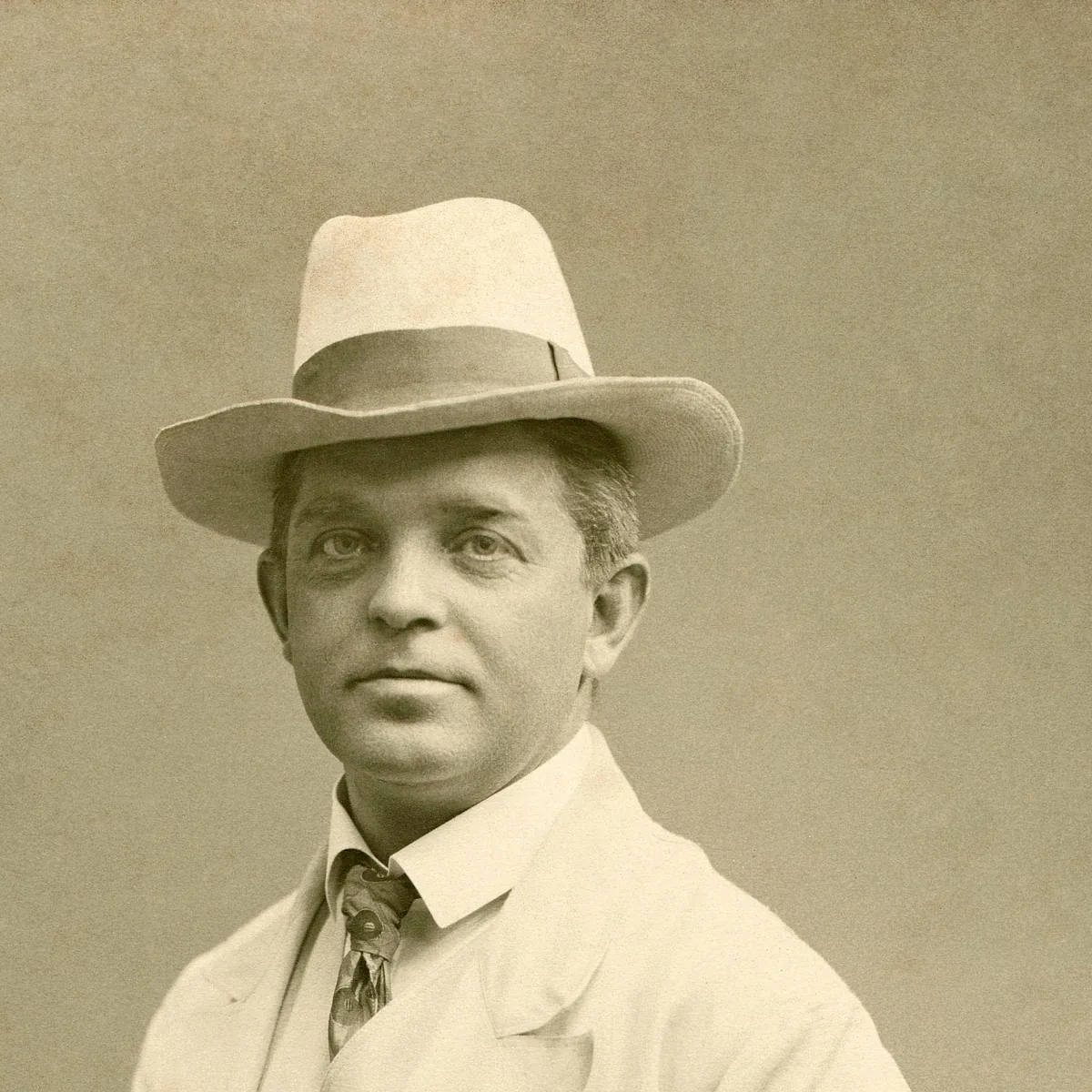
Nielsen was born on the Danish island of Funen in 1865. He played second violin in the Royal Danish Orchestra in Copenhagen from 1889 to 1905, later conducted it, and taught at the Royal Danish Academy of Music from 1916. He wrote more than 290 songs and hymns, and critics have linked his rhythms and flattened sevenths to Danish folk music, although that link is debated. Brass has a large role in his symphonies.
His best-known device is progressive tonality, in which a work ends in a different key from the one in which it began. The First Symphony, written in 1891 and 1892 and first played in March 1894 under Johan Svendsen, opens in G minor and closes with a peroration in C major. It is the first work in which this idea shows itself.
The Fourth Symphony, The Inextinguishable (Det Uudslukkelige), was written during the First World War and first played in Copenhagen in February 1916. In a letter of 1914 Nielsen described a work without a programme that would express the spirit of life, all that moves and wants to live. Its four movements are played without a break. The first opens with the full orchestra setting D minor against C, and a clarinet theme in A major later returns to bring the work to its culmination. In the finale two sets of timpani, placed on opposite sides of the orchestra, answer one another, and the players change pitch as they play. The symphony ends in E major.
What to listen for
- In Symphony No. 1, the move from the G minor opening to the bright C major peroration at the very end.
- In Symphony No. 4, the opening, where the whole orchestra sets D minor against C and the two grate together.
- The clarinet theme in A major in the first movement of No. 4, which comes back later to bring the work to its high point.
- That the four movements of No. 4 run on without a pause, so the music feels like one continuous stream.
- The two timpani groups on opposite sides of the stage in the finale of No. 4, passing rhythms back and forth.
Sources: Carl Nielsen (Wikipedia), Symphony No. 1 (Nielsen) (Wikipedia), Symphony No. 4 (Nielsen) (Wikipedia)