1921–1992 · Modern
Astor Piazzolla
1 work
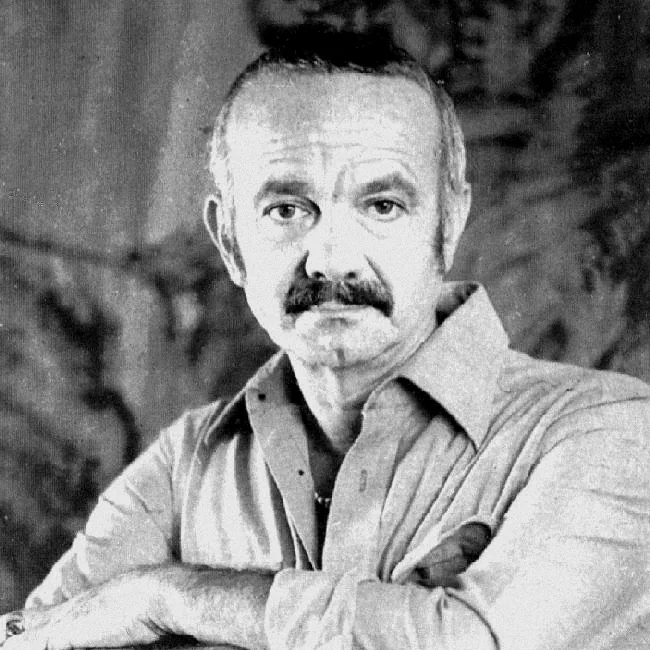
Piazzolla was born in Mar del Plata, Argentina. From 1939 he played the bandoneon, the button accordion of tango bands, in Aníbal Troilo's orchestra and became its arranger, while studying composition with Alberto Ginastera. A French government grant took him to Paris in 1954 to study with Nadia Boulanger, who worked with him on counterpoint and urged him to build his music on tango rather than leave it behind.
The result became known as nuevo tango (new tango). It keeps the rhythms and the bandoneon sound of Buenos Aires dance music but adds the extended chords, dissonance and improvisation of jazz and the counterpoint of classical music: some passages behave like strict fugues, and some bass lines circle like a passacaglia, a repeating bass pattern. Fast sections are gritty and angular; in slow sections the bandoneon or a string instrument sings a long lyrical line. His favourite band was a quintet of bandoneon, violin, piano, electric guitar and double bass. Living in Rome in the 1970s, he turned to leaner, more continuous forms with a stronger jazz flavour.
Oblivion dates from 1982 and is one of five Piazzolla pieces heard in Marco Bellocchio's film Henry IV (Enrico IV, 1984). It is not a dance but a slow song in ABA form: the melody grows from a falling five-note figure over the slow, steady pulse of the milonga, an Argentine dance related to tango, with jazz sevenths and suspensions in the harmony. In 1984 the singer Milva performed it with French words as J'oublie, and it has since been arranged for violin, cello, oboe and other instruments with orchestra.
What to listen for
- Under the melody the bass keeps a slow, even milonga pulse from start to finish.
- The tune grows from a short falling figure that is repeated at different pitches (a sequence), so each phrase sinks and then starts again higher or lower.
- In the middle section the melody moves in triplets, three even notes in the time of two beats, which loosens it against the steady bass.
- Listen to the chords for jazz colour: added sevenths and suspended notes that hold off the expected resolution.
- The return of the opening melody closes the ABA plan in the same subdued mood.
Sources: Astor Piazzolla (Wikipedia), Oblivion (Piazzolla) (Wikipedia)