1891–1953 · Modern
Sergei Prokofiev
15 works
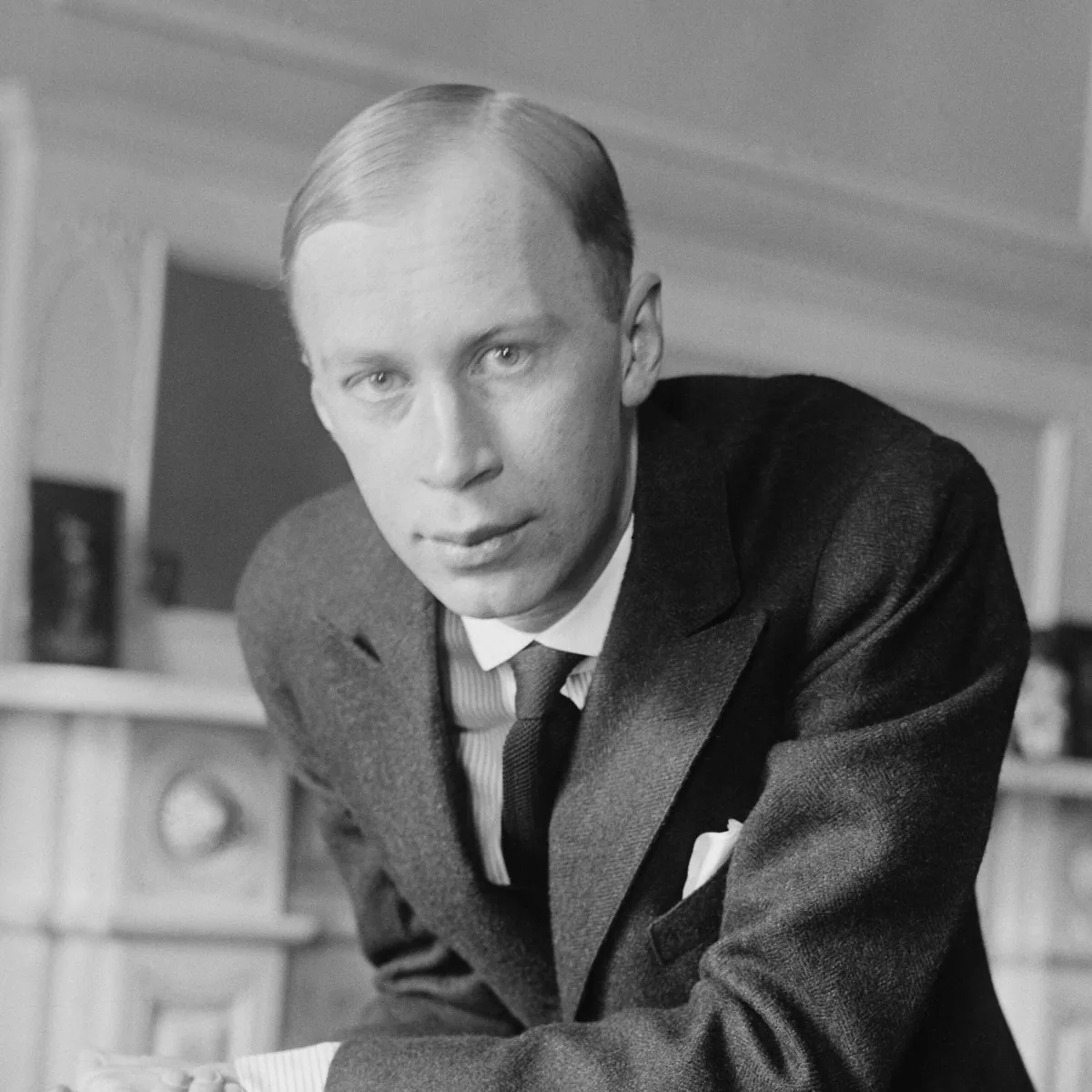
Prokofiev was born in Sontsovka, in what is now Ukraine, and graduated from the Saint Petersburg Conservatory. He first made his name as a composer-pianist of ferociously dissonant and virtuosic piano music. After the 1917 Revolution he left Russia for the United States, then Germany and Paris, and in 1936 he settled in Moscow. Richard Taruskin praised his melodic gift as almost unparalleled among 20th-century composers.
The early piano works come from that first period. Concerto No. 1 (1911 to 1912) is a single movement in eleven tempo sections, opening and closing with a broad D-flat theme. Concerto No. 2 was first played at Pavlovsk in September 1913; its score was destroyed in a fire after the Revolution and he rewrote it in 1923. A very long cadenza fills most of the second half of its first movement, and the scherzo is a relentless motor. Concerto No. 3 was finished in 1921 and opens with a lyrical clarinet melody, and the slow movement is a theme with five variations.
The Sonatas Nos. 6, 7 and 8 (Opp. 82 to 84) are the War Sonatas. No. 6 opens with a motto in minor and parallel major thirds, so A major and A minor sound together. No. 7 ends with a Precipitato toccata in septuple time with repeated B-flat major triads. No. 8 is the longest, about 30 minutes. Peter and the Wolf (1936, for Natalya Sats' Central Children's Theatre) gives each character an instrument and a theme. The Flute Sonata was finished in 1943 and Prokofiev made the violin version in 1944 with the help of David Oistrakh.
What to listen for
- Motor rhythm in the Precipitato finale of Sonata No. 7, where repeated B-flat major triads are driven at speed.
- Clashes of major and minor, as in the opening of Sonata No. 6, and harsh dissonance placed beside lyrical melody.
- In Concertos Nos. 2 and 3, the long first-movement cadenza of No. 2 and the clarinet melody that opens No. 3.
- The lyrical opening of Sonata No. 8, where the key keeps shifting through remote modulations.
- In Peter and the Wolf, the characters by instrument: flute for the bird, oboe for the duck, clarinet for the cat, bassoon for the grandfather, three horns for the wolf.
Sources: Sergei Prokofiev (Wikipedia), Piano Concerto No. 1 (Prokofiev) (Wikipedia), Piano Concerto No. 2 (Prokofiev) (Wikipedia), Piano Concerto No. 3 (Prokofiev) (Wikipedia), Piano Sonata No. 6 (Prokofiev) (Wikipedia), Piano Sonata No. 7 (Prokofiev) (Wikipedia), Piano Sonata No. 8 (Prokofiev) (Wikipedia), Peter and the Wolf (Wikipedia), Flute Sonata (Prokofiev) (Wikipedia)
Works
 ProkofievPiano Concerto No. 1 in D-flat major, Op. 10ProkofievPiano Sonata No. 2 in D minor, Op. 14ProkofievToccata in D minor, Op. 11ProkofievMazurka from Ten Pieces, Op. 12 No. 4ProkofievPiano Concerto No. 2 in G minor, Op. 16ProkofievPiano Sonata No. 3 in A minor, Op. 28ProkofievPiano Sonata No. 4 in C minor, Op. 29ProkofievSymphony No. 1 in D major, Op. 25ProkofievPiano Concerto No. 3 in C major, Op. 26ProkofievPeter and the Wolf, Op. 67ProkofievPiano Sonata No. 6 in A major, Op. 82ProkofievPiano Sonata No. 7 in B-flat major, Op. 83ProkofievFlute Sonata in D major, Op. 94ProkofievPiano Sonata No. 8 in B-flat major, Op. 84ProkofievViolin Sonata No. 2 in D major, Op. 94bis