1792–1868 · Romantic
Gioachino Rossini
3 works
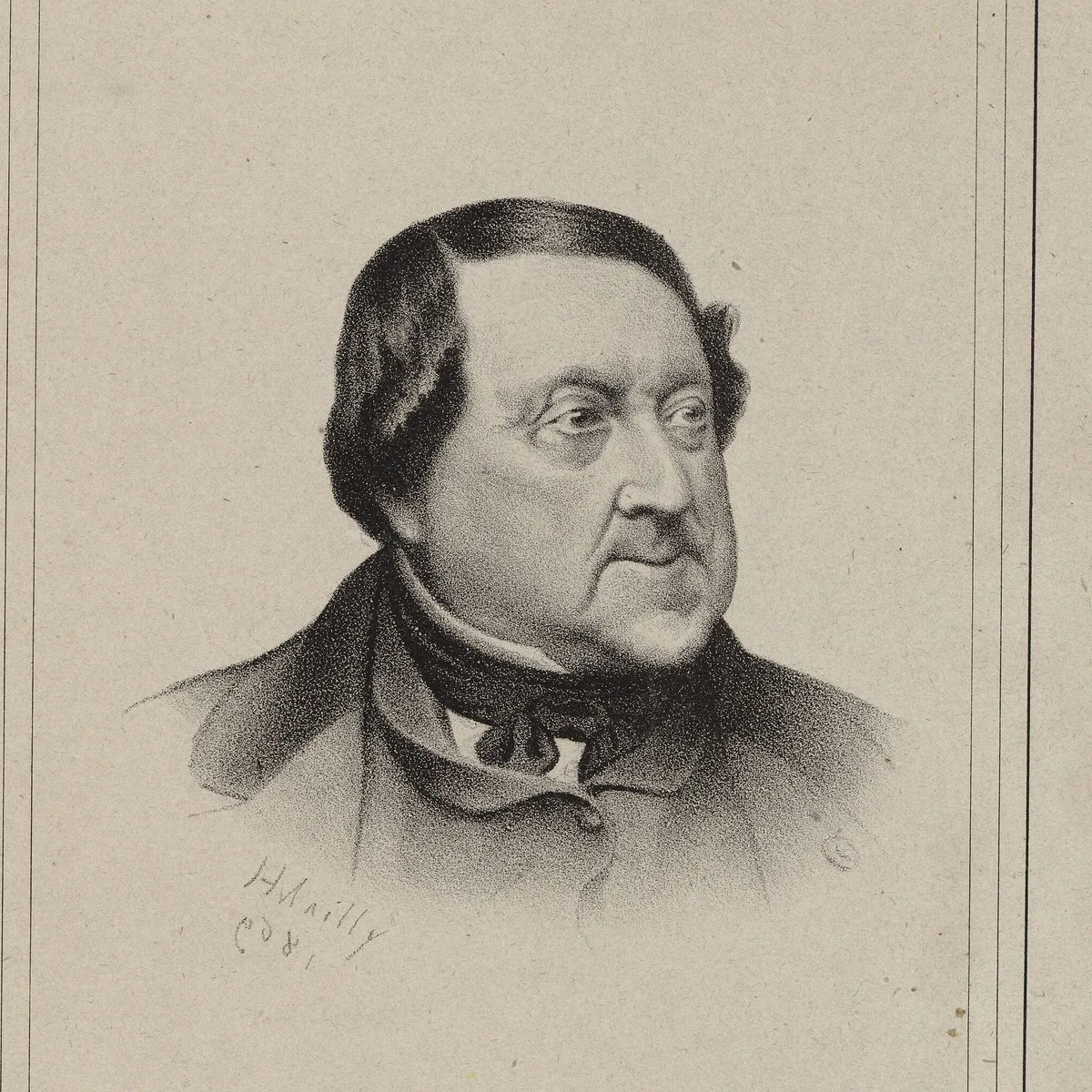
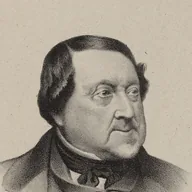
Rossini was born in Pesaro in 1792 and wrote opera for Venice, Milan and Rome before becoming director of the royal theatres in Naples in 1815. He worked in Vienna and London in 1822 to 1824, and from 1824 in Paris, where he directed the Théâtre-Italien and wrote for the Opéra. Guillaume Tell (1829) was his last opera, and he wrote little for decades after it. He died at Passy, Paris, in 1868.
Philip Gossett describes his overtures as sonata movements without development sections, usually preceded by a slow introduction. They have clear melodies, exuberant rhythms, simple harmony and a crescendo climax, and Richard Taruskin notes that the second theme is always announced by a woodwind solo. Rossini also reused overtures. The one for The Barber of Seville (premiered in Rome on 20 February 1816) came from Aureliano in Palmira and Elisabetta, and it contains none of the opera's own themes. La Cenerentola (Rome, 25 January 1817) borrowed an overture from La gazzetta.
The William Tell overture is different, because it paints a scene. It lasts about 12 minutes and plays in four linked parts. Dawn is for five solo cellos over double basses, with quiet timpani rolls. The Storm is for the full orchestra and ends with a solo flute. The Ranz des vaches (call to the cows) is a calm pastoral in G major led by the cor anglais and flute. The finale, the March of the Swiss Soldiers, is an energetic galop in E major announced by trumpets.
What to listen for
- A slow introduction followed by a quick main section, with the second theme announced by a woodwind solo.
- The crescendo: a tune repeated while the orchestra grows louder and more crowded, ending in a bright climax.
- That the Barber and Cenerentola overtures use music from other Rossini operas, so they do not preview the opera's own tunes.
- In William Tell, the five solo cellos at dawn, the cor anglais and flute in the pastoral, then the trumpet call and galloping finale.
Sources: Gioachino Rossini (Wikipedia), The Barber of Seville (Wikipedia), La Cenerentola (Wikipedia), William Tell Overture (Wikipedia)