1866–1925 · Modern
Erik Satie
1 work
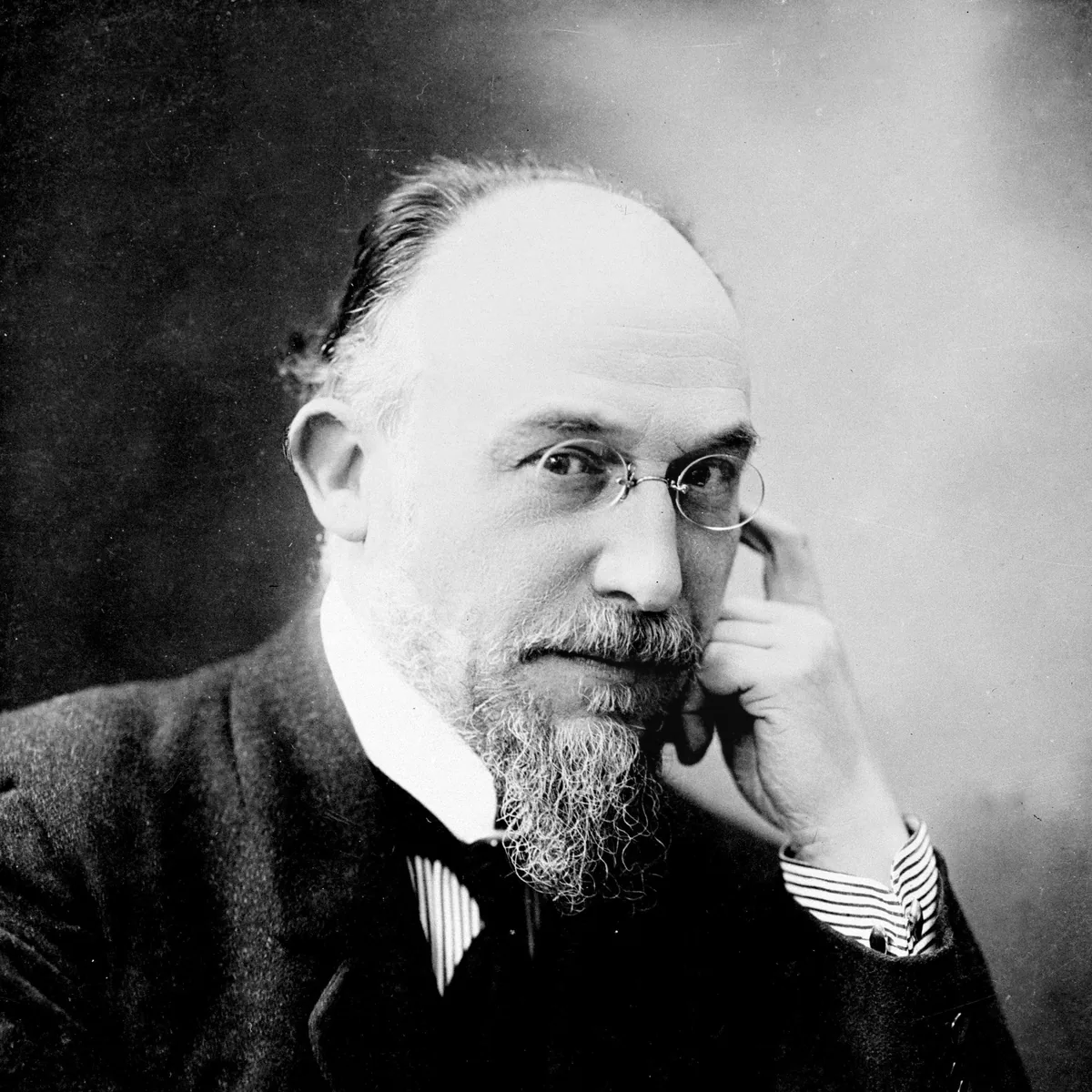
Satie was born in Honfleur in 1866 and died in Paris in 1925. He worked as a pianist in the cabarets of Montmartre, first at the Chat Noir and then at the Auberge du Clou. From 1898 he lived in Arcueil, and as an adult he studied at the Schola Cantorum from 1905 to 1912.
His harmony is often described as built on unresolved chords, and his melodies are generally simple and reflect his interest in old church music, especially Gregorian chant. Some pieces, such as the Gnossiennes, leave out bar lines. Later works carry absurd titles, and he coined the term musique d'ameublement (furniture music) for background music that supports a mood without demanding attention.
The three Gymnopédies for piano were completed by 2 April 1888. The first and third were published that year and the second in 1895. The title comes from the French form of gymnopaedia, an ancient Greek festival. The pieces are in 3/4 time and carry the markings Lent et douloureux (slow and painful), Lent et triste (slow and sad) and Lent et grave (slow and grave). The melodies are set against the harmony with deliberate, mild dissonances, and the opening of No. 1 alternates two major seventh chords, on G and on D. Roger Nichols and Paul Griffiths describe them as pure simplicity, monotonous repetition and highly original modal harmonies. Debussy orchestrated the first and third in February 1897.
What to listen for
- A slow triple time with a gentle, rocking accompaniment, which in No. 1 swings between two major seventh chords.
- Melody notes that rub very mildly against the chords underneath, a deliberate, soft dissonance.
- Simple repetition with almost no development: each phrase comes back much as it was.
- The three different slow moods of the three pieces: painful, sad and grave.