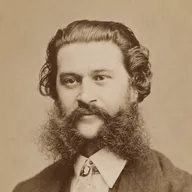
1825–1899 · Romantic
Johann Strauss II
1 work
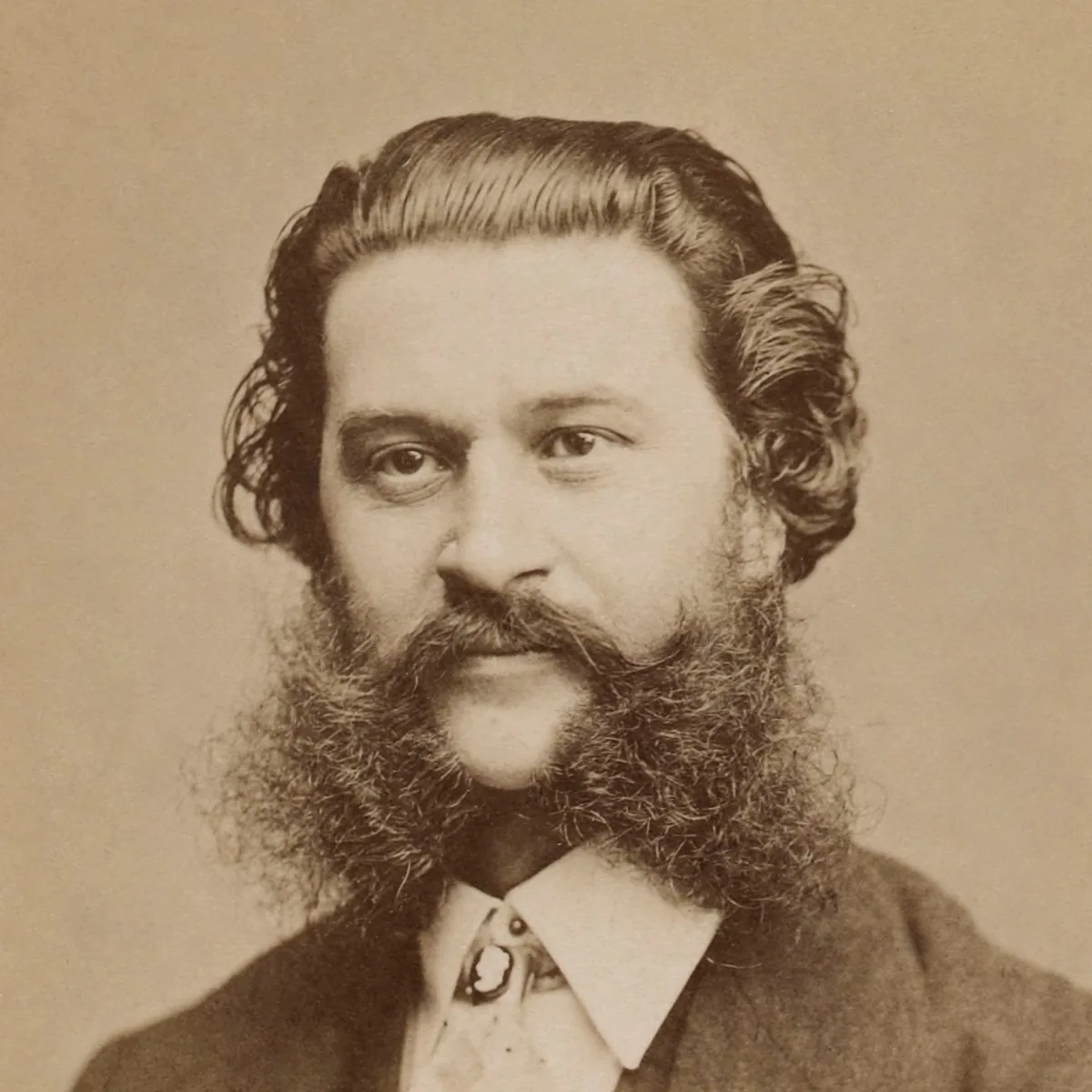
Johann Strauss II was born in Vienna in 1825 and died there in 1899. He was a violinist and conductor who wrote more than 500 waltzes, polkas, quadrilles, marches and other dances, plus several operettas, including Die Fledermaus and Der Zigeunerbaron, and a ballet. In his lifetime he was called the Waltz King. He began as a rival to his father, Johann Strauss I, and was refused the court post of Hofballmusikdirektor several times before he received it in 1863. His music is still played every year at the Vienna New Year's Concert.
The Blue Danube, Op. 314, was composed in 1866 and first performed on 15 February 1867 by the Vienna Men's Choral Association, as a choral waltz with words by the association's poet Joseph Weyl. The orchestral version, prepared for the 1867 Paris World's Fair, became the form in which it is mostly heard. A performance takes about ten minutes.
It is a chain of waltzes rather than a single tune. A long quiet introduction in A major, with tremolo violins and a horn, leads to the first waltz in D major. Four more waltzes follow in contrasting keys and moods, joined by short passages called intradas, and the coda recalls earlier material before a bright ending.
What to listen for
- The introduction: shimmering tremolo violins, a horn calling the waltz theme over soft staccato winds, a brief turn to D major, and then the first waltz begins.
- The first waltz tune itself, a gently rising triad figure in cellos and horns over harp, with the waltz beat accented at the end of each three-note phrase.
- Waltzes 2 to 5, each with its own key and mood (B-flat major, G major, F major and F-sharp minor), separated by short intradas.
- The climax of the fifth waltz, marked by cymbal crashes.
- The coda, which recalls earlier waltzes and the opening theme, and ends with a snare drum roll and a bright flourish.
Sources: Johann Strauss II (Wikipedia), The Blue Danube (Wikipedia)