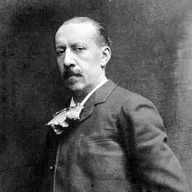
1844–1937 · Late Romantic
Charles-Marie Widor
1 work
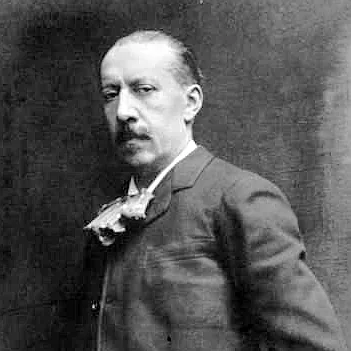
Widor was born in Lyon and died in Paris. He was organist of Saint-Sulpice in Paris from January 1870 until the end of 1933, and he taught organ at the Paris Conservatoire from 1890 to 1896, succeeding César Franck, then composition. His ten organ symphonies are the part of his output still regularly played.
The organs of Aristide Cavaillé-Coll, like the one at Saint-Sulpice, had a warmer sound, many stops, and smooth crescendos and diminuendos. These qualities invited an orchestral, symphonic way of writing for the organ.
The Toccata closes the Symphony No. 5 in F minor, Op. 42 No. 1 (1879), a five-movement work. It is in F major and is his best-known piece for the organ, often played as a wedding recessional. Its texture is a stream of rapid staccato arpeggios, grouped in one-bar phrases that begin in F and move by fifths through C major, G major and beyond, with a melody joined by syncopated chords. It has been described as the first of the French Romantic organ toccatas, and Gigout, Boëllmann, Vierne and Dupré followed it. Widor himself played it deliberately and recorded it at Saint-Sulpice at a quite slow tempo, while many organists take it much faster.
What to listen for
- A tireless stream of fast, detached arpeggios, in one-bar phrases that shift key by fifths.
- Syncopated chords that support the melody and give it its drive.
- Gradual swells of volume, which the Cavaillé-Coll organ makes possible, as if a large orchestra were playing.
- How fast it is taken: Widor preferred a steady, controlled tempo, and many players go much quicker.
Sources: Charles-Marie Widor (Wikipedia), Symphony for Organ No. 5 (Wikipedia)