1833–1887 · Romantic
Alexander Porfiryevich Borodin
1 work
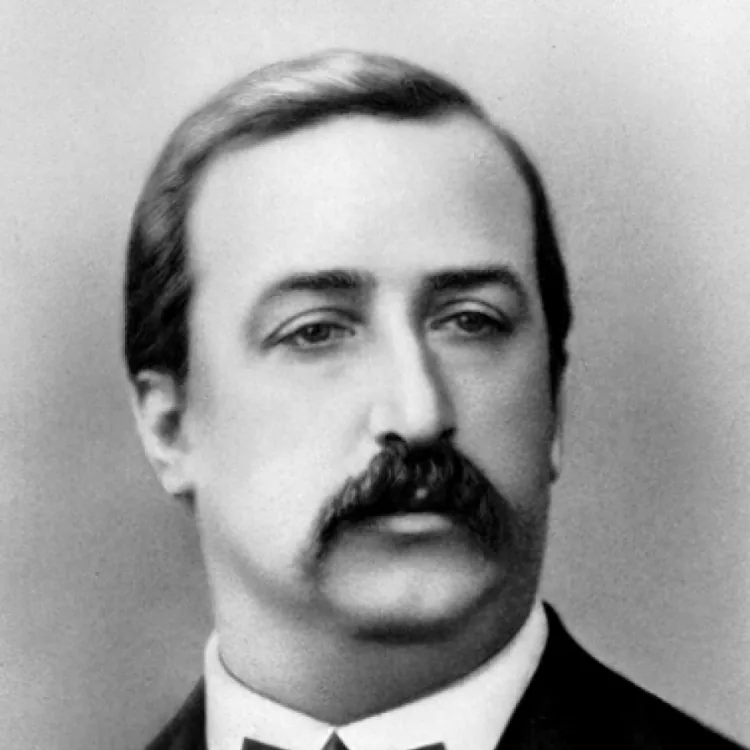
Borodin was a professional chemist who composed in his spare time. He studied with Balakirev from 1862 and belonged to The Five, the Russian nationalist group. His main works are two symphonies, two string quartets, the symphonic poem In the Steppes of Central Asia and the opera Prince Igor, which he left unfinished when he died suddenly in Saint Petersburg in 1887.
His music is noted for strong lyricism and rich harmony in a Russian manner with some Western influence. Because he wrote in odd moments, pieces took years. The Second Symphony in B minor was begun in 1869, its piano score finished in 1873, and the orchestration of the last three movements done in 1875. The full score was lost in 1876, so he re-orchestrated the outer movements. Eduard Nápravník conducted the first performance in 1877; Borodin thinned the heavy brass in 1879, and Rimsky-Korsakov led the revised version.
Vladimir Stasov called the symphony "Heroic" (Bogatyrskaya), linking it to the world of Prince Igor, and reported Borodin's programme: warrior-heroes assembling in the first movement, a minstrel in the slow movement, a feast of heroes in the finale. The first movement is in sonata form, with an opening theme built on an octatonic scale (alternating whole tones and semitones) and a second theme in D major. The scherzo alternates four- and five-bar phrases. The finale uses a pentatonic theme and Slavic dances in mixed metres with syncopation.
What to listen for
- The first movement's opening theme, which uses an octatonic scale and is the seed of the movement. The D major second theme brings the contrast.
- In the scherzo, phrases that alternate four and five bars, which give a hurried, lurching feel.
- The slow movement framed by clarinet and horn solos over harp, which Stasov linked to a minstrel.
- The finale: a pentatonic theme in violins and violas, then Slavic dances in mixed metres with syncopation.
- The scherzo's contrasting Allegretto trio, a calmer interlude between the fast outer sections.
Sources: Alexander Borodin (Wikipedia), Symphony No. 2 (Borodin) (Wikipedia)