1854–1928 · Modern
Leoš Janáček
3 works
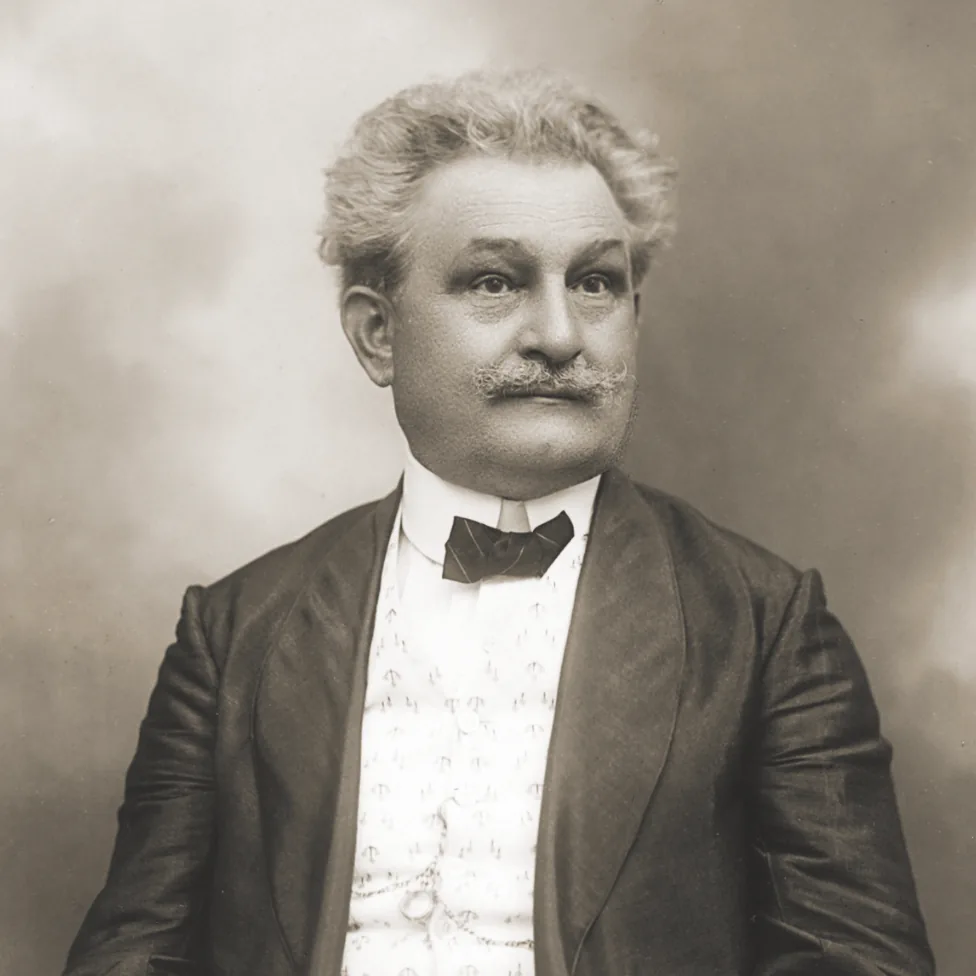
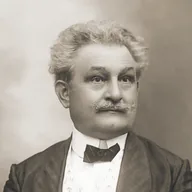
Janáček was born in Hukvaldy, Moravia, in 1854 and died in Ostrava in 1928. He led the Brno organ school from 1881 until 1919, when it became the Brno Conservatory. For much of his life he researched Moravian and Slovak folk music, and he arranged more than 150 folk songs with piano. His best-known works, such as the operas Káťa Kabanová and The Cunning Little Vixen and the Glagolitic Mass, date from the last decade of his life. He based vocal melody on the rhythm and pitch of spoken Czech, which he called speech melodies. He also used short motifs repeated to build momentum, irregular rhythms, and modal rather than strictly key-based harmony.
The three catalog works span 1905 to 1926. The Piano Sonata 1.X.1905 was begun right after 1 October 1905, when a worker, František Pavlík, was bayoneted at a demonstration in Brno supporting a Czech university; Janáček meant it as a tribute. It was first played in Brno on 27 January 1906 by Ludmila Tučková. He burned a third movement, a funeral march, before the premiere, and later threw the other two into the Vltava; the work was lost until 1924, when Tučková announced she owned a copy.
The String Quartet No. 1, Kreutzer Sonata, was written in October 1923. It is based on Tolstoy's novella, and it was first played by the Czech Quartet in Prague on 17 October 1924. The Sinfonietta (1926), first called Military Sinfonietta, is dedicated to the Czechoslovak Army. Janáček was inspired by a brass band and wrote fanfares; the organisers of a Sokol gymnastic festival then commissioned a work, and he expanded the material into five movements for a very large brass section. It was first played in Prague on 26 June 1926 under Václav Talich.
What to listen for
- In the Sinfonietta, a first movement for brass and percussion only, the fanfare that comes back, now triumphant, in the fifth and last movement.
- The fast woodwind ostinato (a short figure repeated) that opens the second movement of the Sinfonietta, followed by a lyrical episode.
- In the First Quartet, short themes that are cut against each other like a montage, rather than developed in the usual way, and modal turns in the melody.
- In the piano sonata, two surviving movements in E-flat minor: Presentiment (Con moto) and Death (Adagio).
- Across all three works, motifs of a few notes that repeat and push the music forward.
Sources: Leoš Janáček (Wikipedia), Sinfonietta (Janáček) (Wikipedia), String Quartet No. 1 (Janáček) (Wikipedia), 1. X. 1905 (Wikipedia)