Symphony Atlas

Concerto for Orchestra, Sz. 116

194337 min

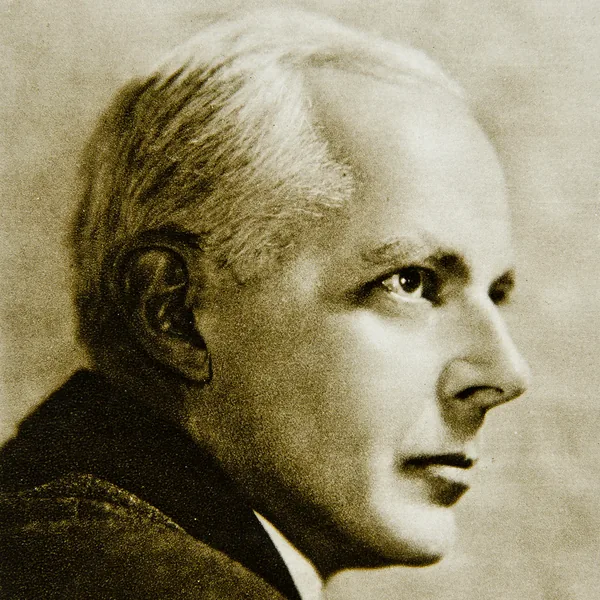
This guide follows Bartók’s Concerto for Orchestra, Sz. 116 (1943) in five parts: Introduzione (sonata form), Giuoco delle coppie, Elegia, Intermezzo interrotto and Finale (sonata form).

Recording: Chicago Symphony Orchestra, Georg Solti

· Música UNAM →

I Introduzione · Sonata form · 6 sections

:
:
  1. I · Sonata form
  2. IIGiuoco delle coppie
  3. III
  4. IV interrotto
  5. V · Sonata form
ISonata form1:27–10:44

A slow, mysterious is built from of fourths and scale , and later themes grow from it. The fast , the , begins with a leaping first for the violins. The is a folk-like tune of narrow range over drones. The includes a brass , a passage where a enters in . The starts with the , and the first after it.

  1. :
  2. :
IIGiuoco delle coppie11:06–17:25

A snare drum alone opens the . Then, in section A, pairs of instruments play in turn, each pair moving in parallel at a fixed interval: bassoons in sixths, oboes in thirds, clarinets in sevenths, flutes in fifths and muted trumpets in seconds. Around the middle a short brass interrupts, and from A1 onward the pairs with fuller scoring. A short ends the .

  1. A
  2. B
  3. C
  4. A1
  5. B1
III17:37–23:53

The slow centre of the work and a typical example of Bartók's “night music”. Three themes, mostly drawn from the first , are framed by a misty of tiny , and a keening oboe is one of the voices. The order is A, B, C, then B and A in reverse, which gives the its arch shape. A follows.

  1. A
  2. B
  3. C
  4. B1
  5. A1
IV interrotto24:17–28:23

An leads to a flowing melody in changing metres (A), then a (B), and A . The interruption starts with C: a crude marching tune widely heard as the of Shostakovich's Seventh Symphony, which itself echoes Lehár's operetta The Merry Widow. Bartók mocks it with woodwind trills and brass glissandi (slides). B comes back, and then the begins.

  1. A
  2. B
  3. A1
  4. C
  5. B1
VSonata form28:42–38:02

A horn () launches a perpetual-motion first for the strings. After a , the offers a contrast. The is built largely from a series of fugues. The follows, then another , and in the the whole orchestra drives to the close. Bartók's 1945 revision lengthened this ending.

  1. :
  2. :

Section boundaries in music are not always sharp; a transition may be felt over a pause or a held chord.

At a glance

  1. I. IntroduzioneSonata form · 9 min · 521 bars · dotted quarter note ≈ 73 bpm
  2. II. Giuoco delle coppie6 min · 262 bars · quarter note ≈ 86 bpm
  3. III. Elegia6 min · 128 bars · quarter note ≈ 64 bpm
  4. IV. Intermezzo interrotto4 min · 151 bars
  5. V. FinaleSonata form · 9 min · 630 bars · quarter note ≈ 141 bpm

Instruments: Piccolo, Flute, Oboe, English horn, Clarinet, Bass clarinet, Bassoon, Contrabassoon, Horn, Trumpet, Trombone, Tuba, Timpani, Percussion, Harp, Violin, Violin I, Violin II, Viola, Cello, Double bass

Questions

How long is Concerto for Orchestra, Sz. 116?
About 37 min in this recording, in 5 movements: I 9 min, II 6 min, III 6 min, IV 4 min and V 9 min.
What form are its movements in?
I: sonata form and V: sonata form.
Which instruments play in Concerto for Orchestra, Sz. 116?
Piccolo, Flute, Oboe, English horn, Clarinet, Bass clarinet, Bassoon, Contrabassoon, Horn, Trumpet, Trombone, Tuba, Timpani, Percussion, Harp, Violin, Violin I, Violin II, Viola, Cello and Double bass.
How fast is it played?
In this recording, measured from the score: I dotted quarter note ≈ 73 bpm, II quarter note ≈ 86 bpm, III quarter note ≈ 64 bpm and V quarter note ≈ 141 bpm.
Report a timing error

More by Bartók

See all →

More in sonata form

See all →

In listening paths

See all →

Path 27

20th-century classical music

Twelve directions the century took, from Schoenberg's Verklärte Nacht of 1899 to Piazzolla's tango of 1982.

Schoenberg → Ives → Bartók → Holst → Gershwin → Barber → Prokofiev → Copland → Ligeti → Górecki → Piazzolla

12 works · 4 h 14 min

In the catalog

Béla BartókOrchestral worksModern periodSonata form

Join Symphony Atlas

Continue with GoogleCreate account

Have one? Sign in