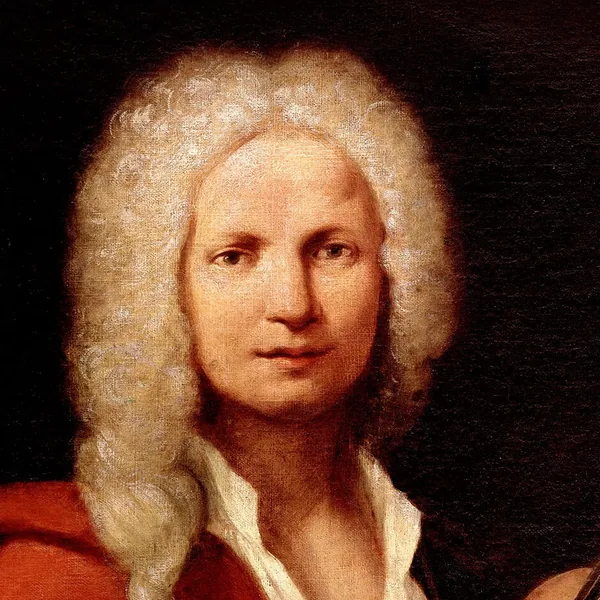
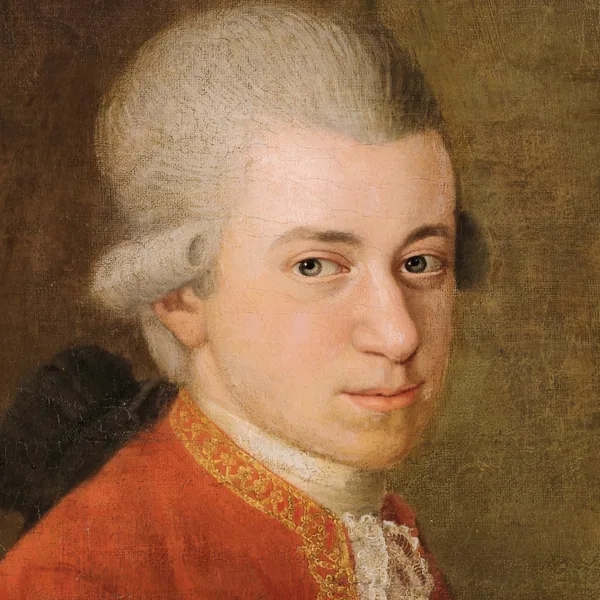
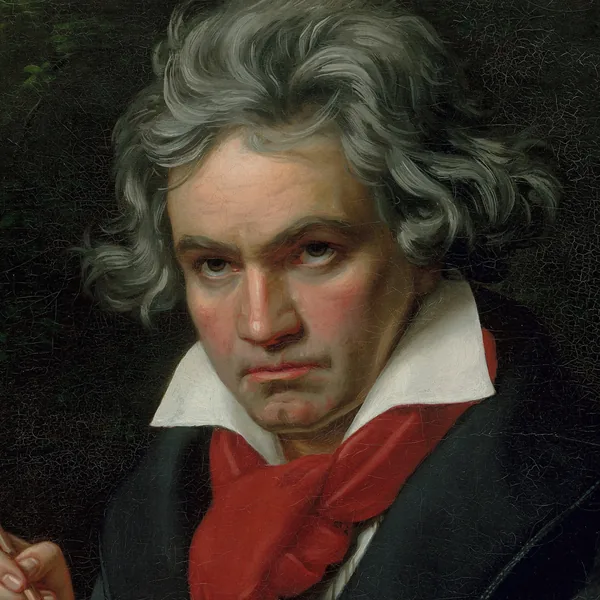
Path 01
Start here
Ten well-known works to learn the map on, each open in full to everyone.
Pachelbel → Bach → Vivaldi → Mozart → Beethoven → Schubert → Chopin → Dvořák → Debussy
Listening paths · Path 27
Twelve directions the century took, from Schoenberg's Verklärte Nacht of 1899 to Piazzolla's tango of 1982.
No single style holds the twentieth century together. Schoenberg began in late Romantic harmony, Bartók drew on folk rhythm and hammered the piano like a drum, Gershwin brought jazz into the concert hall, Copland and Barber found an American voice, Ligeti wrote clouds of sound in which no single line can be followed, and Górecki slowed music almost to stillness. This path takes one work from each direction, in the order they were written.
 SchoenbergVerklärte Nacht, Op. 4
1899, on the century's threshold: one long movement after Richard Dehmel's poem about two lovers walking through a moonlit wood. The dark D minor opening pictures the walk; in the second part the music grows warmer as the night is transfigured.
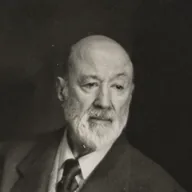 IvesThe Unanswered Question
Three layers at once, each at its own speed: strings that barely move, a trumpet asking the same question seven times, and flutes whose answers grow faster and more dissonant until they give up. After Question 7 nothing answers.
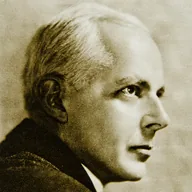 BartókAllegro barbaro, Sz. 49
Bartók treats the piano almost as a drum, and the title is said to answer Paris critics who called his music barbaric. The tune of A is mostly pentatonic, the harmony around it chromatic, and the hammering hardly relents before the Coda.
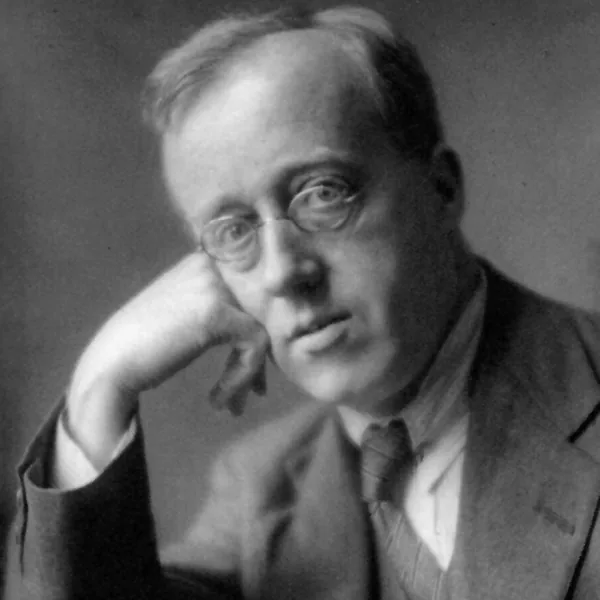
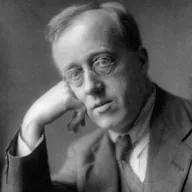 HolstThe Planets, Op. 32
Each planet as astrology describes its character. Mars marches in five beats to the bar, Venus brings calm after it, and in Jupiter the broad middle tune, later fitted with words as a hymn, stands between the livelier ones.
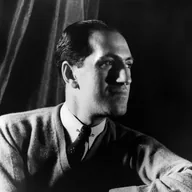 GershwinRhapsody in Blue
Jazz enters the concert hall, written in about five weeks for Paul Whiteman's band in 1924. It opens with the clarinet's rising slide, and the same blues-scale ideas come back through sections B to F, from stride piano to the full orchestra.
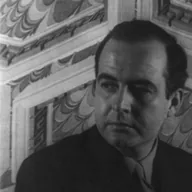 BarberAdagio for Strings, Op. 11
One long melody moving by step, passed from the first violins to the viola, then the cello, then high in the first violins again. Follow it through the Climax build to the pause after the peak, and the quiet return of the opening.
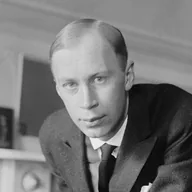 ProkofievPeter and the Wolf, Op. 67
Written in 1936 to introduce children to the orchestra. In Introducing the characters each gets an instrument and a theme: Peter the strings, the bird a flute, the duck an oboe, the cat a low clarinet, the grandfather a bassoon.
BartókConcerto for Orchestra, Sz. 116Written in about eight weeks in 1943, when Bartók, ill and far from Hungary, had almost stopped composing. Every group takes a solo turn: in Giuoco delle coppie instruments arrive in pairs at fixed intervals, and the Intermezzo interrotto is broken off by a mocking march (C).
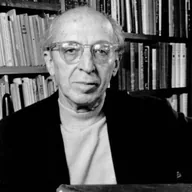 CoplandAppalachian Spring Suite
American open spaces, from Copland's ballet for Martha Graham set in rural Pennsylvania. Eight sections run without a break; at F the clarinet sings the Shaker tune Simple Gifts, and five variations follow before the Coda.
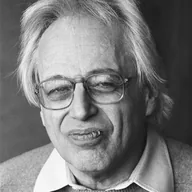 LigetiLux aeterna
Sound masses in place of melody: sixteen unaccompanied voices sing nearly the same line, entering a hair apart, so the words melt into a slowly shifting cloud. In B′ the basses sing “Domine” very low, forming the only conventional chord in the piece.
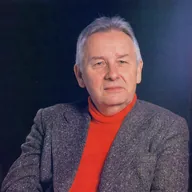 GóreckiSymphony No. 3, Op. 36
A turn to slow, plain, modal music in 1976: three laments about a mother and a child, sung by a soprano. The first movement is a canon that the double basses begin, each new voice a fifth higher, until eight parts are sounding.
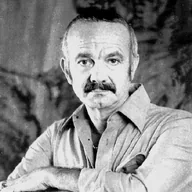 PiazzollaOblivion
Tango closes the century: a long, melancholy melody over a bass that never loses its slow tango pulse. The plan could hardly be simpler – A, a short B played twice, then A′.
Path 01
Ten well-known works to learn the map on, each open in full to everyone.
Pachelbel → Bach → Vivaldi → Mozart → Beethoven → Schubert → Chopin → Dvořák → Debussy
Path 02
Twelve symphonies from Mozart's Fortieth to Shostakovich's Fifth, the core of the concert repertoire.
Mozart → Haydn → Beethoven → Schubert → Berlioz → Mendelssohn → Brahms → Mahler → Tchaikovsky → Dvořák → Shostakovich
Path 03
Twelve slow, quiet pieces, from Chopin's lullaby to Pärt's Fratres.
Chopin → Liszt → Wagner → Debussy → Massenet → Fauré → Grainger → Delius → Williams → Rachmaninoff → Pärt
Path 04
Ground bass, ritornello, fugue and dance: the Baroque in twelve works, from Purcell to Bach's Musical Offering.
Purcell → Pachelbel → Bach → Vivaldi → Handel → Scarlatti
Path 05
The form behind most first movements, heard twelve times, from a small sonata to a symphony.
Mozart → Haydn → Beethoven → Schubert → Mendelssohn → Brahms → Prokofiev
Path 06
Haydn's two London visits, 1791–95: six of the symphonies he wrote there, three piano sonatas, and what he took home to Vienna.
Haydn
Path 07
Short, complete works for a single sitting.
Bach → Mozart → Haydn → Beethoven → Schubert → Mendelssohn → Saint-Saëns → Sibelius → Ravel → Debussy → Gershwin → Copland
Path 08
Four players across almost two centuries: Haydn shapes the conversation, Bartók breaks it open, Shostakovich turns it inward.
Haydn → Mozart → Schubert → Beethoven → Dvořák → Debussy → Reger → Bartók → Shostakovich
Path 09
One work for each kind in the catalog, from the symphony to choral music.
Beethoven → Vivaldi → Debussy → Holst → Dvořák → Mozart → Chopin → Scarlatti → Bach → Schubert → Strauss → Handel
Path 10
From the First of 1800 to the Choral of 1824, in the order Beethoven wrote them.
Beethoven
Path 11
Soloist and orchestra across two and a half centuries, from Bach's harpsichord to Rostropovich's cello.
Bach → Vivaldi → Mozart → Beethoven → Mendelssohn → Tchaikovsky → Dvořák → Rachmaninoff → Ravel → Shostakovich
Path 12
Eleven short pieces from Field to Grieg, each holding one mood.
Field → Schubert → Mendelssohn → Chopin → Schumann → Liszt → Tchaikovsky → Rachmaninoff → Brahms → Grieg
Path 13
A poem, a voice and a piano, later an orchestra: from Schubert's first masterpieces to Strauss's last songs.
Schubert → Schumann → Wagner → Mahler → Debussy → Fauré → Strauss
Path 14
Two ways of making much from little: a theme changed again and again, and a subject passed from voice to voice.
Bach → Mozart → Haydn → Beethoven → Mendelssohn → Brahms → Elgar
Path 15
Fauré, Satie, Debussy, Chausson, Dukas and Ravel, from 1887 to 1920.
Fauré → Satie → Debussy → Chausson → Dukas → Ravel
Path 16
From Glinka to Shostakovich: a century of Russian music, in the order it was written.
Glinka → Balakirev → Mussorgsky → Borodin → Rimsky-Korsakov → Tchaikovsky → Rachmaninoff → Scriabin → Prokofiev → Shostakovich
Path 17
Nocturne, étude, mazurka, scherzo, ballade, polonaise, waltz: Chopin's genres in twelve works, in the order he wrote them.
Chopin
Path 18
Mozart in twelve works, from a motet written at sixteen to the Requiem he left unfinished.
Mozart
Path 19
Brahms in twelve works, from the First Piano Concerto to the last of his piano pieces.
Brahms
Path 20
Twelve piano sonatas from Mozart and Haydn to Prokofiev's war sonata of 1942.
Mozart → Haydn → Beethoven → Schubert → Chopin → Liszt → Berg → Bartók → Prokofiev
Path 21
Two French composers side by side, often compared and often confused, from 1891 to Boléro in 1928.
Debussy → Ravel
Path 22
Ten violin concertos, from Beethoven's of 1806 to Sibelius's of 1904.
Beethoven → Paganini → Mendelssohn → Wieniawski → Bruch → Lalo → Brahms → Tchaikovsky → Dvořák → Sibelius
Path 23
The late Romantic orchestra at its largest: Bruckner's and Mahler's symphonies and Strauss's tone poems, 1880 to 1945.
Bruckner → Mahler → Strauss
Path 24
Folk songs, dances and landscapes, from Liszt's Hungary to Márquez's Mexico.
Liszt → Smetana → Grieg → Albéniz → Dvořák → Sibelius → Elgar → Williams → Janáček → Villa-Lobos → Rodrigo → Márquez
Path 25
Choirs from Handel's coronation anthem to Ligeti's cloud of voices: masses, requiems and psalms, 1727 to 1966.
Handel → Mozart → Brahms → Verdi → Fauré → Orff → Messiaen → Bernstein → Ligeti
Path 26
Twelve overtures from Mozart's Figaro to Bernstein's Candide, each a complete piece in a few minutes.
Mozart → Beethoven → Rossini → Weber → Mendelssohn → Wagner → Berlioz → Offenbach → Brahms → Tchaikovsky → Bernstein