Path 01
Start here
Ten well-known works to learn the map on, each open in full to everyone.
Pachelbel → Bach → Vivaldi → Mozart → Beethoven → Schubert → Chopin → Dvořák → Debussy
Listening paths · Path 24
Folk songs, dances and landscapes, from Liszt's Hungary to Márquez's Mexico.
From the middle of the nineteenth century composers across Europe, and later the Americas, looked for the sound of their own country: its folk songs and dances, its rivers and legends. Smetana followed the Vltava through Bohemia, Grieg wrote music for Ibsen's Norwegian play, Sibelius gave Finland a hymn of its own, and in the twentieth century Villa-Lobos, Rodrigo and Márquez carried the idea to Brazil, Spain and Mexico. The works run in the order they were written, from 1847 to 1994.
 LisztHungarian Rhapsody No. 2 in C-sharp minor, S. 244/2
Liszt follows the Hungarian pattern of a slow lassan and a fast friska, though the opening theme turns out to be Romanian. The friska starts quietly and gathers speed, ending in a rush of octaves over almost the whole keyboard.
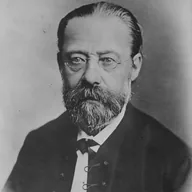 SmetanaVltava (The Moldau), from Má vlast, JB 1:112/2
Bohemia's river from its two springs to Prague. Between scenes on its banks – a Forest Hunt, a Peasant Wedding, nymphs by Moonlight, the St. John’s Rapids – the river theme returns, and the Vyšehrad Motif greets the old castle above the city.
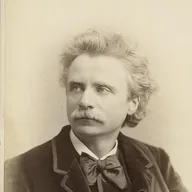 GriegPeer Gynt Suite No. 1, Op. 46
Four numbers from Grieg's music for Ibsen's play: Morning Mood, with a five-note melody passed between flute and oboe; The Death of Åse, for strings alone; Anitra's Dance; and In the Hall of the Mountain King, one theme growing higher, louder and faster.
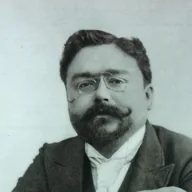 AlbénizAsturias (Leyenda), Op. 47 No. 5
Spain at the piano, though the title was added after Albéniz's death and the music owes more to Andalusian flamenco than to Asturias. A imitates a guitar's repeated open string; B is a delicate song in the manner of a malagueña.
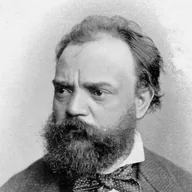 DvořákSymphony No. 9 in E minor, Op. 95
Written in New York by a Czech composer who thought American music could grow from African American and Native American song. Yet in the scherzo the second dance, section B, sounds closer to a Czech folk dance than to anything American.
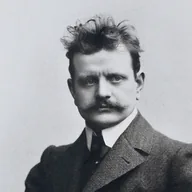 SibeliusFinlandia, Op. 26
Written in 1899 for an event that was a veiled protest against Russian censorship in Finland. After the dark brass chorale and the driving Allegro, the Hymn brings a calm tune often taken for a folk song; it is Sibelius's own.
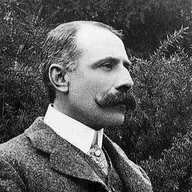 ElgarPomp and Circumstance March No. 1, Op. 39
The title comes from Othello. A brisk march (A) frames the trio (B), whose broad tune, later sung as “Land of Hope and Glory”, is heard first in G major and then in D. The Coda goes back to the march, not the big tune.
Every tune here is an English folk song. In the opening march they are handed round rather than developed: Seventeen Come Sunday in the woodwinds, Pretty Caroline for solo clarinet and cornet, then Dives and Lazarus in the low brass, in 2/4 against 6/8 above.
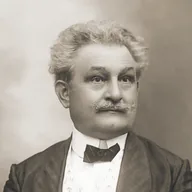 JanáčekSinfonietta
Written for a Sokol gymnastics festival and dedicated to the Czechoslovak army. The inner movements are named after places in Brno – the castle, the Queen's Monastery, the street, the town hall – and the opening brass fanfare returns at the very end.
 Villa-LobosBachianas Brasileiras No. 2
Villa-Lobos set Brazilian folk and popular music to Bach's methods. In the Toccata, The Little Train of the Caipira, percussion and strings set up a chugging rhythm beneath a long, singing melody, and in the Coda the train slows down.
Named after the royal gardens at Aranjuez, south of Madrid. The first movement opens with the guitar strumming a flamenco rhythm of twos against threes; in the Adagio the cor anglais sings first, and the guitar's Cadenza recalls Andalusian “deep song”.
Mexico through the danzón, a couple dance that came from Cuba and made its home in Veracruz. A slow clarinet over the claves opens A, a long chain of sections builds the dance, A′ brings back the opening, and the Coda ends with a stamping close.
Path 01
Ten well-known works to learn the map on, each open in full to everyone.
Pachelbel → Bach → Vivaldi → Mozart → Beethoven → Schubert → Chopin → Dvořák → Debussy
Path 02
Twelve symphonies from Mozart's Fortieth to Shostakovich's Fifth, the core of the concert repertoire.
Mozart → Haydn → Beethoven → Schubert → Berlioz → Mendelssohn → Brahms → Mahler → Tchaikovsky → Dvořák → Shostakovich
Path 03
Twelve slow, quiet pieces, from Chopin's lullaby to Pärt's Fratres.
Chopin → Liszt → Wagner → Debussy → Massenet → Fauré → Grainger → Delius → Williams → Rachmaninoff → Pärt
Path 04
Ground bass, ritornello, fugue and dance: the Baroque in twelve works, from Purcell to Bach's Musical Offering.
Purcell → Pachelbel → Bach → Vivaldi → Handel → Scarlatti
Path 05
The form behind most first movements, heard twelve times, from a small sonata to a symphony.
Mozart → Haydn → Beethoven → Schubert → Mendelssohn → Brahms → Prokofiev
Path 06
Haydn's two London visits, 1791–95: six of the symphonies he wrote there, three piano sonatas, and what he took home to Vienna.
Haydn
Path 07
Short, complete works for a single sitting.
Bach → Mozart → Haydn → Beethoven → Schubert → Mendelssohn → Saint-Saëns → Sibelius → Ravel → Debussy → Gershwin → Copland
Path 08
Four players across almost two centuries: Haydn shapes the conversation, Bartók breaks it open, Shostakovich turns it inward.
Haydn → Mozart → Schubert → Beethoven → Dvořák → Debussy → Reger → Bartók → Shostakovich
Path 09
One work for each kind in the catalog, from the symphony to choral music.
Beethoven → Vivaldi → Debussy → Holst → Dvořák → Mozart → Chopin → Scarlatti → Bach → Schubert → Strauss → Handel
Path 10
From the First of 1800 to the Choral of 1824, in the order Beethoven wrote them.
Beethoven
Path 11
Soloist and orchestra across two and a half centuries, from Bach's harpsichord to Rostropovich's cello.
Bach → Vivaldi → Mozart → Beethoven → Mendelssohn → Tchaikovsky → Dvořák → Rachmaninoff → Ravel → Shostakovich
Path 12
Eleven short pieces from Field to Grieg, each holding one mood.
Field → Schubert → Mendelssohn → Chopin → Schumann → Liszt → Tchaikovsky → Rachmaninoff → Brahms → Grieg
Path 13
A poem, a voice and a piano, later an orchestra: from Schubert's first masterpieces to Strauss's last songs.
Schubert → Schumann → Wagner → Mahler → Debussy → Fauré → Strauss
Path 14
Two ways of making much from little: a theme changed again and again, and a subject passed from voice to voice.
Bach → Mozart → Haydn → Beethoven → Mendelssohn → Brahms → Elgar
Path 15
Fauré, Satie, Debussy, Chausson, Dukas and Ravel, from 1887 to 1920.
Fauré → Satie → Debussy → Chausson → Dukas → Ravel
Path 16
From Glinka to Shostakovich: a century of Russian music, in the order it was written.
Glinka → Balakirev → Mussorgsky → Borodin → Rimsky-Korsakov → Tchaikovsky → Rachmaninoff → Scriabin → Prokofiev → Shostakovich
Path 17
Nocturne, étude, mazurka, scherzo, ballade, polonaise, waltz: Chopin's genres in twelve works, in the order he wrote them.
Chopin
Path 18
Mozart in twelve works, from a motet written at sixteen to the Requiem he left unfinished.
Mozart
Path 19
Brahms in twelve works, from the First Piano Concerto to the last of his piano pieces.
Brahms
Path 20
Twelve piano sonatas from Mozart and Haydn to Prokofiev's war sonata of 1942.
Mozart → Haydn → Beethoven → Schubert → Chopin → Liszt → Berg → Bartók → Prokofiev
Path 21
Two French composers side by side, often compared and often confused, from 1891 to Boléro in 1928.
Debussy → Ravel
Path 22
Ten violin concertos, from Beethoven's of 1806 to Sibelius's of 1904.
Beethoven → Paganini → Mendelssohn → Wieniawski → Bruch → Lalo → Brahms → Tchaikovsky → Dvořák → Sibelius
Path 23
The late Romantic orchestra at its largest: Bruckner's and Mahler's symphonies and Strauss's tone poems, 1880 to 1945.
Bruckner → Mahler → Strauss
Path 25
Choirs from Handel's coronation anthem to Ligeti's cloud of voices: masses, requiems and psalms, 1727 to 1966.
Handel → Mozart → Brahms → Verdi → Fauré → Orff → Messiaen → Bernstein → Ligeti
Path 26
Twelve overtures from Mozart's Figaro to Bernstein's Candide, each a complete piece in a few minutes.
Mozart → Beethoven → Rossini → Weber → Mendelssohn → Wagner → Berlioz → Offenbach → Brahms → Tchaikovsky → Bernstein
Path 27
Twelve directions the century took, from Schoenberg's Verklärte Nacht of 1899 to Piazzolla's tango of 1982.
Schoenberg → Ives → Bartók → Holst → Gershwin → Barber → Prokofiev → Copland → Ligeti → Górecki → Piazzolla