Path 01
Understanding sonata form
The form behind most first movements, heard six times, from a small sonata to a symphony.
Mozart → Haydn → Beethoven → Schubert
Listening paths · Path 02
The last five of the twelve symphonies Haydn wrote for London audiences, 1794–95.
Haydn travelled to London twice, in 1791–92 and 1794–95, and wrote twelve symphonies for its concerts. These five come from the second visit. Each opens with a slow introduction, and each plays with what its audience expected to hear next.
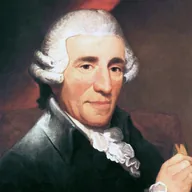 HaydnSymphony No. 100 in G major
The “Military”: triangle, cymbals and bass drum join in the second movement, and a trumpet call sounds near its end.
HaydnSymphony No. 101 in D majorThe “Clock”: in the second movement bassoons and plucked strings tick under the melody.
HaydnSymphony No. 102 in B-flat majorNo nickname of its own. The story of a chandelier that fell at a premiere without hurting anyone belongs to this work, but the name “Miracle” went to No. 96.
HaydnSymphony No. 103 in E-flat majorIt begins with a roll on the timpani alone, and the slow opening returns near the end of the first movement.
HaydnSymphony No. 104 in D majorHaydn's last symphony. The finale's tune sits over a long held bass note, like a drone under a folk song.
Path 01
The form behind most first movements, heard six times, from a small sonata to a symphony.
Mozart → Haydn → Beethoven → Schubert
Path 03
Short, complete works for a single sitting.
Mozart → Beethoven → Haydn → Ravel → Bach → Mendelssohn
Path 04
Four players across a century and a half: Haydn shapes the conversation, Bartók breaks it open.
Haydn → Reger → Bartók