Path 01
Start here
Ten well-known works to learn the map on, each open in full to everyone.
Pachelbel → Bach → Vivaldi → Mozart → Beethoven → Schubert → Chopin → Dvořák → Debussy
Listening paths · Path 02
Twelve symphonies from Mozart's Fortieth to Shostakovich's Fifth, the core of the concert repertoire.
A symphony is a large work for orchestra, usually in four movements: a fast first movement in sonata form, a slow movement, a minuet or scherzo, and a finale. These twelve are the ones concert halls return to most, and together they show how far that plan could stretch in a century and a half: Haydn's loud chord in a quiet movement, Beethoven's chorus, Berlioz's opium dream, Mahler's funeral march on a children's round. They run in the order they were written, from 1788 to 1937.
 MozartSymphony No. 40 in G minor, K. 550
One of only two Mozart symphonies in a minor key. The violas begin before the melody, so the first theme seems already under way, and its sighing half-step returns again and again. In the finale's Development, listen for the quiet passage that uses every note of the chromatic scale except G, the home note.
 HaydnSymphony No. 94 in G major, Hob. I:94
The nickname comes from the Andante. Its plain Theme is played softly, repeated even more softly, and then the whole orchestra strikes one fortissimo chord. Haydn wanted a brilliant London debut; the four variations that follow show how much he could draw from an eight-bar tune.
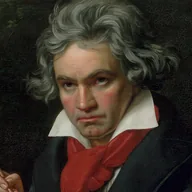 BeethovenSymphony No. 5 in C minor, Op. 67
Three short notes and a long one: the opening figure is heard in almost every bar of the first movement, even in the accompaniment. In the Recapitulation the music halts for a brief, slow oboe solo. Later the scherzo fades over soft timpani and swells without a break into the finale.
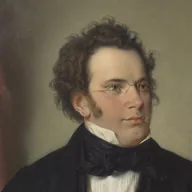 SchubertSymphony No. 8 in B minor, D 759
Only two movements were finished, and they lay unheard for more than forty years. In the first, a four-bar horn transition turns the music to G major, and the cellos sing the lyrical 2nd Subject before the violins take it over; the development later builds to a climax with trombones.
BeethovenSymphony No. 9 in D minor, Op. 125The first symphony by a major composer to bring in voices. Before they arrive, the finale's Introduction recalls each earlier movement in turn; then cellos and basses quietly announce the Ode to Joy theme, which grows through variation after variation until the baritone and chorus take it up.
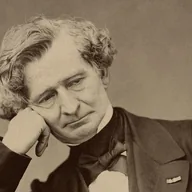 BerliozSymphonie fantastique, Op. 14
A symphony that tells a story, in five movements. Its thread is the idée fixe, the beloved's melody, first heard as the 1st subject of the first movement. Follow it as it becomes a waltz, troubles a pastoral scene, is cut off at the scaffold and returns as a mocking dance at the witches' sabbath.
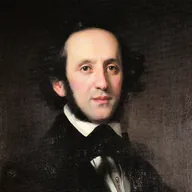 MendelssohnSymphony No. 4 in A major, Op. 90
Mendelssohn expected it to be the jolliest piece he had written. It bursts open in bright A major over pulsing woodwind chords, yet it ends in A minor with a Saltarello, a fast Roman dance that barely pauses for breath from its 1st Subject to the Coda.
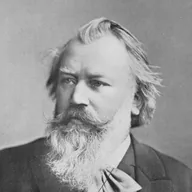 BrahmsSymphony No. 4 in E minor, Op. 98
The thing to hear is the finale: a short theme comes round again and again while the music above it keeps changing, through thirty variations. Trombones play for the first time in the symphony here, and at Variation 27 the winds bring back the first movement's theme.
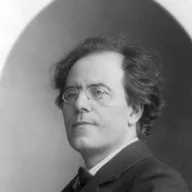 MahlerSymphony No. 1 in D major
Mahler built this symphony from his own songs. In the third movement the round “Frère Jacques”, which he calls “Bruder Martin”, becomes a minor-key funeral march begun by a solo double bass, until a band-like tune with cymbals and bass drum breaks in at B.
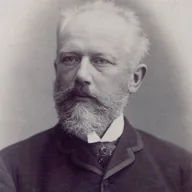 TchaikovskySymphony No. 6 in B minor, Op. 74
Most symphonies end fast and loud; this one ends with an Adagio lamentoso that sinks into silence. On the way, the second movement is a waltz with five beats in the bar, and the third is a scherzo that grows into a march, with bass drum and cymbals heard only there.
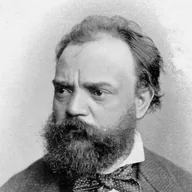 DvořákSymphony No. 9 in E minor, Op. 95
Written in New York, it is held together by its themes. The fanfare-like 1st Subject of the first movement returns in later movements, and the finale's Coda gathers material from all of them, even the Largo's opening chords. In the Largo itself, the cor anglais sings the main melody over muted strings.
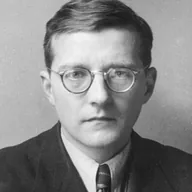 ShostakovichSymphony No. 5 in D minor, Op. 47
Written after Pravda's attack on Shostakovich, it was greeted in 1937 with an ovation of more than half an hour. The question it leaves sits in the finale's Coda: the strings hammer the note A over and over while the timpani pound, and listeners still argue whether the D major ending is joy or force.
Path 01
Ten well-known works to learn the map on, each open in full to everyone.
Pachelbel → Bach → Vivaldi → Mozart → Beethoven → Schubert → Chopin → Dvořák → Debussy
Path 03
Twelve slow, quiet pieces, from Chopin's lullaby to Pärt's Fratres.
Chopin → Liszt → Wagner → Debussy → Massenet → Fauré → Grainger → Delius → Williams → Rachmaninoff → Pärt
Path 04
Ground bass, ritornello, fugue and dance: the Baroque in twelve works, from Purcell to Bach's Musical Offering.
Purcell → Pachelbel → Bach → Vivaldi → Handel → Scarlatti
Path 05
The form behind most first movements, heard twelve times, from a small sonata to a symphony.
Mozart → Haydn → Beethoven → Schubert → Mendelssohn → Brahms → Prokofiev
Path 06
Haydn's two London visits, 1791–95: six of the symphonies he wrote there, three piano sonatas, and what he took home to Vienna.
Haydn
Path 07
Short, complete works for a single sitting.
Bach → Mozart → Haydn → Beethoven → Schubert → Mendelssohn → Saint-Saëns → Sibelius → Ravel → Debussy → Gershwin → Copland
Path 08
Four players across almost two centuries: Haydn shapes the conversation, Bartók breaks it open, Shostakovich turns it inward.
Haydn → Mozart → Schubert → Beethoven → Dvořák → Debussy → Reger → Bartók → Shostakovich
Path 09
One work for each kind in the catalog, from the symphony to choral music.
Beethoven → Vivaldi → Debussy → Holst → Dvořák → Mozart → Chopin → Scarlatti → Bach → Schubert → Strauss → Handel
Path 10
From the First of 1800 to the Choral of 1824, in the order Beethoven wrote them.
Beethoven
Path 11
Soloist and orchestra across two and a half centuries, from Bach's harpsichord to Rostropovich's cello.
Bach → Vivaldi → Mozart → Beethoven → Mendelssohn → Tchaikovsky → Dvořák → Rachmaninoff → Ravel → Shostakovich
Path 12
Eleven short pieces from Field to Grieg, each holding one mood.
Field → Schubert → Mendelssohn → Chopin → Schumann → Liszt → Tchaikovsky → Rachmaninoff → Brahms → Grieg
Path 13
A poem, a voice and a piano, later an orchestra: from Schubert's first masterpieces to Strauss's last songs.
Schubert → Schumann → Wagner → Mahler → Debussy → Fauré → Strauss
Path 14
Two ways of making much from little: a theme changed again and again, and a subject passed from voice to voice.
Bach → Mozart → Haydn → Beethoven → Mendelssohn → Brahms → Elgar
Path 15
Fauré, Satie, Debussy, Chausson, Dukas and Ravel, from 1887 to 1920.
Fauré → Satie → Debussy → Chausson → Dukas → Ravel
Path 16
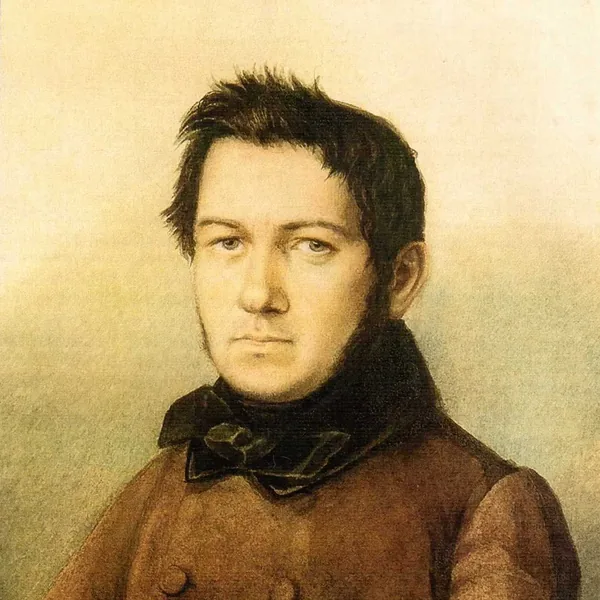
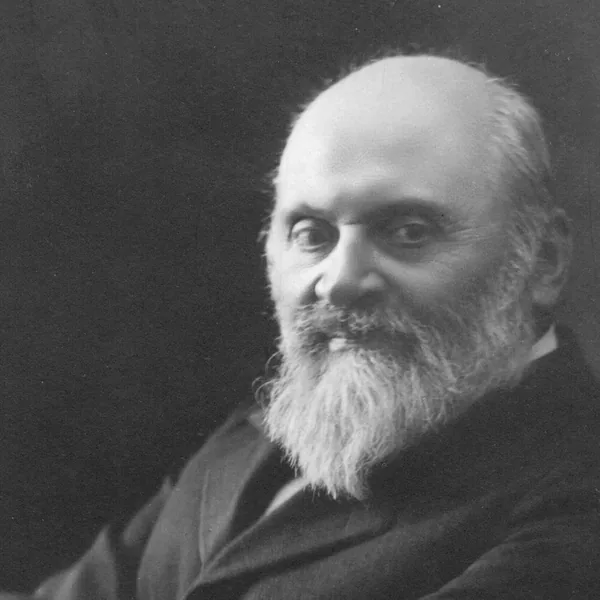
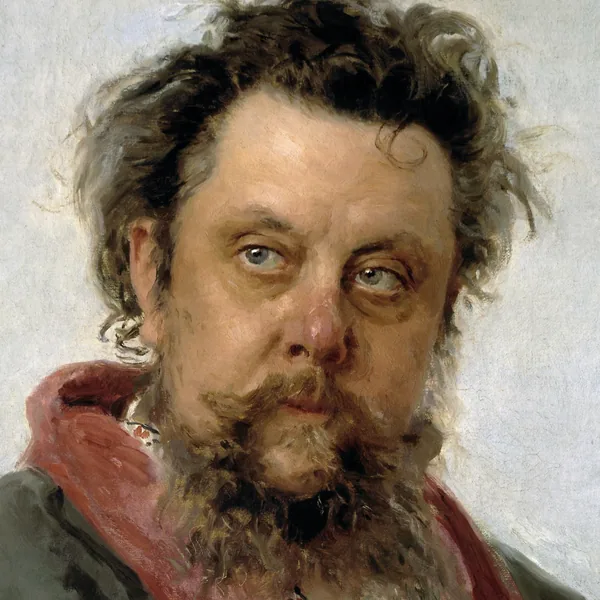
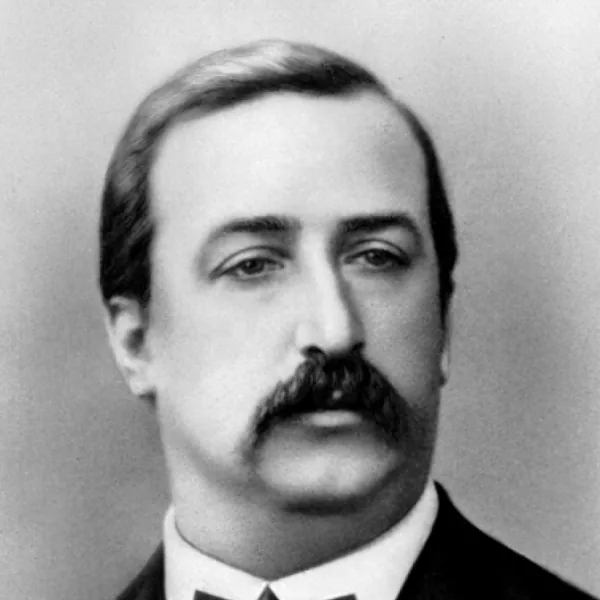
From Glinka to Shostakovich: a century of Russian music, in the order it was written.
Glinka → Balakirev → Mussorgsky → Borodin → Rimsky-Korsakov → Tchaikovsky → Rachmaninoff → Scriabin → Prokofiev → Shostakovich
Path 17
Nocturne, étude, mazurka, scherzo, ballade, polonaise, waltz: Chopin's genres in twelve works, in the order he wrote them.
Chopin
Path 18
Mozart in twelve works, from a motet written at sixteen to the Requiem he left unfinished.
Mozart
Path 19
Brahms in twelve works, from the First Piano Concerto to the last of his piano pieces.
Brahms
Path 20
Twelve piano sonatas from Mozart and Haydn to Prokofiev's war sonata of 1942.
Mozart → Haydn → Beethoven → Schubert → Chopin → Liszt → Berg → Bartók → Prokofiev
Path 21
Two French composers side by side, often compared and often confused, from 1891 to Boléro in 1928.
Debussy → Ravel
Path 22
Ten violin concertos, from Beethoven's of 1806 to Sibelius's of 1904.
Beethoven → Paganini → Mendelssohn → Wieniawski → Bruch → Lalo → Brahms → Tchaikovsky → Dvořák → Sibelius
Path 23
The late Romantic orchestra at its largest: Bruckner's and Mahler's symphonies and Strauss's tone poems, 1880 to 1945.
Bruckner → Mahler → Strauss
Path 24
Folk songs, dances and landscapes, from Liszt's Hungary to Márquez's Mexico.
Liszt → Smetana → Grieg → Albéniz → Dvořák → Sibelius → Elgar → Williams → Janáček → Villa-Lobos → Rodrigo → Márquez
Path 25
Choirs from Handel's coronation anthem to Ligeti's cloud of voices: masses, requiems and psalms, 1727 to 1966.
Handel → Mozart → Brahms → Verdi → Fauré → Orff → Messiaen → Bernstein → Ligeti
Path 26
Twelve overtures from Mozart's Figaro to Bernstein's Candide, each a complete piece in a few minutes.
Mozart → Beethoven → Rossini → Weber → Mendelssohn → Wagner → Berlioz → Offenbach → Brahms → Tchaikovsky → Bernstein
Path 27
Twelve directions the century took, from Schoenberg's Verklärte Nacht of 1899 to Piazzolla's tango of 1982.
Schoenberg → Ives → Bartók → Holst → Gershwin → Barber → Prokofiev → Copland → Ligeti → Górecki → Piazzolla