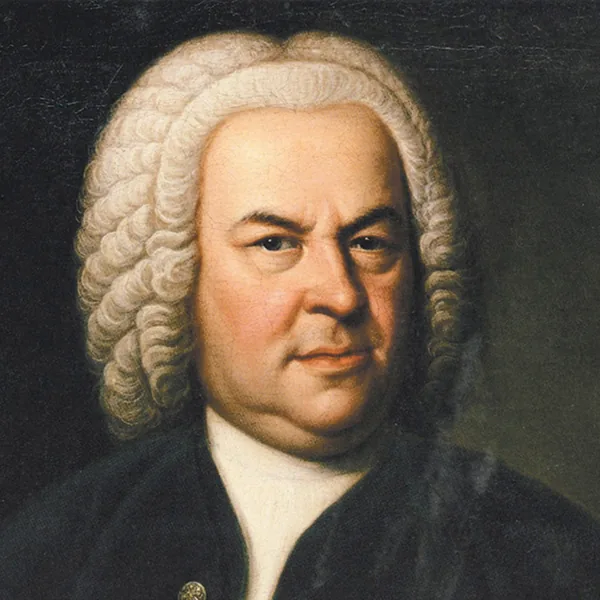
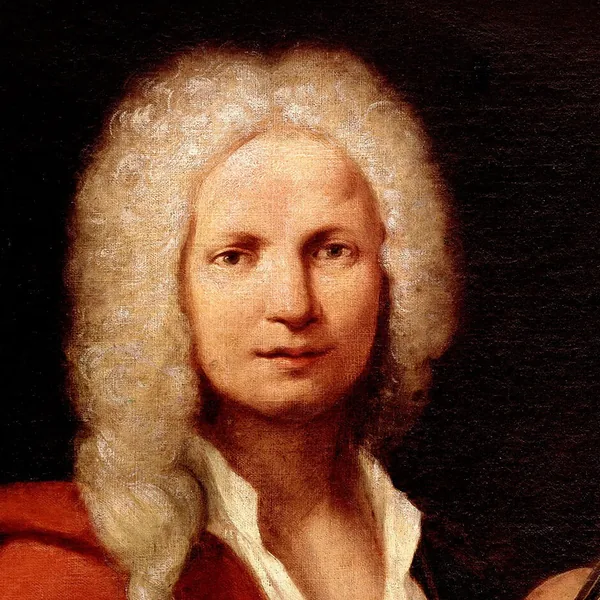
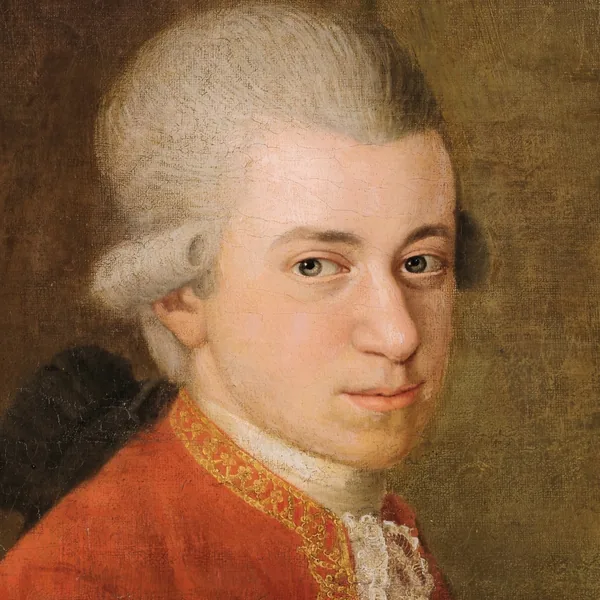
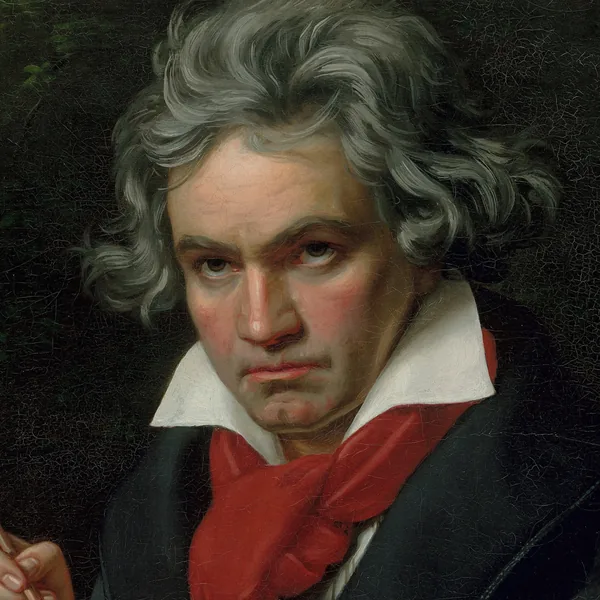
Path 01
Start here
Ten well-known works to learn the map on, each open in full to everyone.
Pachelbel → Bach → Vivaldi → Mozart → Beethoven → Schubert → Chopin → Dvořák → Debussy
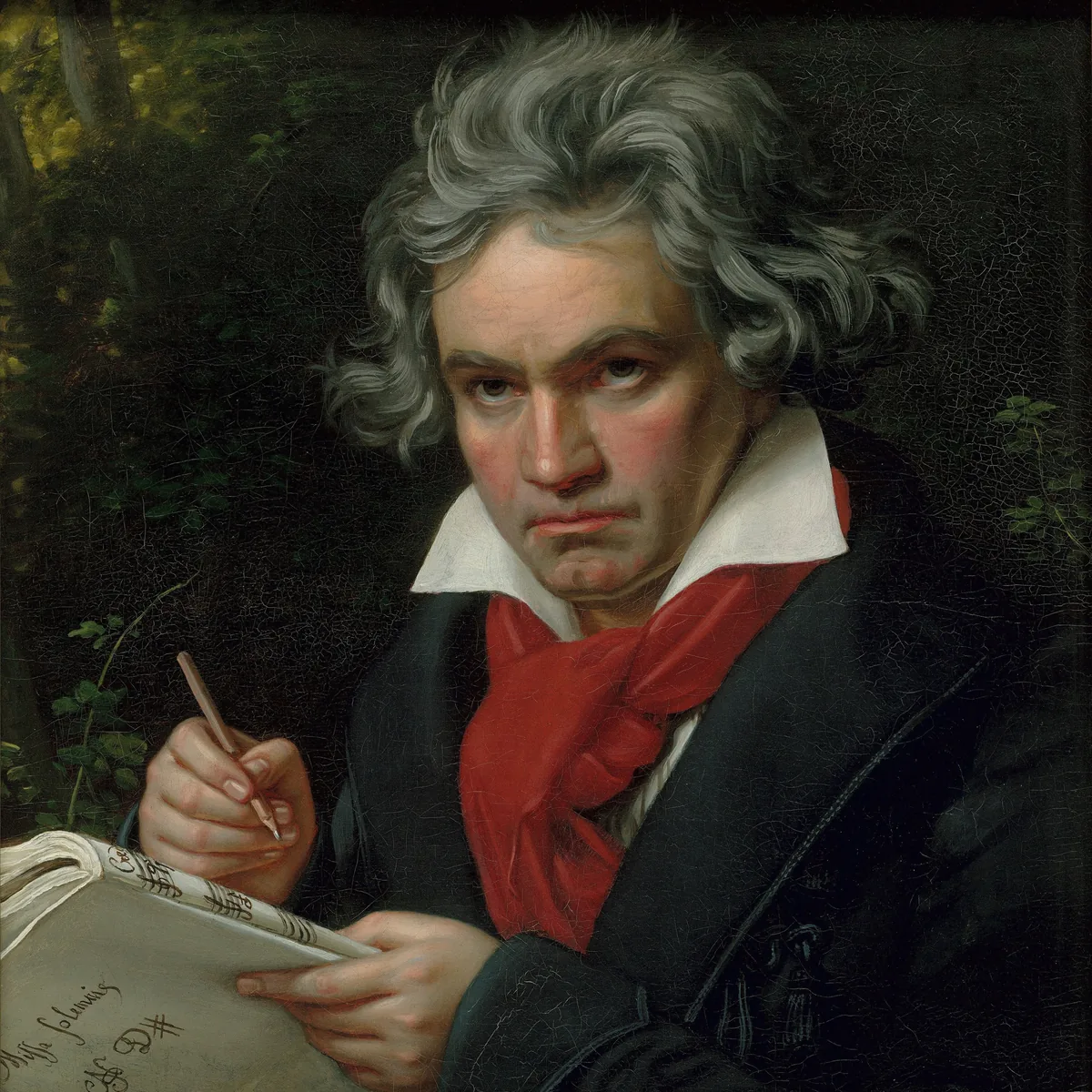
This guide follows Beethoven’s Symphony No. 5 in C minor, Op. 67 (1808) in three parts: Allegro con brio (sonata form), Andante con moto (theme and variations) and Allegro (sonata form).
I Allegro con brio · Sonata form · 10 sections
Nearly everything grows from the four-note figure that opens the : three short notes and one long. It is heard in almost every , in the accompaniment as well as in the tunes. A horn call leads into the lyrical , in E-flat major. Then the begins. In the the music stops for a short, slow oboe before the . The closes the .
Two themes take turns and are varied each time. In A-flat major, violas and cellos sing the (A), and it in new guises as A1, A2 and A3. The (B) moves from A-flat toward C major. It comes back as B1 and B2. Short transitions the sections, and then a long begins.
Two movements run together here. The , in C minor, opens with hushed cellos and basses, answered by a loud horn . The C major (B) begins with a for cellos and basses. The in quiet strings, and at its close it fades over soft timpani, then a long crescendo bursts into the . In the come the and then a quiet of the 's horn , which leads to the ; the speeds up and ends with 29 of C major chords.
Section boundaries in music are not always sharp; a transition may be felt over a pause or a held chord.

 BeethovenSymphony No. 1 in C major, Op. 21BeethovenSymphony No. 2 in D major, Op. 36BeethovenSymphony No. 3 in E-flat major, Op. 55BeethovenSymphony No. 4 in B-flat major, Op. 60BeethovenSymphony No. 6 in F major, Op. 68BeethovenSymphony No. 7 in A major, Op. 92BeethovenSymphony No. 8 in F major, Op. 93BeethovenSymphony No. 9 in D minor, Op. 125FreeBeethovenRondo in A major, WoO 49BeethovenPiano Concerto No. 2 in B-flat major, Op. 19
 BachTrio Sonata No. 1 in E-flat major, BWV 525
 HaydnSymphony No. 1 in D major, Hob. I:1HaydnHorn Concerto in D major, Hob. VIId:3HaydnPiano Sonata in A-flat major, Hob. XVI:46HaydnPiano Sonata in C minor, Hob. XVI:20HaydnString Quartet in A major, Op. 20 No. 6HaydnString Quartet in C major, Op. 20 No. 2HaydnString Quartet in D major, Op. 20 No. 4HaydnString Quartet in E-flat major, Op. 20 No. 1HaydnString Quartet in F minor, Op. 20 No. 5
Path 01
Ten well-known works to learn the map on, each open in full to everyone.
Pachelbel → Bach → Vivaldi → Mozart → Beethoven → Schubert → Chopin → Dvořák → Debussy
Path 02
Twelve symphonies from Mozart's Fortieth to Shostakovich's Fifth, the core of the concert repertoire.
Mozart → Haydn → Beethoven → Schubert → Berlioz → Mendelssohn → Brahms → Mahler → Tchaikovsky → Dvořák → Shostakovich
Path 05
The form behind most first movements, heard twelve times, from a small sonata to a symphony.
Mozart → Haydn → Beethoven → Schubert → Mendelssohn → Brahms → Prokofiev
Path 09
One work for each kind in the catalog, from the symphony to choral music.
Beethoven → Vivaldi → Debussy → Holst → Dvořák → Mozart → Chopin → Scarlatti → Bach → Schubert → Strauss → Handel
Path 10
From the First of 1800 to the Choral of 1824, in the order Beethoven wrote them.
Beethoven
Reviews