Forms · Unit 4: Sonata form
What is sonata form?
is the plan behind most first movements of symphonies, sonatas, quartets and concertos from Haydn onwards, and behind many finales and slow movements too. It is less a mould than a story about keys: the music leaves home, travels and comes back.
The presents the material. A first theme in the home key is followed by a that moves away, a second theme in a new key and a short closing passage. In the Classical period the whole exposition is then repeated, so that the listener gets to know the themes.
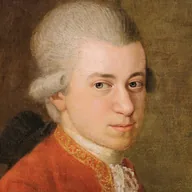 MozartSymphony No. 40 in G minor, K. 550
Mozart’s Symphony No. 40 in G minor, one of three symphonies he finished within about seven weeks in the summer of 1788, starts as if in mid-sentence: the violas set up a restless accompaniment, and the violins enter with a theme built on a sighing, falling step.
The is the journey. Fragments of the themes are taken apart, combined and pushed through unstable keys. It usually sounds restless, and near its end the music often settles on a long dominant chord, waiting for home.
MozartSymphony No. 40 in G minor, K. 550After the exposition and its repeat, the development lurches into a distant key. The sighing figure is now pushed from key to key, and the orchestra seems to fight with it.
The brings the exposition back with one crucial change: the second theme now stays in the home key. The tension created by the move to a new key is resolved. A may round the movement off.
The name came later: in the nineteenth century, theorists such as A. B. Marx and Carl Czerny described what Haydn, Mozart and Beethoven had done without naming it, which is a good reason to treat sonata form as a set of expectations rather than rules.