Forms · Unit 5: Counterpoint
The fugue
is the art of combining independent melodic lines. Its most famous form is the , a piece built from one short melody, the , which passes from voice to voice.
A fugue begins with the subject alone. A second voice then enters with it in the key of the dominant, the , while the first voice carries on with a new line. Often that new line keeps returning with the subject; it is called a countersubject. When every voice has entered, the first section, the exposition, is complete.
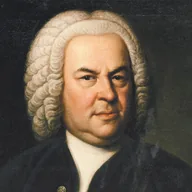 BachThe Well-Tempered Clavier, Book I, BWV 846-869
Bach’s Well-Tempered Clavier, Book I, finished in 1722, has a prelude and fugue in every major and minor key. In the C minor fugue the subject is short and springy, and three voices take it up in turn.
After the exposition, a fugue alternates , where the subject is absent or only hinted at, with new of the subject, often in other keys. Episodes tend to use sequences, a figure repeated on rising or falling steps, which carry the music from key to key.
Near the end the entries may crowd in so closely that one begins before the last has finished. This overlapping is called , and together with a long held bass note it often brings a fugue to its climax.
BachToccata and Fugue in D minor, BWV 565The fugue of the Toccata and Fugue in D minor builds its subject from a single line of running notes, in which a repeated note alternates with a falling scale. Follow it from voice to voice, and listen for the moment the organist’s feet take it up alone.