Forms · Unit 7: Freer forms
Song forms
In a song the poem comes first, and its shape often decides the shape of the music. Schubert, who wrote more than 600 songs, used three basic plans.
In a song every verse of the poem, or , is sung to the same music, as in a hymn or a folk song. Das Wandern, the first song of Die schöne Müllerin, has five verses and one tune. The music stays the same while the words move on, so the singer’s colour and timing carry the changes.
A song keeps the music for most verses but changes it where the poem turns. Winterreise, Schubert’s cycle of 24 songs from 1827, opens with one: Gute Nacht, a walking song in D minor.
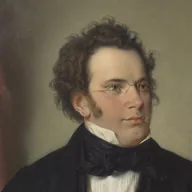 SchubertWinterreise, D. 911
The piano has carried on with the steady footsteps of the walk, and here the second verse begins, to exactly the same music as the first. The third verse varies it, and the fourth brings a change you cannot miss.
A song follows the text with new music as the story unfolds. Schubert wrote Erlkönig in 1815, at eighteen, on Goethe’s ballad of a father riding through the night with his young son, pursued by the Erlking, a spirit of death. One singer plays the narrator, the father, the terrified boy and the Erlking, while the piano’s hammering triplets, the galloping horse, hardly ever stop.
SchubertErlkönig, D 328; Op. 1Here the Erlking speaks for the first time. The music turns to the major, the voice softens to coax the boy, and the triplets lighten into a skipping rhythm.
The poem has its patterns, three temptations and three cries of Mein Vater, mein Vater (my father, my father), each higher than the last. But the music does not repeat itself from verse to verse: it climbs with the boy’s fear until the triplets stop and the last line is sung as a .
Baroque opera and oratorio had another plan, the : a first section, a contrasting middle and the first section again, A B A. The singer was expected to decorate the return. He was despised, from Handel’s Messiah of 1741, is a famous example: a slow lament in E-flat major on words from Isaiah, with a middle section in C minor.
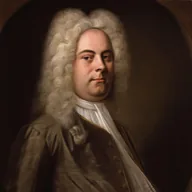 HandelMessiah: He was despised
The middle section: He gave his back to the smiters. The key turns to C minor, and the strings hammer out a sharp dotted rhythm under the voice, like the blows the words describe.
HandelMessiah: He was despisedThen the first section returns, da capo. In this performance the return starts straight with the voice, without the opening ritornello. Compare it with the first time: singers of Handel’s day added their own ornaments to the repeat.