Forms · Unit 1: How form works
The Baroque suite
A Baroque is a set of dances played one after another, usually all in the same key. Few suites were meant for dancing: composers took the rhythms of the ballroom and made them into music for listening. Almost every dance in a suite is in , two halves, each played twice.
Four dances form the core, usually in this order. The , French for German, is moderate and flowing, in four beats. The , French for running, is in three beats, with accents that shift between groups of two and three. The is slow and grave, with the weight on the second of its three beats. The , which grew from the British jig, ends the set at speed.
Between the sarabande and the gigue composers liked to add lighter dances, the : a , a , a or a . These often came in pairs, the first dance returning after the second, the plan that grew into the minuet and trio. Bach wrote more than thirty suites and , for keyboard, for solo violin and cello, and for orchestra.
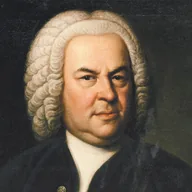 BachCello Suite No. 1 in G major, BWV 1007
Bach’s Cello Suite No. 1 in G major, from his years at Köthen, has the whole plan: a prelude, the four core dances and a pair of minuets before the gigue. Each half of the Allemande is played twice, as binary form asks. Here the second half begins, away from the home key, and works its way back to G major.
BachCello Suite No. 1 in G major, BWV 1007The second minuet of the pair has turned to G minor. Now the first is played again in G major and rounds off the pair: the plan that grew into the minuet and trio.
BachViolin Concerto in A minor, BWV 1041Dance rhythms run through Baroque music far beyond the suite. Bach ends his Violin Concerto in A minor with a gigue in all but name: fast, with three quick notes to each beat.
After about 1750 the suite went out of fashion, though the minuet lived on in the Classical symphony. In 1884 Grieg looked back: he wrote From Holberg’s Time for the 200th birthday of the playwright Ludvig Holberg, born a year before Bach and Handel. It borrows the old dance names, but it is a Romantic imitation, and the melodies and harmonies are Grieg’s own.
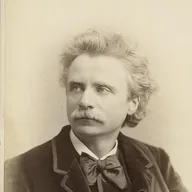 GriegHolberg Suite (From Holberg’s Time), Op. 40
Grieg’s Sarabande keeps the slow three beats of the old dance and its lean on the second beat.
GriegHolberg Suite (From Holberg’s Time), Op. 40After a cheerful gavotte comes a , named after a small French bagpipe: listen for the drone, a long held note in the bass, under the circling tune. Then the gavotte returns, as the first of a pair should.