Forms · Unit 4: Sonata form
The recapitulation and coda
The is the return home. The first theme comes back in the tonic, and a listener who has followed the journey hears it as an arrival: after the restlessness of the development, the music suddenly feels solid again. But the recapitulation is not a simple repeat of the exposition. Because the listener knows the material by now, composers often shorten it or decorate it; what matters is that the second theme comes home.
The transition has to be rewritten, because this time it must not leave home, and the second theme follows in the tonic too. In a major-key movement this resolves the tension. In a minor-key movement it can do the opposite, bringing a once-bright theme into the darkness of the minor.
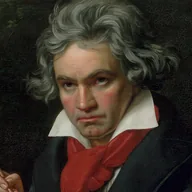 BeethovenSymphony No. 5 in C minor, Op. 67
When Beethoven’s first theme returns, the music soon stops for a short, slow solo on the oboe, a moment of reflection in the middle of the storm, before the drive resumes.
Mozart’s G minor Symphony shows the minor-key twist. Its second theme, first heard in B-flat major, returns in G minor in the recapitulation, and its sweetness turns to sorrow.
The , from the Italian for tail, comes after the recapitulation has finished its work. In Haydn and Mozart it is usually brief. Beethoven made it a fourth part of the form, sometimes as weighty as the development.
BeethovenSymphony No. 5 in C minor, Op. 67Beethoven’s coda is no short farewell. It is long and keeps working on the motif, so that many writers call it a second development, before the final cadences hammer home C minor.