Forms · Unit 7: Freer forms
Preludes and tone poems
Not every piece follows a set plan. Some forms are defined by what they do rather than by a pattern of sections.
A was first a piece that came before something else: a fugue, a suite, a church service. In Bach’s Well-Tempered Clavier each fugue has its prelude, often built on a single figure kept up from start to finish. Chopin’s 24 Preludes, Op. 28, published in 1839, made the prelude a piece in its own right: one in every major and minor key, some lasting less than a minute. They go round the circle of keys, each major key followed by the minor key that shares its notes. Bach’s C major prelude, all broken chords, later became the accompaniment of Gounod’s Ave Maria.
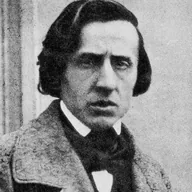 Chopin24 Preludes, Op. 28
Chopin’s Prelude in E minor is little more than a melody over slowly sinking chords. Here the pattern begins again and rises to a brief outburst before the music dies away. This prelude was played at Chopin’s funeral.
A , or tone poem, takes its shape from a story or a picture. Smetana’s Vltava, written in 1874 after he had lost his hearing, follows the river through Bohemia from its two springs to Prague. Each scene has its own music, and the river’s theme returns between them, like a refrain that travels.
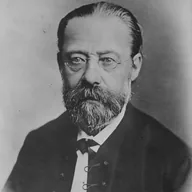 SmetanaVltava (The Moldau), from Má vlast, JB 1:112/2
As the river flows past a village, a wedding is under way, and the orchestra breaks into a polka.
Freer forms still use the tools of the others: themes that return, contrast and variation. The difference is that the listener follows a story or a mood instead of a familiar plan.