Forms · Unit 4: Sonata form
Sonata-rondo
A combines a rondo’s refrain with the key plan of sonata form. Its usual shape is A B A C A B A: the refrain returns as in any rondo, the first B is in a contrasting key like a second subject, the middle C works like a development, and the second B comes back in the home key, like a recapitulated second subject.
Mozart and Beethoven often used it for finales, because it joins a tune everyone can follow with the tension and resolution of sonata form.
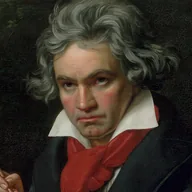 BeethovenSymphony No. 8 in F major, Op. 93
The finale of Beethoven’s Eighth Symphony is a sonata-rondo full of jokes. Its main theme ends on a startling loud note that does not belong to the key, and that note returns to cause trouble later. Beethoven even begins the second theme in the wrong key, A-flat major, before it finds its proper key. Here the refrain has just come back, and the music sets off on its developing middle section.
BeethovenSymphony No. 4 in B-flat major, Op. 60The slow movement of Beethoven’s Fourth Symphony is a sonata-rondo too. Its second theme, a melody for the clarinet, first appears in a new key; here it returns, now in the home key, E-flat major. At the very end of the movement the timpani play its dotted accompaniment rhythm alone.
Analysts do not always agree whether a movement is a sonata-rondo, a rondo or a sonata form, and some label the same movement with letters while others use exposition and recapitulation. The disagreement is a sign of how closely the two forms are related.