Forms · Unit 4: Sonata form
The development
In the development the composer takes the themes of the exposition apart and puts them to work. A theme may be broken into short fragments, a single figure repeated on rising or falling steps, a , or two ideas set against each other.
The key changes often and rarely settles, which is why the development sounds unstable: it is the furthest point of the journey. Near its end the music usually finds its way to the dominant of the home key and holds it, building expectation. This passage is the , and a long, held dominant chord is the surest sign that home is near.
A development can also bring something new: a fresh theme, or a trick. Some developments pretend to end early, with the first theme returning in the wrong key before the music moves off again; this is a .
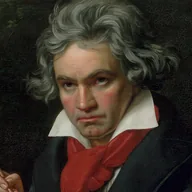 BeethovenSymphony No. 5 in C minor, Op. 67
Beethoven’s development opens with the four-note motif blared out by the horns and clarinets and answered by the strings. Later the horn call from the exposition is broken down until single chords are passed between the wind and the strings, growing quieter and quieter, until the motif bursts back in.
 HaydnSymphony No. 104 in D major
Haydn begins his development quietly, in B minor, far from home. A few notes of the main theme travel from key to key.
The development is where a composer’s imagination shows most clearly. Haydn liked surprises, sudden silences and returns that turn out to be false. Mozart could darken a cheerful theme. Beethoven made his developments longer and more violent than anyone before him.