Forms · Unit 6: The concerto
The Classical concerto
The Classical concerto joins the contrast of soloist and orchestra to the plan of sonata form. Its first movement usually has a double exposition: the orchestra plays an exposition first, the , staying in the home key; then the soloist enters and plays it again, the , this time moving to the second key as an exposition should.
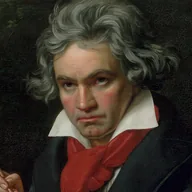 BeethovenPiano Concerto No. 3 in C minor, Op. 37
In Beethoven’s Third Piano Concerto, in C minor, the orchestral exposition runs for several minutes. Then the piano enters, not with the theme but with three rising scales that sweep up the keyboard.
Development and recapitulation follow, with soloist and orchestra sharing the material. Near the end of the recapitulation the orchestra stops on a held chord. The soloist then plays the , a free passage that shows off both the instrument and the player’s imagination.
BeethovenPiano Concerto No. 3 in C minor, Op. 37At the first performance Beethoven improvised the cadenza; the one heard today he wrote out some years later: stormy, wide-ranging and at times far from the home key. Listen for the trills at its end, the traditional signal that the orchestra is about to return.
In Mozart’s day the cadenza was usually improvised, and both Mozart and Beethoven played their own concertos. Later soloists wanted written cadenzas, and composers began to supply them.
Beethoven was the soloist when the concerto was first played, in Vienna in 1803. According to Ignaz von Seyfried, who turned his pages, the solo part was still mostly blank, and Beethoven played much of it from memory.
The other two movements are freer. The slow movement is often a song for the soloist; the finale is usually a rondo, with the refrain passed between soloist and orchestra.