Forms · Unit 8: The whole work
How the movements fit together
A symphony, a sonata or a string quartet is made of several movements: separate pieces, each with its own form and tempo, usually divided by pauses. They are meant to be heard together, and composers plan the whole as carefully as each part.
The Classical plan has four movements: a fast first movement in , usually the weightiest of the four; a slow, songlike movement; a dance, the minuet and trio, which Beethoven usually replaced with a faster ; and a quick , often a . Concertos have three movements, fast, slow, fast, and so do most of Haydn’s and Mozart’s piano sonatas.
Keys hold the plan together. A work is named after its home key, which the first movement sets out and the finale returns to. A middle movement, most often the slow one, moves to a related key for contrast.
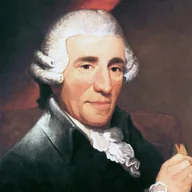 HaydnSymphony No. 104 in D major
Haydn’s last symphony is in D major. Its slow movement moves to G major, the key built on the fourth note of the scale and the most common choice, with a graceful theme in the strings. The minuet and the finale are back in D major.
A minor-key work can end in the major, and then the plan tells a story. Beethoven’s Fifth Symphony begins in C minor. Its scherzo does not end: it fades into a hushed passage over the timpani that grows until the finale breaks in without a pause.
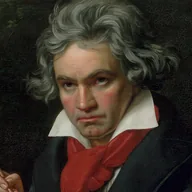 BeethovenSymphony No. 5 in C minor, Op. 67
The finale arrives in C major, and three trombones, a piccolo and a double bassoon join in for the first time in the symphony. The home note is the same as at the start, but the darkness of the minor has gone.
Composers also tie movements together by bringing a theme back. In the middle of the Fifth’s finale the scherzo returns for a moment, like a memory. Such a became a favourite device in the nineteenth century, in symphonies by Berlioz, Franck, Tchaikovsky and Dvořák.
BeethovenSymphony No. 9 in D minor, Op. 125The finale of Beethoven’s Ninth brings back brief memories of the first movement, then the scherzo, then the slow movement. After each one the cellos and basses answer as if speaking and cut it off, until the theme of the Ode to Joy appears.