Forms · Unit 3: Variation
Variations over a repeating bass
Some variations are built on a bass line rather than a melody. A short bass, repeated again and again while the music above it changes, is called a ground bass. It is one of the oldest ways of making a long piece from a small idea.
In the Baroque such a piece was often called a or a . Both are usually slow and in three beats, both repeat a bass or a pattern of chords, and composers of the time did not keep the two names strictly apart. One of the most famous grounds is in Purcell’s opera Dido and Aeneas: in her lament, When I am laid in earth, Dido sings over a slowly falling bass that comes round again and again.
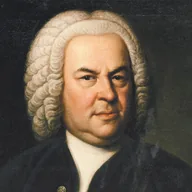 BachPassacaglia and Fugue in C minor, BWV 582
Bach’s Passacaglia in C minor begins with its eight-bar theme alone, played by the organist’s feet on the pedals. Learn its shape: it will be heard twenty more times.
Above the repeating theme each variation finds a new texture: flowing lines, sharp rhythms, full chords. Later Bach moves the theme into the upper voices, then brings it back to the pedals, and after the last variation the Passacaglia runs straight into a fugue on the first half of the theme. That first half matches the bass of a short organ piece by the French composer André Raison, which Bach seems to have known.
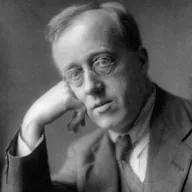 HolstFirst Suite in E-flat for Military Band, Op. 28 No. 1 / H. 105
Holst wrote a chaconne for military band in 1909. His eight-bar theme passes from instrument to instrument, and here, in the middle of the movement, it is turned upside down.
The idea lived on after the Baroque. Brahms ended his Fourth Symphony with about thirty variations on an eight-bar theme borrowed from a attributed to Bach, and Pachelbel’s Canon is built over a ground bass only two bars long.