Path 01
Start here
Ten well-known works to learn the map on, each open in full to everyone.
Pachelbel → Bach → Vivaldi → Mozart → Beethoven → Schubert → Chopin → Dvořák → Debussy
Listening paths · Path 03
Twelve slow, quiet pieces, from Chopin's lullaby to Pärt's Fratres.
Calm music is not empty music. These pieces move slowly and softly, often over a rocking or held bass, but each has a shape you can follow: a melody that leaves and comes back, a tune passed from one instrument to another, a quiet climax. Most last only a few minutes. They run in the order they were written, from 1844 to 1977.
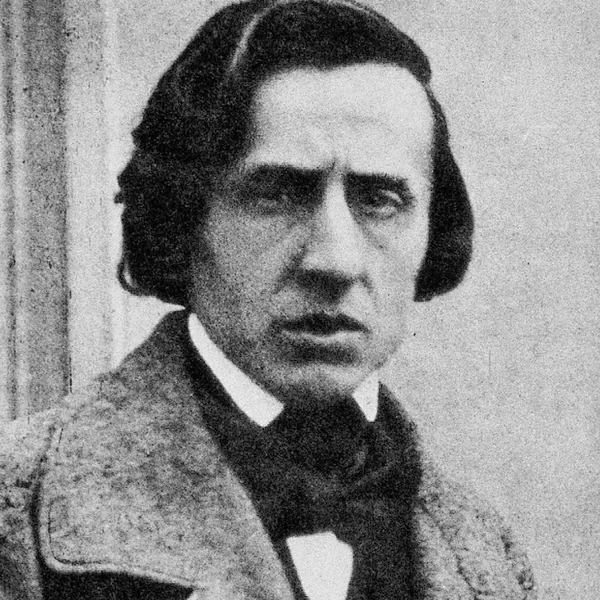
 ChopinBerceuse in D-flat major, Op. 57
A lullaby whose calm comes from the left hand, rocking on nearly the same figure from start to finish. Above it the tiny theme passes through sixteen variations, dissolving into trills by Variation 11 and returning plain in Variation 16.
 LisztConsolation No. 3 in D-flat major, S. 172 No. 3
Marked Lento placido. A single tune floats over a long, low D-flat and gentle triplets, and rather than bringing new ideas, A1 and A2 reshape the same melody; around the middle the bass drops away and the tune sings alone, higher up.
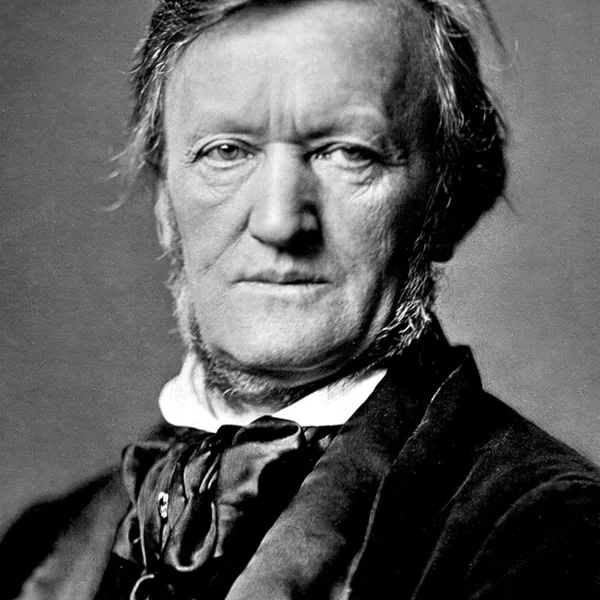
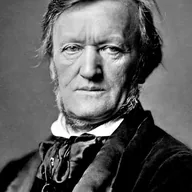 WagnerSiegfried Idyll, WWV 103
A birthday present: Cosima Wagner woke to it on Christmas morning 1870, played on the staircase of their house. The A theme opens softly and keeps returning; follow it through the long Development to its breakthrough, and hear it once more in the Coda.
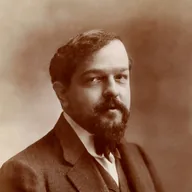 DebussyRêverie, L. 68
The calm comes from blurring: the melody floats over a held B-flat in the bass, and off-beat accents in the accompaniment soften the pulse. In A′ the first theme returns in the middle voice, wrapped in arpeggios.
 MassenetMéditation from Thaïs
An interlude from Massenet's opera Thaïs, placed at the turning point of the drama. The solo violin plays the main melody twice in A, B grows steadily more passionate, and A′ restores the calm, the violin rising to high harmonics at the close.
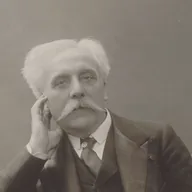 FauréSicilienne, Op. 78
A sicilienne is a gently swaying dance in 6/8, and here the sway never stops. The opening melody (A) is heard three times, with B and a new idea, C, between its appearances, before a short Coda.
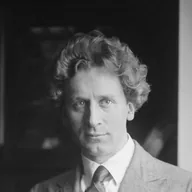 GraingerIrish Tune from County Derry
The old Londonderry Air, set without words. Nothing is developed: the 32-bar tune is simply heard twice in four-bar phrases. Follow the plan A, B, A, C, D, D, E, A on the map, and the swell toward the E phrase near the end.
A mood picture rather than a scene. Soft, shifting chords carry the cuckoo's falling call through A, in a gently rocking 6/4; in B the first violins sing the Norwegian folk song “In Ola Valley”, and A′ thins out and fades.
After George Meredith's poem about a skylark. The solo violin rises alone in Cadenza I before the orchestra joins; a folk-like flute tune opens B, and in Cadenza III the violin climbs on its own again to end the piece.
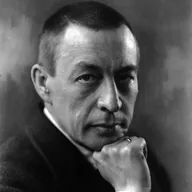 RachmaninoffVocalise, Op. 34 No. 14
A song without words, written for the soprano Antonina Nezhdanova. One melody, sung on a single vowel, carries everything over a gently undulating accompaniment; with no text to guide you, follow the arch of the line from A through B to the Coda.
Drawn from Vaughan Williams's opera Sir John in Love. The old Greensleeves tune (A) frames a middle section (B) built on another folk melody, Lovely Joan, and a brief Cadenza leads back to Greensleeves.
Calm through repetition: the same six-bar pattern nine times, each separated by an Interlude in which a piano note tolls. The violin line changes while the theme returns in a different octave each time, and the last Interlude is the longest.
Path 01
Ten well-known works to learn the map on, each open in full to everyone.
Pachelbel → Bach → Vivaldi → Mozart → Beethoven → Schubert → Chopin → Dvořák → Debussy
Path 02
Twelve symphonies from Mozart's Fortieth to Shostakovich's Fifth, the core of the concert repertoire.
Mozart → Haydn → Beethoven → Schubert → Berlioz → Mendelssohn → Brahms → Mahler → Tchaikovsky → Dvořák → Shostakovich
Path 04
Ground bass, ritornello, fugue and dance: the Baroque in twelve works, from Purcell to Bach's Musical Offering.
Purcell → Pachelbel → Bach → Vivaldi → Handel → Scarlatti
Path 05
The form behind most first movements, heard twelve times, from a small sonata to a symphony.
Mozart → Haydn → Beethoven → Schubert → Mendelssohn → Brahms → Prokofiev
Path 06
Haydn's two London visits, 1791–95: six of the symphonies he wrote there, three piano sonatas, and what he took home to Vienna.
Haydn
Path 07
Short, complete works for a single sitting.
Bach → Mozart → Haydn → Beethoven → Schubert → Mendelssohn → Saint-Saëns → Sibelius → Ravel → Debussy → Gershwin → Copland
Path 08
Four players across almost two centuries: Haydn shapes the conversation, Bartók breaks it open, Shostakovich turns it inward.
Haydn → Mozart → Schubert → Beethoven → Dvořák → Debussy → Reger → Bartók → Shostakovich
Path 09
One work for each kind in the catalog, from the symphony to choral music.
Beethoven → Vivaldi → Debussy → Holst → Dvořák → Mozart → Chopin → Scarlatti → Bach → Schubert → Strauss → Handel
Path 10
From the First of 1800 to the Choral of 1824, in the order Beethoven wrote them.
Beethoven
Path 11
Soloist and orchestra across two and a half centuries, from Bach's harpsichord to Rostropovich's cello.
Bach → Vivaldi → Mozart → Beethoven → Mendelssohn → Tchaikovsky → Dvořák → Rachmaninoff → Ravel → Shostakovich
Path 12
Eleven short pieces from Field to Grieg, each holding one mood.
Field → Schubert → Mendelssohn → Chopin → Schumann → Liszt → Tchaikovsky → Rachmaninoff → Brahms → Grieg
Path 13
A poem, a voice and a piano, later an orchestra: from Schubert's first masterpieces to Strauss's last songs.
Schubert → Schumann → Wagner → Mahler → Debussy → Fauré → Strauss
Path 14
Two ways of making much from little: a theme changed again and again, and a subject passed from voice to voice.
Bach → Mozart → Haydn → Beethoven → Mendelssohn → Brahms → Elgar
Path 15
Fauré, Satie, Debussy, Chausson, Dukas and Ravel, from 1887 to 1920.
Fauré → Satie → Debussy → Chausson → Dukas → Ravel
Path 16
From Glinka to Shostakovich: a century of Russian music, in the order it was written.
Glinka → Balakirev → Mussorgsky → Borodin → Rimsky-Korsakov → Tchaikovsky → Rachmaninoff → Scriabin → Prokofiev → Shostakovich
Path 17
Nocturne, étude, mazurka, scherzo, ballade, polonaise, waltz: Chopin's genres in twelve works, in the order he wrote them.
Chopin
Path 18
Mozart in twelve works, from a motet written at sixteen to the Requiem he left unfinished.
Mozart
Path 19
Brahms in twelve works, from the First Piano Concerto to the last of his piano pieces.
Brahms
Path 20
Twelve piano sonatas from Mozart and Haydn to Prokofiev's war sonata of 1942.
Mozart → Haydn → Beethoven → Schubert → Chopin → Liszt → Berg → Bartók → Prokofiev
Path 21
Two French composers side by side, often compared and often confused, from 1891 to Boléro in 1928.
Debussy → Ravel
Path 22
Ten violin concertos, from Beethoven's of 1806 to Sibelius's of 1904.
Beethoven → Paganini → Mendelssohn → Wieniawski → Bruch → Lalo → Brahms → Tchaikovsky → Dvořák → Sibelius
Path 23
The late Romantic orchestra at its largest: Bruckner's and Mahler's symphonies and Strauss's tone poems, 1880 to 1945.
Bruckner → Mahler → Strauss
Path 24
Folk songs, dances and landscapes, from Liszt's Hungary to Márquez's Mexico.
Liszt → Smetana → Grieg → Albéniz → Dvořák → Sibelius → Elgar → Williams → Janáček → Villa-Lobos → Rodrigo → Márquez
Path 25
Choirs from Handel's coronation anthem to Ligeti's cloud of voices: masses, requiems and psalms, 1727 to 1966.
Handel → Mozart → Brahms → Verdi → Fauré → Orff → Messiaen → Bernstein → Ligeti
Path 26
Twelve overtures from Mozart's Figaro to Bernstein's Candide, each a complete piece in a few minutes.
Mozart → Beethoven → Rossini → Weber → Mendelssohn → Wagner → Berlioz → Offenbach → Brahms → Tchaikovsky → Bernstein
Path 27
Twelve directions the century took, from Schoenberg's Verklärte Nacht of 1899 to Piazzolla's tango of 1982.
Schoenberg → Ives → Bartók → Holst → Gershwin → Barber → Prokofiev → Copland → Ligeti → Górecki → Piazzolla