Path 01
Start here
Ten well-known works to learn the map on, each open in full to everyone.
Pachelbel → Bach → Vivaldi → Mozart → Beethoven → Schubert → Chopin → Dvořák → Debussy
Listening paths · Path 04
Ground bass, ritornello, fugue and dance: the Baroque in twelve works, from Purcell to Bach's Musical Offering.
Between about 1600 and 1750 composers built music on a few strong ideas, and most of them are here: a bass line repeated without end, as in Pachelbel's canon; an orchestral refrain that frames the soloists, in Vivaldi's and Bach's concertos; a subject passed from voice to voice in a fugue; a chain of dances in one key, in the cello suite; a chorus that alternates solid chords with running counterpoint, in Handel. The works run from Purcell's theatre music of 1695 to the ricercar Bach wrote in 1747 on a theme given to him by Frederick the Great.
 PurcellAbdelazer Suite: Rondeau
A rondeau from Purcell's theatre music of 1695: a hornpipe Refrain comes back three times around two Episodes, every section eight bars long. Britten later built his Young Person's Guide to the Orchestra on this tune.
The ground bass at its plainest: one bass line and one chord pattern, repeated from first bar to last. Over it three violins follow one another in canon, and every new Motif on the map is a fresh way of decorating the same harmony.
 BachToccata and Fugue in D minor, BWV 565
The north German pairing of free and strict. An improvised-sounding toccata of runs, pauses and a dark chord over low D, then a fugue on one stream of sixteenth notes that dissolves into a Recitativo, a Cadenza and a Vivace Coda.
BachBrandenburg Concerto No. 2 in F major, BWV 1047The concerto grosso: a group of soloists, here high trumpet, recorder, oboe and violin, against strings and continuo. The Ritornello keeps returning while the four pass the lead in the Episodes; the trumpet rests in the Andante and opens the fugal finale.
 VivaldiViolin Concerto in F minor (The Four Seasons), RV 297 / Op. 8 No. 4
Ritornello form that tells a story. Each refrain and solo episode is tied to a line of Vivaldi's sonnet, from stamping feet and chattering teeth to slipping on the ice, while the Largo between sets a calm violin song over plucked “rain”.
BachCello Suite No. 1 in G major, BWV 1007The dance suite for a single cello, all in G: a free Prélude of broken chords, then Allemande, Courante, Sarabande, a pair of Menuets and a Gigue. In every dance both halves, A and B, are played twice.
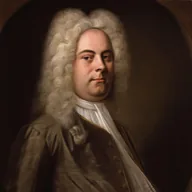 HandelZadok the Priest, HWV 258
Two Baroque choral manners side by side: solid chords for the refrain “God save the King” and quick “Amen” runs passed between the voices in the Episodes. Before either, a long string crescendo through the Introduction.
BachConcerto for Two Violins in D minor, BWV 1043Two soloists as complete equals. The Vivace is built like a fugue around a returning refrain (A); in the Largo, a siciliano, one violin takes up what the other has just played; the final Allegro has them chasing each other between refrains.
BachItalian Concerto in F major, BWV 971A concerto with no orchestra. Bach writes the Ritornello and the solo Episodes for one harpsichord with two keyboards and moves between them to show the contest; between the quick movements, a long ornamented melody in D minor, like an aria.
HandelMessiah: Hallelujah ChorusThe oratorio chorus as Handel built it: chords on “Hallelujah”, a line in unison and then in imitation, a hymn-like passage in four parts, a fugue on “for ever and ever”, and a tense pause before the last “Hallelujah”. Trumpets, rare in Messiah, return here.
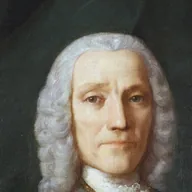 ScarlattiKeyboard Sonata in D minor, K. 141
One of Scarlatti's 555 single-movement sonatas, in two halves. Fast repeated notes drive it throughout, the hands cross, and Spanish dance rhythms add colour; the second half opens with a varied A and brings back C and D.
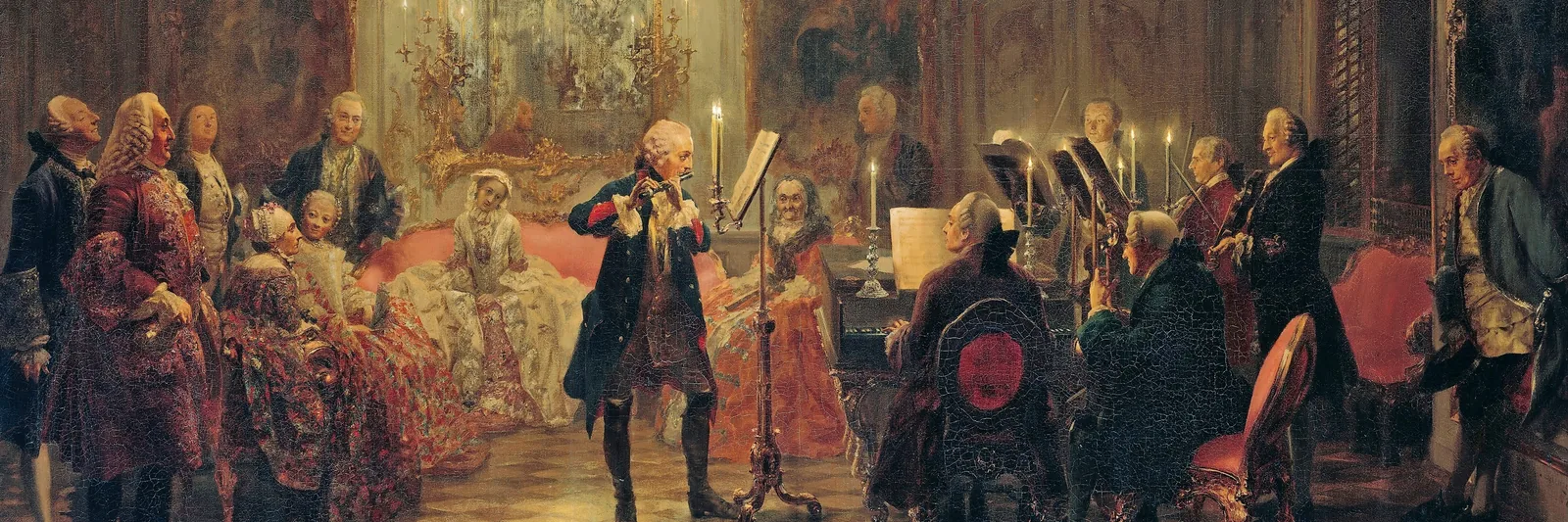
BachThe Musical Offering, BWV 1079: Ricercar a 6The ricercar, an old name for a learned fugue: six voices on the chromatic theme Frederick the Great gave Bach at Potsdam in 1747. Each voice enters in turn in the Exposition, and the Episodes spin out the countersubject rather than the royal theme.
Path 01
Ten well-known works to learn the map on, each open in full to everyone.
Pachelbel → Bach → Vivaldi → Mozart → Beethoven → Schubert → Chopin → Dvořák → Debussy
Path 02
Twelve symphonies from Mozart's Fortieth to Shostakovich's Fifth, the core of the concert repertoire.
Mozart → Haydn → Beethoven → Schubert → Berlioz → Mendelssohn → Brahms → Mahler → Tchaikovsky → Dvořák → Shostakovich
Path 03
Twelve slow, quiet pieces, from Chopin's lullaby to Pärt's Fratres.
Chopin → Liszt → Wagner → Debussy → Massenet → Fauré → Grainger → Delius → Williams → Rachmaninoff → Pärt
Path 05
The form behind most first movements, heard twelve times, from a small sonata to a symphony.
Mozart → Haydn → Beethoven → Schubert → Mendelssohn → Brahms → Prokofiev
Path 06
Haydn's two London visits, 1791–95: six of the symphonies he wrote there, three piano sonatas, and what he took home to Vienna.
Haydn
Path 07
Short, complete works for a single sitting.
Bach → Mozart → Haydn → Beethoven → Schubert → Mendelssohn → Saint-Saëns → Sibelius → Ravel → Debussy → Gershwin → Copland
Path 08
Four players across almost two centuries: Haydn shapes the conversation, Bartók breaks it open, Shostakovich turns it inward.
Haydn → Mozart → Schubert → Beethoven → Dvořák → Debussy → Reger → Bartók → Shostakovich
Path 09
One work for each kind in the catalog, from the symphony to choral music.
Beethoven → Vivaldi → Debussy → Holst → Dvořák → Mozart → Chopin → Scarlatti → Bach → Schubert → Strauss → Handel
Path 10
From the First of 1800 to the Choral of 1824, in the order Beethoven wrote them.
Beethoven
Path 11
Soloist and orchestra across two and a half centuries, from Bach's harpsichord to Rostropovich's cello.
Bach → Vivaldi → Mozart → Beethoven → Mendelssohn → Tchaikovsky → Dvořák → Rachmaninoff → Ravel → Shostakovich
Path 12
Eleven short pieces from Field to Grieg, each holding one mood.
Field → Schubert → Mendelssohn → Chopin → Schumann → Liszt → Tchaikovsky → Rachmaninoff → Brahms → Grieg
Path 13
A poem, a voice and a piano, later an orchestra: from Schubert's first masterpieces to Strauss's last songs.
Schubert → Schumann → Wagner → Mahler → Debussy → Fauré → Strauss
Path 14
Two ways of making much from little: a theme changed again and again, and a subject passed from voice to voice.
Bach → Mozart → Haydn → Beethoven → Mendelssohn → Brahms → Elgar
Path 15
Fauré, Satie, Debussy, Chausson, Dukas and Ravel, from 1887 to 1920.
Fauré → Satie → Debussy → Chausson → Dukas → Ravel
Path 16
From Glinka to Shostakovich: a century of Russian music, in the order it was written.
Glinka → Balakirev → Mussorgsky → Borodin → Rimsky-Korsakov → Tchaikovsky → Rachmaninoff → Scriabin → Prokofiev → Shostakovich
Path 17
Nocturne, étude, mazurka, scherzo, ballade, polonaise, waltz: Chopin's genres in twelve works, in the order he wrote them.
Chopin
Path 18
Mozart in twelve works, from a motet written at sixteen to the Requiem he left unfinished.
Mozart
Path 19
Brahms in twelve works, from the First Piano Concerto to the last of his piano pieces.
Brahms
Path 20
Twelve piano sonatas from Mozart and Haydn to Prokofiev's war sonata of 1942.
Mozart → Haydn → Beethoven → Schubert → Chopin → Liszt → Berg → Bartók → Prokofiev
Path 21
Two French composers side by side, often compared and often confused, from 1891 to Boléro in 1928.
Debussy → Ravel
Path 22
Ten violin concertos, from Beethoven's of 1806 to Sibelius's of 1904.
Beethoven → Paganini → Mendelssohn → Wieniawski → Bruch → Lalo → Brahms → Tchaikovsky → Dvořák → Sibelius
Path 23
The late Romantic orchestra at its largest: Bruckner's and Mahler's symphonies and Strauss's tone poems, 1880 to 1945.
Bruckner → Mahler → Strauss
Path 24
Folk songs, dances and landscapes, from Liszt's Hungary to Márquez's Mexico.
Liszt → Smetana → Grieg → Albéniz → Dvořák → Sibelius → Elgar → Williams → Janáček → Villa-Lobos → Rodrigo → Márquez
Path 25
Choirs from Handel's coronation anthem to Ligeti's cloud of voices: masses, requiems and psalms, 1727 to 1966.
Handel → Mozart → Brahms → Verdi → Fauré → Orff → Messiaen → Bernstein → Ligeti
Path 26
Twelve overtures from Mozart's Figaro to Bernstein's Candide, each a complete piece in a few minutes.
Mozart → Beethoven → Rossini → Weber → Mendelssohn → Wagner → Berlioz → Offenbach → Brahms → Tchaikovsky → Bernstein
Path 27
Twelve directions the century took, from Schoenberg's Verklärte Nacht of 1899 to Piazzolla's tango of 1982.
Schoenberg → Ives → Bartók → Holst → Gershwin → Barber → Prokofiev → Copland → Ligeti → Górecki → Piazzolla