Path 18
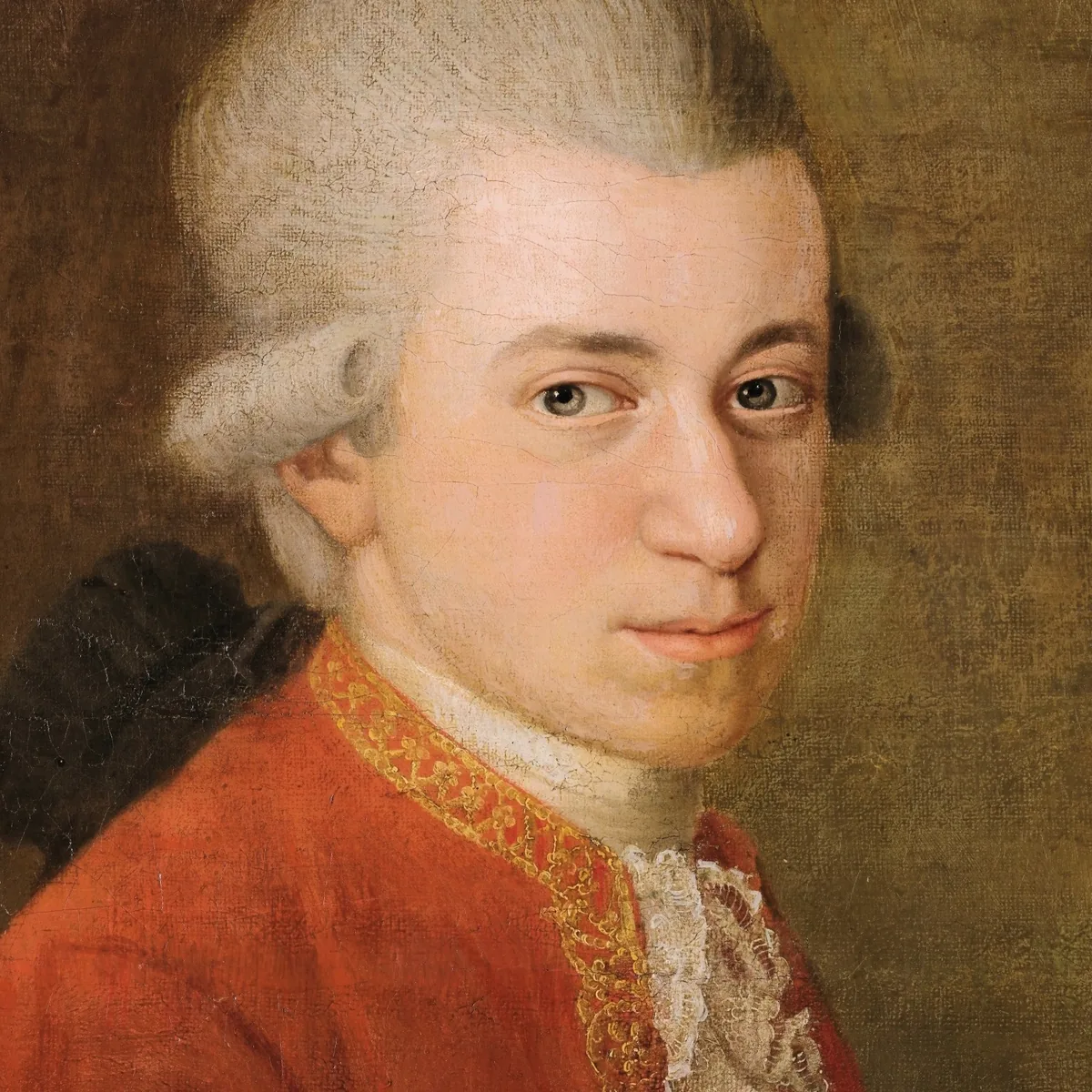
Essential Mozart
Mozart in twelve works, from a motet written at sixteen to the Requiem he left unfinished.
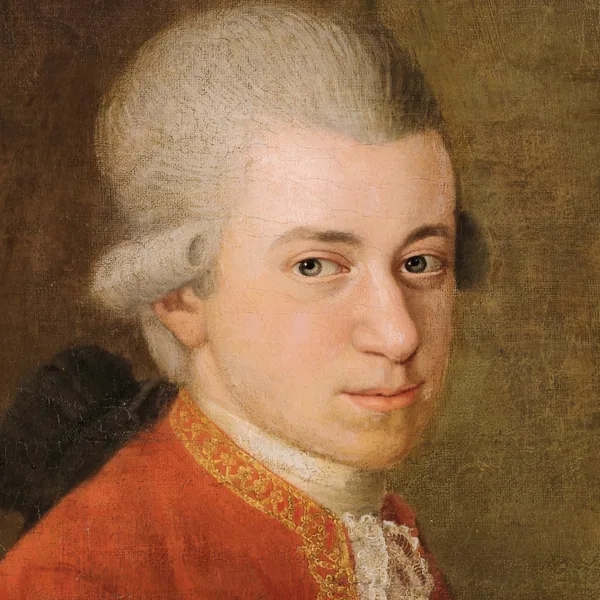
Mozart
This guide follows Mozart’s Requiem in D minor, K. 626 (1791) in eight parts: Introitus: Requiem aeternam, Kyrie (fugue), Dies irae, Tuba mirum, Rex tremendae, Recordare, Confutatis and Lacrimosa.
I Introitus: Requiem aeternam · 7 sections
A slow, dark opening in D minor, and the only number in the Requiem that Mozart orchestrated in full. Bassoons and then basset horns present the in , an idea that echoes Handel's funeral . After the the chorus enters, with the basses alone in the first . A soprano later sings “” to an old formula, not a tune of Mozart's. The ends on a , a pause that leaves the to it.
A , that is, a fugue with two , which follows the without a break. The first is a traditional “cross” figure of the kind Bach, Handel and Haydn used; the second comes from the last chorus of Handel's Dettingen . Long runs of sixteenth-notes make the voices climb in intensity. The music moves through sections A, B and C before the . The ends with a slow passage on a bare fifth, an old-fashioned sound.
The “Day of Wrath” opens the with chorus and orchestra at full strength: string , syncopated rhythms and repeated chords in the brass. A rising run of sixteenth-notes drives the chorus up on “Quantus tremor est futurus” (how great the trembling will be). That idea is repeated with developed harmony, then the sound suddenly drops to a trembling . A new section, B, follows, and then a , the .
“Hark, the trumpet”: a tenor trombone, alone, plays a three-note arpeggio in B flat major, and the bass imitates it two later. A pause at the end of the is the only in the Requiem. The tenor, alto and soprano then enter in turn, and the sings “Cum vix justus” together and unaccompanied, with the violins and bass answering. After the the music falls into sections and D.
“King of tremendous majesty” lasts only 22 . The orchestra announces the king with a falling melody in dotted rhythm, and the chorus cries “Rex!” in the orchestra's pauses, oddly on the second beat of the . The chorus then takes over the dotted rhythm, in the style of a salute to royalty. Chordal and writing alternate in section B, and the ends on a nearly unaccompanied on an open D chord.
At 130 the longest number and the first in triple . Basset horns introduce the over descending scales in the cellos, and the four take it up. A on “Ne me perdas” has a plainer accompaniment of repeated chords. The begins with section B, with the returning at A1 and developed alone in section C. The arrives with A2, and the last fade into descending orchestral scales.
A contrast between hell and mercy. Tenors and basses burst out in a dotted rhythm on the damned, with only the , then stop. In section B, sopranos and altos softly on “Voca me cum benedictis” (call me with the blessed) over arpeggios in the strings. The contrast is repeated in A1 and B1. In section C the prayer “Oro supplex” makes a striking move from A minor to A flat minor, and a final seventh chord leads into the .
A rocking figure in twelve-eight begins quietly in the strings, cut by rests, and the chorus joins on “ ” (that tearful day) after two . Two later the sopranos rise by step, first detached, then smooth and in a crescendo. The chorus is at full volume by the end of the opening eight , and those eight are all that Mozart wrote of the . From section B on, the music is Süssmayr's, ending with an Amen .
Section boundaries in music are not always sharp; a transition may be felt over a pause or a held chord.
 MozartMass in C major, K. 317MozartExsultate, jubilate, K. 165MozartViolin Concerto No. 1 in B-flat major, K. 207MozartBassoon Concerto in B-flat major, K. 191MozartPiano Sonata No. 1 in C major, K. 279MozartPiano Sonata No. 2 in F major, K. 280MozartPiano Sonata No. 3 in B-flat major, K. 281MozartPiano Sonata No. 4 in E-flat major, K. 282MozartPiano Sonata No. 5 in G major, K. 283MozartPiano Sonata No. 6 in D major, K. 284
 BachToccata and Fugue in D minor, BWV 565BachPassacaglia and Fugue in C minor, BWV 582FreeBachFantasia and Fugue in C minor, BWV 537BachBrandenburg Concerto No. 2 in F major, BWV 1047BachBrandenburg Concerto No. 4 in G major, BWV 1049BachChromatic Fantasia and Fugue in D minor, BWV 903BachThe Well-Tempered Clavier, Book I, BWV 846-869BachPrelude and Fugue No. 1 in C major (WTC II), BWV 870BachPrelude and Fugue in B minor, BWV 544BachFugue in C minor (WTC 2 No. 2), BWV 871
Path 18
Mozart in twelve works, from a motet written at sixteen to the Requiem he left unfinished.
Mozart
Path 25
Choirs from Handel's coronation anthem to Ligeti's cloud of voices: masses, requiems and psalms, 1727 to 1966.
Handel → Mozart → Brahms → Verdi → Fauré → Orff → Messiaen → Bernstein → Ligeti
Reviews