L’Isle joyeuse, L. 106
This guide follows Debussy’s L’Isle joyeuse, L. 106 (1904) in one part (sonata form).
Premium
Follow all 13 sections as they play
A and a flourish on the whole-tone scale open the piece (T1), then the music settles into A Lydian. Themes follow quickly, and the , T6, arrives in an A major setting. I brings in the other whole-tone scale, which the outer sections avoid, for contrast. The in pure A major in I, the music grows louder through II and the , and the opening (T1) comes back on the last page, merging into a tune before the final sweep.
- : T1
- : T2
Section boundaries in music are not always sharp; a transition may be felt over a pause or a held chord.
More by Debussy
See all →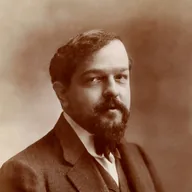 DebussyRêverie, L. 68DebussyArabesque No. 1 in E major, CD 74/1; L. 66/1DebussyDeuxième Arabesque in G major, L. 66 No. 2DebussyPour le piano, L. 95DebussyEstampes, L. 100DebussyImages, Book I, L. 110DebussySuite bergamasque, L. 75DebussyImages, Book II, L. 111DebussyChildren's Corner, L. 113DebussyPrélude I/1: Danseuses de Delphes, L. 117 No. 1
More in sonata form
See all → BachTrio Sonata No. 1 in E-flat major, BWV 525
 HaydnSymphony No. 1 in D major, Hob. I:1HaydnHorn Concerto in D major, Hob. VIId:3HaydnPiano Sonata in A-flat major, Hob. XVI:46HaydnPiano Sonata in C minor, Hob. XVI:20HaydnString Quartet in A major, Op. 20 No. 6HaydnString Quartet in C major, Op. 20 No. 2HaydnString Quartet in D major, Op. 20 No. 4HaydnString Quartet in E-flat major, Op. 20 No. 1HaydnString Quartet in F minor, Op. 20 No. 5
Reviews