What is classical music? · Unit 4: Kinds of work
Chamber music
was first music for a room, a chamber, rather than for a church or a theatre. It is written for a small group with one player to each part, and it usually has no conductor: the players lead by watching and listening to one another.
The string quartet is the best-known chamber group, but there are many others, and their names usually count the players. A is piano, violin and cello. A piano quintet joins a piano to a string quartet; Schumann’s, of 1842, became the model for later ones by Brahms and Dvořák. A clarinet quintet adds a clarinet instead, as in the famous quintets by Mozart and Brahms. A string quintet adds a second viola or a second cello, and a string sextet has two of each instrument.
Two players are enough. In a sonata for violin and piano, or for cello and piano, the two are partners rather than soloist and accompanist, and Beethoven’s early violin sonatas were even published as sonatas for piano with a violin. He described his Kreutzer Sonata as written in a very concertante style, almost like a concerto, and its piano part is as demanding as the violin’s.
The border with orchestral music is not always sharp. In Bach’s Fifth Brandenburg Concerto the soloists are a flute, a violin and a harpsichord. In the slow movement, marked , tenderly, the other strings stop and the three soloists play alone, much like a , the favourite chamber music of the time.
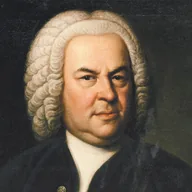 BachBrandenburg Concerto No. 5 in D major, BWV 1050
With one player to each part, every line can be heard. The violin begins a tender phrase and the flute answers it over the harpsichord’s bass; in the passages that follow, the harpsichord’s right hand becomes a third melodic voice. In this performance the harpsichord is a real one, made in Antwerp in 1640, and the flute is a wooden Baroque flute.
In a piano trio or quintet, listen for the strings playing together as one block against the piano, then going their separate ways; in a clarinet quintet, follow the clarinet as it hands a tune to the strings and takes it back.