What is classical music? · Unit 4: Kinds of work
One instrument alone
Some music is written for a single string or wind instrument with no accompaniment at all: . A keyboard can play a tune and its harmony at once, but a violin, a cello or a flute mostly plays one line, so the composer has to suggest the rest.
There are several ways to do it. The notes of a chord can be played one after another, quickly enough for the ear to hold them together. A string player can bow two strings at once, which is called a . And a melody can leap between a low part and a high one, so that the listener hears two voices from one instrument.
Bach’s six sonatas and for violin, in a fair copy dated 1720, and his six suites for cello set the standard. The partitas and suites are chains of Baroque dances; the that ends the second violin partita is a long set of variations on a short, repeating pattern. A century later Paganini published his 24 Caprices, each a study in a different skill. The last, a theme with eleven variations and a finale, has been borrowed by composers from Brahms to Rachmaninoff.
Later composers kept finding new things to say. Debussy’s Syrinx, written in 1913 for a play, is a single winding line for flute: the reed pipe of the god Pan, heard from offstage. The guitar has a repertoire of its own: in Tárrega’s Recuerdos de la Alhambra, from 1899, the fingers repeat each melody note so fast that it seems to hold, while the thumb plays the accompaniment.
Inside a concerto, too, one player can be left alone for a while. Near the end of the first movement of Bach’s Fifth Brandenburg Concerto the other players stop and the harpsichord goes on by itself for sixty-five bars, a Bach wrote out in full.
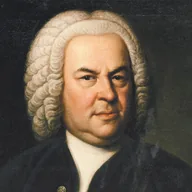 BachBrandenburg Concerto No. 5 in D major, BWV 1050
The solo grows step by step: in time the right hand’s figures become ever faster and wilder over a long, repeated note in the bass. A keyboard makes its own harmony, which a violin or a flute alone can only suggest. Here it is played on a harpsichord made in Antwerp in 1640.