What is classical music? · Unit 1: First steps
Music with a plan
A painting can be taken in at a glance; a piece of music cannot, because it unfolds in time. Composers help the listener by giving the music a plan: a theme that is easy to remember, something different after it, and then the theme again. When a familiar tune returns, you know where you are.
Musicians describe such plans with letters. The first section is A. Something new is B, and anything newer still is C. When the first music comes back, it is A again. In a piece that goes A B A C A, the returning tune is called the .
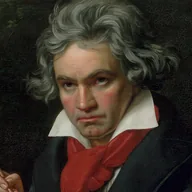 BeethovenPiano Sonata No. 8 in C minor, Op. 13
The last movement of Beethoven’s Pathétique Sonata begins quietly, with three quick notes that lift into a restless tune in C minor over a busy left hand. This is A. Learn it now: it will come back.
Next the music moves to the brighter key of E-flat major, with a gentle new melody and then livelier ideas. That is B. At its end the music grows loud, rushes down the keyboard and stops on a held chord. That pause is a signal: the refrain is about to return.
BeethovenPiano Sonata No. 8 in C minor, Op. 13Here A comes back, quiet again after the outburst. This is the moment the plan becomes audible: you recognise the music, and you know that a section has ended.
The second contrasting section, C, is in A-flat major and sounds quite different: long, smooth notes, with the two hands weaving separate lines, a texture called . Then the music gathers speed and force, and the same signal as before, a loud falling run and a pause, leads back to the refrain.
After that, B returns, now in C major, and A comes back one last time. A short ends the sonata: the opening of the tune is heard softly in another key, and a final rush down the keyboard closes it in C minor.
Beethoven wrote the sonata in 1798, and it was published in Vienna the following year as the Grande Sonate pathétique, a title that, unlike Moonlight, had his approval. Its plan needs no title, though: it is plain to anyone who listens for the returns.
Large works use the same idea on a bigger scale. A symphony movement may last a quarter of an hour, but it too is built from sections that come back, and following them is the surest way to understand what you hear.