What is classical music? · Unit 3: Instruments
The brass family
Brass instruments are metal tubes, coiled so that they can be held, with a small mouthpiece at one end and a flared bell at the other. The sound begins at the player’s lips, which buzz against the mouthpiece; the column of air in the tube turns that buzz into a note.
A plain tube can play only certain notes, the of its length, and the player chooses between them by tightening or loosening the lips. For centuries that was all trumpets and horns could do. Valves, invented in Germany around 1815, changed that: each valve opens an extra loop of tubing, so every note of the scale is within reach. The trombone does the same with its slide.
The horn grew out of the hunting horn. Its tube, nearly four metres long when uncoiled, ends in a wide bell that points backwards, and the player keeps a hand inside it. Its tone is warm and round, and a Romantic orchestra usually has four horns.
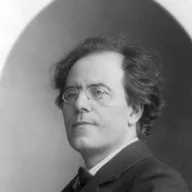 MahlerSymphony No. 1 in D major
Near the end of Mahler’s First Symphony the music breaks through into D major, and the horns lead a triumphant . The score, which calls for seven horns, asks all the horn players to stand up for the closing pages, so that the chorale rings out over the whole orchestra.
The trumpet is the highest and brightest of the brass. In the Baroque it was the sound of festivals and kings, usually heard together with the timpani. The trombone was long kept for church music and for solemn scenes on the stage; Beethoven was among the first to bring it into a symphony. The tuba, the bass of the family, was patented in Berlin in 1835, and an orchestra usually has just one. A pushed into the bell softens any of them and changes its colour.
A wind band has more brass than an orchestra: cornets join the trumpets, and euphoniums, a kind of tenor tuba, sing in the middle of the sound. Holst knew the brass from the inside: before he made his name as a composer, he earned his living as a trombonist.
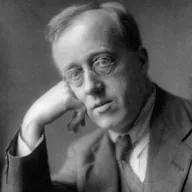 HolstFirst Suite in E-flat for Military Band, Op. 28 No. 1 / H. 105
Holst’s First Suite for military band begins with its theme in the low brass, the tubas and euphoniums: an eight-bar melody, quiet and solemn, that will return again and again in new colours.