What is classical music? · Unit 3: Instruments
Percussion
Percussion instruments sound when they are struck, shaken or scraped. Some play definite notes and can carry a tune: the timpani, the xylophone with its wooden bars, the glockenspiel with its steel bars, and tubular bells. Others make a sound of no fixed pitch: the snare drum, the bass drum, the cymbals, the triangle and the tambourine.
The timpani, or kettledrums, have belonged to the orchestra since the Baroque. Each is a large bowl, usually of copper, with a skin stretched across the top; tightening the skin raises the note. In Baroque and Classical music there were usually two, tuned to the home note and the , and they played together with the trumpets. Since the late nineteenth century pedals have let the player retune a drum in a moment. A , a fast alternation of the two sticks, keeps the sound going.
The bass drum, the cymbals and the triangle arrived in the eighteenth century, from the military bands of the Ottoman Turks, which Europeans loved to imitate. Mozart used them in his Turkish opera The Abduction from the Seraglio, Haydn in his Military Symphony and Beethoven in a march in the finale of his Ninth. At first they meant something exotic; later they became ordinary members of the orchestra.
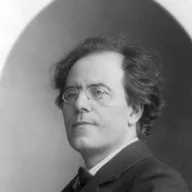 MahlerSymphony No. 1 in D major
The funeral march of Mahler’s First Symphony dies away, and then, without a pause, a crash of the cymbals and a loud, clashing chord tear open the finale.
Later composers kept adding colours. Tchaikovsky made the celesta famous, a small keyboard whose hammers strike metal bars, in the Dance of the Sugar Plum Fairy in 1892. Debussy ends his Prélude à l’après-midi d’un faune with antique cymbals, tiny tuned discs that ring like small bells.
A percussion section is a team: its players usually move between several instruments in one piece, and only the timpanist stays at the same drums. Its most memorable moments are not always loud. In Beethoven’s Fifth, one soft note repeated on the timpani holds the whole orchestra in suspense.