What is classical music? · Unit 4: Kinds of work
The concerto
A sets a soloist, or a small group of soloists, against an orchestra. It is part conversation and part contest: the orchestra states the music, the soloist answers, decorates and shows what the instrument can do.
In the Baroque concerto a returning passage for the full group, the , alternates with episodes for the soloist. In a concerto grosso the soloists are a small group, often two violins and a cello, set against the full ensemble. Vivaldi wrote about five hundred concertos. Bach’s six Brandenburg Concertos, dedicated in 1721 to the Margrave of Brandenburg, each call for a different group of instruments; in the Fifth a flute, a violin and a harpsichord share the solo part.
The Classical concerto, as Mozart and Beethoven wrote it, has three movements: fast, slow, fast. In the first, the orchestra usually presents the main themes on its own before the soloist enters. Near the end the orchestra stops and the soloist plays alone in a . Cadenzas were once improvised; Beethoven wrote out his own, and in his last piano concerto he told the pianist not to add another.
Mozart wrote his Piano Concerto No. 20 in D minor for his own concerts in Vienna. He finished it on 10 February 1785 and was the soloist at its first performance the next day. It is one of only two of his piano concertos in a minor key. No cadenza by Mozart survives for it; the one most pianists play was written by Beethoven, who admired the work and played it himself.
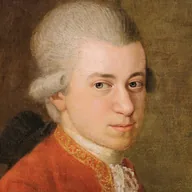 MozartPiano Concerto No. 20 in D minor, K. 466
After the orchestra’s long, restless opening, the piano enters quietly with a melody of its own, one the orchestra has not played. The soloist arrives as a new character, not as one more voice.
MozartPiano Concerto No. 20 in D minor, K. 466The finale is a . The piano opens it alone with a theme that shoots upwards, and then the full orchestra seizes the same figure and drives it on; soloist and orchestra keep trading the refrain. At the very end the music turns from D minor to D major.
Not every work for soloist and orchestra is called a concerto. Shorter, freer go by names such as romance, fantasy or rhapsody.