What is classical music? · Unit 4: Kinds of work
Harpsichord and organ
The harpsichord and the organ work in quite different ways from the piano, and each has a repertoire of its own. Before the piano took over, late in the eighteenth century, most was written for the harpsichord.
Much of this music is , several independent lines at once. Bach’s , written as teaching pieces, set two lines against each other, and the first book of his Well-Tempered Clavier, dated 1722, has a prelude and a fugue in each of the 24 major and minor keys. Domenico Scarlatti, who served the Spanish court, wrote 555 short sonatas, most of them in two halves, each played twice.
has its home in the church, and much of it is sacred. In his own day Bach was admired above all as an organist and keyboard player. Many of his organ works pair a free opening, a prelude, fantasia or , with a fugue, and his chorale preludes are built on the hymn tunes his congregation sang. Later the organ found new voices in France, where Widor’s Toccata of 1879 is still a favourite at weddings.
A toccata, from the Italian for touch, is a showpiece in the manner of an improvisation; the fugue that follows brings order, with one subject taken up by voice after voice.
His Passacaglia and Fugue in C minor, an early work, pairs the fugue with a instead. An eight-bar theme, first heard alone in the , the keyboard played with the feet, comes round twenty more times while the music around it keeps changing. The fugue follows without a break, and its subject is the first half of that theme.
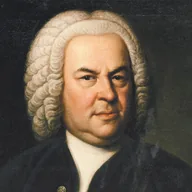 BachPassacaglia and Fugue in C minor, BWV 582
The begins on the keyboards for the hands with its , the first half of the passacaglia theme, and a second, busier line runs beside it from the start. Other voices take the pair up in turn; the pedals wait.