What is classical music? · Unit 3: Instruments
The orchestra
An orchestra is a large group of players in four families, named for the way their instruments make sound: strings, woodwind, brass and percussion. The strings usually sit at the front, around the conductor; the woodwind sit behind them, and the brass and percussion at the back, so that the loudest instruments are furthest away.
The orchestra has grown over the centuries. A Baroque orchestra was built on strings and , with oboes and bassoons and, for festive music, trumpets and timpani. In the Classical period pairs of woodwind instruments, horns and trumpets became standard, and the clarinet joined last. Haydn’s orchestras ranged from about twenty players at court to about sixty at his London concerts.
The Romantics brought in trombones, the tuba, the harp and more percussion, and a modern symphony orchestra has between about eighty and a hundred players.
The conductor is a newer figure than the orchestra. In London Haydn directed his symphonies from the keyboard while the violinist Johann Peter Salomon led the players. Standing in front with a baton spread only from the 1820s, as orchestras and scores grew larger.
In a one soloist stands out against the orchestra. Bartók’s Concerto for Orchestra, written in the United States in 1943, turns the idea around: the sections of the orchestra, and single instruments within them, take turns in the spotlight, like soloists.
In the second movement, the ‘Game of Pairs’, a snare drum plays alone before five pairs of wind instruments take their turns: bassoons, oboes, clarinets, flutes and muted trumpets. The two players of each pair move together, always the same distance apart, so that every pair has a sound of its own. In the middle the brass play a slow, solemn .
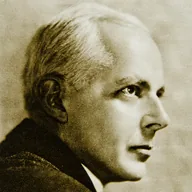 BartókConcerto for Orchestra, Sz. 116
After the chorale the pairs come back one by one, the bassoons first, now with more instruments around them. Listen for the colour of each family as it passes: the reedy oboes, the smoother clarinets, the airy flutes and the bright trumpets.