What is classical music? · Unit 2: Five periods
The Romantic period
Through the nineteenth century, roughly 1820 to 1900, composers came to see music above all as personal expression. Schubert, Chopin, Schumann, Liszt, Brahms, Verdi, Wagner, Tchaikovsky and Dvořák belong to this period.
Romantic composers were drawn to nature, to literature and to the supernatural. Songs set poems; orchestral pieces told stories or painted scenes. Many composers turned to the songs and dances of their own countries, and star performers such as the violinist Paganini and the pianist Liszt were celebrated for their virtuosity.
One of the boldest of these stories came less than four years after Beethoven’s death. Berlioz’s Symphonie fantastique, first played in Paris in December 1830, follows a programme he wrote himself: a young artist, hopelessly in love, takes opium and dreams of his beloved. She is represented by a melody, the or fixed idea, which returns in all five movements. In the fourth, the artist dreams that he has killed her and is marched to the scaffold.
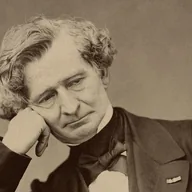 BerliozSymphonie fantastique, Op. 14
Soon after the slow introduction gives way to a fast tempo, the flute and the first violins play the idée fixe together: a long, restless melody that rises in leaps and falls back in sighs. Learn its opening; you will meet it again.
Orchestras grew, with more brass, harps and new percussion: Berlioz’s symphony asks for two harps, a cor anglais, a small, high E-flat clarinet and bells. Composers also argued about where music should go next: Brahms gave new life to the symphony and the sonata, while Liszt and Wagner wanted music bound to poetry and drama.
The piano was the instrument of the age, found in concert halls and in middle-class homes. Composers wrote short piano pieces with titles such as or , and songs for voice and piano. In 1840, the year he married the pianist Clara Wieck, Schumann wrote more than a hundred songs, among them Dichterliebe, a on sixteen poems by Heine.
The line from the Classical period is not sharp. Schubert lived at the same time as Beethoven, yet his songs are among the first great works of the Romantic age.
National styles grew stronger as the century went on. The Czech composer Dvořák wrote his Ninth Symphony, From the New World, in New York in 1893, after his student Harry T. Burleigh had sung him African American spirituals.
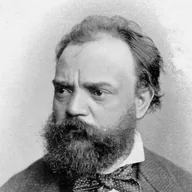 DvořákSymphony No. 9 in E minor, Op. 95
Near the end of the first movement’s exposition, a solo flute plays a gentle tune in G major. Many listeners hear in it the spiritual Swing Low, Sweet Chariot. Dvořák insisted that he had borrowed no actual melodies, only tried to catch their spirit.