What is classical music? · Unit 2: Five periods
Modern music
Around 1900 some composers began to look for sounds that the old rules did not allow. Modern music is the broadest of the periods: it covers more than a century, and its styles have little in common except a willingness to break with the past.
Debussy loosened harmony, using chords for their colour rather than for their pull towards a home note. Stravinsky’s ballet The Rite of Spring, first performed in Paris in 1913, made rhythm the driving force, and Schoenberg wrote music with no key at all. Prokofiev and Stravinsky also looked back to the clear forms of the eighteenth century, and Gershwin brought jazz into the concert hall.
Bartók took another road. In the early 1900s he began travelling to villages in Hungary and beyond, writing down and recording thousands of folk songs, and he built his own style from their modes and rhythms.
In 1943 he was living in New York, ill and short of money, when the conductor Serge Koussevitzky commissioned an orchestral work from him. Bartók wrote the Concerto for Orchestra in about eight weeks. He called it a concerto because each section of the orchestra, and many single players, are treated like soloists.
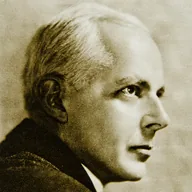 BartókConcerto for Orchestra, Sz. 116
In the first movement, the contrast to the energetic main theme is a gentle oboe tune that rocks between neighbouring notes over long held notes in the horns and strings, like a folk song.
BartókConcerto for Orchestra, Sz. 116The fourth movement is called Intermezzo interrotto, the interrupted intermezzo. After a folk-like opening tune for oboe, the violas play a broad, warm melody.
Then the opening tune returns, and the interruption follows. A crude, jaunty tune breaks in, and the orchestra jeers at it with laughing trills and rude slides on the trombones. Many hear in it a mockery of a march from Shostakovich’s Seventh Symphony, broadcast around the world in 1942; the same tune also echoes a song from Lehár’s operetta The Merry Widow. Afterwards the warm melody returns as if nothing had happened.
Later composers widened the range still further. Messiaen wrote down birdsong and built whole pieces from it, and Arvo Pärt made music from a few slow notes that ring like bells.
Periods overlap. Debussy, born in 1862, is counted as Modern; Mahler, born in 1860, as late Romantic. The labels describe the style of the music, not the date on a birth certificate.