What is classical music? · Unit 2: Five periods
The Baroque period
Historians divide classical music into periods. They are labels for broad changes in style, not fences: composers did not change their style on the first day of a new century. A useful division has five periods: Baroque, Classical, Romantic, late Romantic and Modern.
The Baroque runs from about 1600 to 1750, the year Bach died. Its composers include Monteverdi, Purcell, Pachelbel, Vivaldi, Bach and Handel. Opera was born at its start, in Italy around 1600, and the oratorio, the concerto and the sonata took shape during it.
The name began as an insult. In 1734 a French critic called a new opera by Rameau baroque, meaning bizarre and overloaded; the word probably comes from the Portuguese for a misshapen pearl. Only in the twentieth century did historians adopt it as the name of the period.
One sound runs through almost all Baroque music for a group: the . A cello or bassoon plays a bass line that hardly ever stops, while a harpsichord, organ or lute fills in the chords above it. Everything else is built on that foundation.
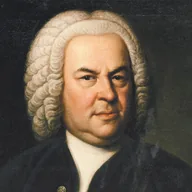 BachPassacaglia and Fugue in C minor, BWV 582
Bach’s Passacaglia in C minor for organ, written when he was a young organist, is built on a bass line eight bars long. First it is heard alone, played by the organist’s feet on the . It then returns in twenty variations, 21 times in all, while the music around it keeps changing. Listen to the low line: everything else is built on it.
Baroque composers usually kept one mood through a whole movement, and they liked strong contrasts between passages for the full group and lighter passages for a few players. In a concerto, the full group’s opening music keeps returning between the soloists’ passages; this returning music is called the .
BachBrandenburg Concerto No. 5 in D major, BWV 1050In Bach’s Fifth Brandenburg Concerto the whole group has just played the ritornello. Now the soloists take over: the flute and the violin trade short figures, and the harpsichord, which has been filling in the continuo chords, joins them as a third soloist. Later it plays a long solo of its own, and the work is often called the first keyboard concerto.