What is classical music? · Unit 4: Kinds of work
The piano sonata
A is a work in several movements for piano alone, usually three or four, arranged like a small symphony: a first movement in , a slow movement, often a minuet or scherzo, and a fast finale. The word is older than the piano: sonata comes from the Italian for sounded, music played on instruments, as a is music sung.
Haydn and Mozart wrote most of their sonatas in three movements; Beethoven’s early ones have four. Beethoven wrote thirty-two, from the 1790s to 1822, and they follow his whole career. He kept testing the plan. The Moonlight Sonata, published as a sonata in the manner of a fantasy, begins with its slow movement. The Appassionata is driven by a knocking rhythm of three short notes and a long one, like the Fifth Symphony of the same years, and the Hammerklavier lasts about three quarters of an hour.
The Pathétique, his Sonata No. 8 in C minor, came out in 1799 as the Grande Sonate pathétique and did much to make his name. Its first movement shows sonata form at work. A slow, heavy introduction marked comes first. Then the fast music sets out its themes in the , which is played twice, takes them apart in the and brings them back in the . Beethoven also brings back the slow introduction, at the start of the development and once more near the end.
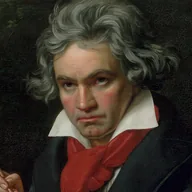 BeethovenPiano Sonata No. 8 in C minor, Op. 13
The fast music begins: a restless theme climbs in the right hand over rumbling broken octaves in the left.
BeethovenPiano Sonata No. 8 in C minor, Op. 13The second theme starts in E-flat minor, where a major key would be expected. The right hand crosses over the left, so that a low voice and a high one answer each other.
Later composers kept coming back to the piano sonata. Schubert wrote his last three in September 1828, two months before he died, and Liszt’s Sonata in B minor runs its sections together into one unbroken movement.