What is classical music? · Unit 3: Instruments
The woodwind family
The woodwind family is named after the wood its instruments were first made of, but what really holds it together is how the sound begins. The player blows, and the air inside a tube is set vibrating, either by an edge or by a thin reed. Keys and finger holes along the tube change its sounding length, and so the note.
The flute has no reed. The player blows across the edge of a hole near the top, and the stream of air, flickering over that edge, sets the air in the tube vibrating. Flutes were made of wood for most of their history and are usually metal today, but they still count as woodwind. The piccolo, a small flute, plays an octave higher still.
The oboe and the bassoon use a double reed: two thin blades of cane tied together, which vibrate against each other. The clarinet has a single reed, held against its mouthpiece. The saxophone, invented by Adolphe Sax in the 1840s, has a single reed too, so it counts as a woodwind instrument, although its body is made of brass.
Each has its own voice. The oboe is reedy and clear, and by tradition it gives the A to which the orchestra tunes, partly because its steady, carrying sound is easy to hear. The clarinet is smoother, and dark and hollow in its low notes. It was the last of the four to join the orchestra, late in the eighteenth century, and Mozart wrote his Clarinet Quintet and Clarinet Concerto for his friend, the clarinettist Anton Stadler. The bassoon, the bass of the family, has a tube more than two and a half metres long, folded back on itself. It can sound gruff and comic, but also soft and sad.
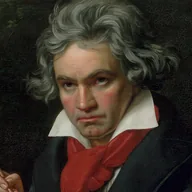 BeethovenSymphony No. 5 in C minor, Op. 67
Soon after the opening music of Beethoven’s Fifth returns, the music comes to a halt and a single oboe plays a short, slow phrase alone, in free time. Then the storm breaks out again.
Each instrument has larger or smaller relatives: the piccolo, the cor anglais (an alto oboe, neither English nor a horn), the bass clarinet and the contrabassoon. Unlike the strings, every woodwind player has a part of their own, so each line is played by one person. Classical composers wrote for pairs of each instrument; a large Romantic orchestra may have three or four.
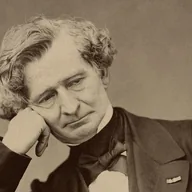 BerliozSymphonie fantastique, Op. 14
In the slow third movement of his Symphonie fantastique (1830), Berlioz pictures two shepherds calling to each other across the fields. A cor anglais on the stage and an oboe played offstage, out of sight, toss the calls back and forth, so that one sounds near and the other far away. Listen for the difference between the lower cor anglais and its smaller relative.