What is classical music? · Unit 4: Kinds of work
Voice and orchestra
A song need not have a piano. In works for a solo singer is accompanied by an orchestra, with no choir. The orchestra gives the composer far more colours than a piano, and it lets a song fill a large concert hall.
Singing with an orchestra is as old as opera. A concert aria is an operatic scene written for the concert hall, often for one particular singer, and Mozart wrote dozens. His Exsultate, jubilate, written in Milan in 1773 for a famous singer, is a sacred piece for solo voice and orchestra that ends with a dazzling Alleluia.
The orchestral song grew up in the nineteenth century. Berlioz wrote Les nuits d’été, six songs on poems by Théophile Gautier, for voice and piano in 1841 and later orchestrated them, and they are often called the first orchestral song cycle. Richard Strauss wrote his Four Last Songs in 1948, the year before he died.
Mahler brought song and symphony so close that the line between them blurs. He wrote both the words and the music of his Songs of a Wayfarer in 1884 and 1885, after an unhappy love, and their tunes went straight into his First Symphony: the second song became the main theme of its first movement, and the last song returns in the middle of the third.
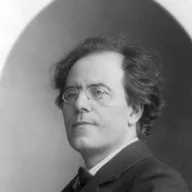 MahlerSymphony No. 1 in D major
After a long, misty introduction, the cellos begin an easy-going tune that opens with a falling fourth. It is the melody of the second Wayfarer song, “I went across the fields this morning”, in which the whole bright world seems to greet the young man. In the symphony it grows and spreads without words.